Qipao vs Cheongsam: 2026 Styling Guide

When navigating the world of traditional Chinese dress, a common question arises among fashion historians, bespoke enthusiasts, and modern stylists alike: what is the exact difference between qipao and cheongsam? While Western fashion media often uses the terms interchangeably to describe the iconic, form-fitting Chinese dress, the reality is far more nuanced. The distinction is fundamentally rooted in linguistics, regional tailoring lineages, and evolving cultural geographies.
As we move through 2026, the neo-traditional fashion movement has elevated the garment from occasional ceremonial wear to a staple of sophisticated, everyday wardrobes. This guide deconstructs the linguistic and structural differences between the qipao and the cheongsam, offering a comprehensive styling framework for the modern wearer.
Linguistic Roots and Historical Divergence
To understand how to style the garment today, one must first understand its regional DNA. The difference between qipao and cheongsam begins with language and the distinct fashion capitals of the 20th century.
The Qipao (旗袍): Shanghai’s Modernist Silhouette
The term qipao (Mandarin for 'banner robe') traces its etymology to the Qing Dynasty (1636–1912), referring to the loose, A-line robes worn by Manchu bannermen. However, the modern qipao was born in the 1920s in Shanghai. Influenced by the May Fourth Movement and early feminist ideals, Shanghai’s socialites and students adopted a streamlined, one-piece version of the male scholar’s robe. According to the Victoria and Albert Museum’s Asian textile archives, the 1930s Shanghai qipao was characterized by its fluid, flat-pattern cutting, which relied on the drape of the silk rather than Western tailoring darts to accommodate the body.
The Cheongsam (長衫): Cantonese Structure and Global Export
Cheongsam is the Cantonese pronunciation of the same characters, translating literally to 'long shirt' or 'long robe.' Historically, in Southern China, this term referred to the men's long gown. However, as the garment migrated to Hong Kong, Macau, and Singapore, and subsequently entered the Western lexicon via British colonial trade, 'cheongsam' became the standard English catch-all for the women's dress. The Hong Kong iteration of the 1950s and 60s diverged sharply from Shanghai's fluid lines, adopting Western darting (sheng dao) to create a highly structured, hourglass silhouette.
The Tailoring Matrix: Construction Differences
When sourcing or commissioning a garment in 2026, knowing the difference between qipao and cheongsam tailoring philosophies will dictate how the dress fits and moves.
| Feature | Shanghai-Style Qipao (Hai Pai) | Hong Kong-Style Cheongsam (Yue Pai) |
|---|---|---|
| Pattern Cutting | Traditional flat cutting; minimal darts; relies on fabric tension and drape. | Western 3D tailoring; prominent bust and waist darts for a contoured fit. |
| Collar Structure | Softer, lower gaoling (high collar); often removable or flexible. | Highly structured, stiffened collars lined with buckram for rigid posture. |
| Side Slits (Kai Cha) | Higher slits for ease of movement, reflecting 1930s pedestrian lifestyles. | Moderate slits, prioritizing a sleek, unbroken line for formal evening wear. |
| Fastenings | Intricate, hand-tied pankou (knot buttons) spanning the entire pianjin (diagonal opening). | Often utilizes hidden metal snaps or zippers, with pankou used purely decoratively. |
2026 Styling Framework: Neo-Traditional Wearability
The contemporary approach to styling the qipao and cheongsam rejects the hyper-sexualized, costumey caricatures often seen in Western media. In 2026, the focus is on 'quiet luxury,' textile appreciation, and proportional layering. Here is how to integrate these garments into a modern wardrobe with cultural respect and sartorial elegance.
Proportional Layering for Transitional Climates
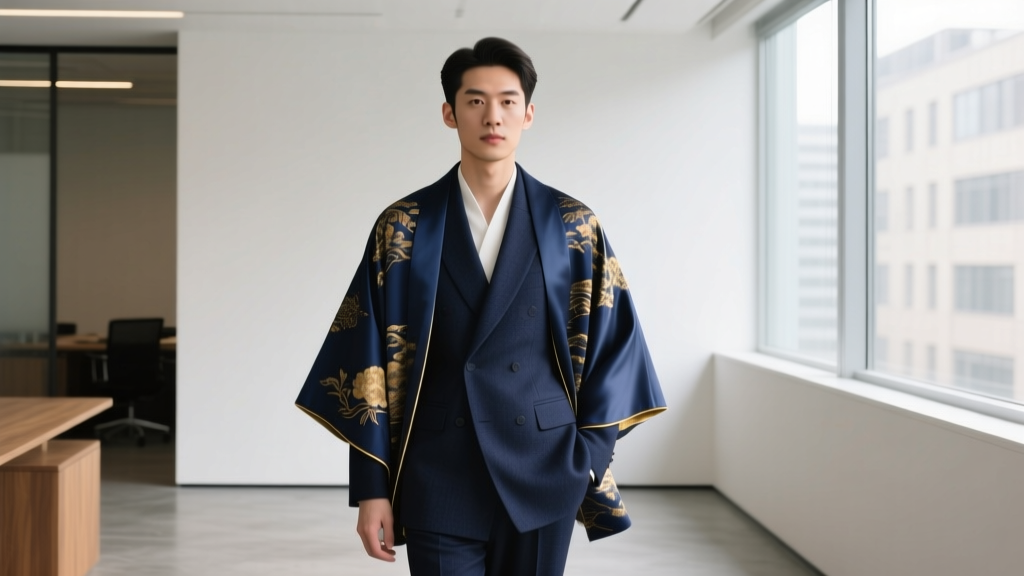
The traditional high collar and sleeveless or cap-sleeve cuts can be challenging in modern, air-conditioned environments or during autumn months. The 2026 Layering Protocol involves contrasting the garment's inherent femininity with structured, masculine outerwear.
- The Oversized Blazer: Pair a sleeveless, midi-length xiangyunsha (mud silk) qipao with an oversized, drop-shoulder wool blazer. The contrast between the fluid silk and the rigid wool creates a striking, modern silhouette.
- The Turtleneck Base: For cooler climates, wear a fitted, ribbed merino wool turtleneck beneath a short-sleeved cheongsam. Opt for monochromatic pairings—such as a charcoal turtleneck under a deep plum brocade dress—to maintain a continuous, elongating vertical line.
Footwear: Grounding the Silhouette
Abandon the stiletto pump, which historically pushes the styling into outdated, formal-wear tropes. Modern styling requires grounding the delicate hemline with substantial or architectural footwear.
- Block-Heel Mary Janes: A nod to the 1920s Shanghai schoolgirl origins of the qipao, updated with a modern, chunky lug sole.
- Pointed-Toe Loafers: For a daytime, professional setting, a sleek leather loafer respects the modest hemline while providing practical comfort for urban commuting.
Fabric Selection as the Ultimate Accessory
In traditional Chinese dress, the fabric is the primary indicator of formality and season. When exploring the difference between qipao and cheongsam in modern boutiques, pay attention to these heritage textiles:
- Xiangyunsha (Mud Silk): Originating from Guangdong, this silk is dyed with yam juice and coated in river mud. It has a distinct crackled texture, is naturally cooling, and resists wrinkles. Ideal for everyday, humid-climate qipaos.
- Song Brocade (Song Jin): A heavyweight, intricately woven fabric with a matte finish and subtle geometric or floral patterns. Best reserved for structured, winter cheongsams and formal evening wear.
- Crepe de Chine: A lightweight, matte silk that drapes beautifully. This is the preferred fabric for the fluid, flat-cut Shanghai-style qipao.
Sourcing and Bespoke Pricing Guide
Whether you are seeking a ready-to-wear piece or a fully bespoke commission, understanding the market is crucial. The Hong Kong Heritage Museum’s extensive cheongsam archives highlight the meticulous, time-intensive nature of traditional tailoring, which is reflected in modern bespoke pricing.
Price Tiers and Sourcing Hubs
- Ready-to-Wear (RTW): $150 – $450 USD. Sourced from contemporary neo-traditional brands in Shanghai and Hangzhou. These garments often utilize blended polyesters or machine-woven silks and standard sizing. Best for casual experimentation.
- Made-to-Measure (MTM): $500 – $1,200 USD. Offered by established houses like Shanghai Tang or specialized boutiques in Singapore. You select from house patterns and fabrics, with adjustments made to your specific measurements. Darts and hemlines are customized.
- Full Bespoke (Hong Kong & Shanghai Master Tailors): $1,500 – $4,000+ USD (approx. HKD 12,000 – HKD 30,000+). This involves multiple fittings, hand-drafted flat patterns, and hand-stitched pankou. Master tailors in Hong Kong's Central district or Shanghai's French Concession will construct the garment using traditional gui (ironing and shaping) techniques that mold the fabric to the body without relying heavily on darts.
Cultural Etiquette and Respectful Modernization
As the qipao and cheongsam continue to influence global runways, wearing them requires an understanding of cultural protocols. The garment is not merely a costume; it is a living artifact of Chinese modernity, women's liberation, and diasporic identity.
Respect the Collar and Closure: The gaoling (high collar) and the pianjin (diagonal chest opening) are architecturally significant to the dress. Altering the neckline into a deep V-cut or removing the side closures to replace them with a standard back zipper strips the garment of its defining cultural markers. If you desire a modern, relaxed look, opt for a digong (low collar) or sleeveless variation designed by a heritage brand, rather than butchering a traditional pattern.
Contextual Appropriateness: While red and gold brocades are culturally coded for weddings and Lunar New Year, wearing them to a casual dinner can appear overly theatrical. For everyday 2026 styling, lean into muted earth tones, subtle botanical prints, or solid-colored crepe silks. The China Institute Gallery frequently exhibits how mid-century Chinese women utilized subtle textile choices to denote intellectualism and modernity rather than overt opulence.
Ultimately, the difference between qipao and cheongsam is a testament to the garment's incredible journey across dialects, borders, and decades. By understanding the structural lineage of your dress and styling it with intentional, modern proportions, you honor the artisans who crafted it and the complex history it carries.