Chinese Women Clothing Fabric Guide

The artistry behind traditional Chinese clothing female garments is not merely a matter of aesthetic design; it is a profound study in textile engineering, natural dyeing, and geometric construction. While contemporary fashion often prioritizes the visual silhouette, the true soul of historical and modern Hanfu, Qipao, and Mamianqun lies in the warp and weft of the fabric itself. To understand these garments is to understand the alchemy of mud and silk, the mathematics of zero-waste pleating, and the patience of double-sided needlework.
This deep dive explores the foundational textiles, regional embroidery techniques, and structural architectures that define authentic Chinese womenswear. Whether you are a collector, a historian, or a garment enthusiast, recognizing these craftsmanship markers is essential for appreciating and sourcing genuine pieces.
The Silk Foundation: Alchemy and Imperial Weaves
Silk (si, 丝) has been the lifeblood of Chinese sartorial culture for over five millennia. However, not all silk is created equal. The most prized fabrics used in high-end female garments involve complex, multi-step regional processes that transform raw silk into structural masterpieces.
Xiangyunsha (Gambier Silk): The Crown Jewel of Lingnan
Originating from the Guangdong region, Xiangyunsha (香云纱), or Gambier silk, is widely considered one of the most luxurious and ecologically complex textiles in the world. The creation of this fabric requires a symbiotic relationship between raw silk, the tannin-rich juice of the Dioscorea cirrhosa tuber, and the iron-rich mud of the Pearl River Delta.
The silk is dipped in the tuber juice and sun-dried up to 30 times. Finally, it is coated in river mud, which reacts with the tannins to create a deep, rich brown-black color on one side and a glossy, amber hue on the other. The result is a fabric that is naturally antibacterial, water-resistant, and possesses a distinct, paper-like rustle. Authentic Xiangyunsha develops a beautiful crackle patina over time, much like fine leather. According to the China National Silk Museum, the traditional Xiangyunsha dyeing technique is a protected national intangible cultural heritage, requiring specific humidity and intense sunlight that limits production to a few months a year.
Kesi (Cut Silk): Weaving the Imperial Court
Kesi (缂丝), translating to "cut silk," is a tapestry weave that creates unbroken, sculptural patterns. Unlike standard embroidery which is stitched onto a base cloth, Kesi is woven on a loom where the colored silk weft threads are wrapped around small bobbins and only woven where the specific color is needed. This leaves tiny, slit-like gaps between color blocks, giving the fabric a carved appearance. Historically reserved for imperial robes and high-ranking female courtiers, Kesi is incredibly labor-intensive; the adage "one inch of Kesi, one ounce of gold" remains accurate today, with master weavers producing only a few centimeters a day.
The Four Great Embroideries: Needlework in Female Garments
While weaving provides the canvas, embroidery (xiu, 绣) provides the narrative. Chinese embroidery is broadly categorized into four major regional styles, each bringing distinct techniques to female garments like the Qipao, Aoqun (jacket and skirt sets), and Yunjian (cloud shoulders).
| Style | Region | Defining Characteristics | Common Motifs on Female Garments |
|---|---|---|---|
| Su Xiu (苏绣) | Suzhou, Jiangsu | Delicate, intricate, uses incredibly fine threads (sometimes split into 1/48th of a strand). Famous for double-sided embroidery. | Koi fish, peonies, swallows, subtle gradients. |
| Shu Xiu (蜀绣) | Sichuan | Uses a unique satin stitch and herringbone stitch. Vibrant colors with a thick, textured feel. | Giant pandas, tigers, lotus flowers, mythical birds. |
| Xiang Xiu (湘绣) | Hunan | Bold, contrasting colors. Often mimics traditional Chinese ink wash paintings using varying thread thicknesses. | Landscapes, calligraphy, lions, dramatic florals. |
| Yue Xiu (粤绣) | Guangdong | Dense, highly textured, and heavily incorporates metallic gold and silver threads. Often uses couched stitching. | Dragons, phoenixes, lychees, auspicious clouds. |
When examining a vintage or high-end contemporary Qipao, look closely at the Pankou (frog closures) and the hem. Authentic Su embroidery will show seamless color transitions without visible knots on the reverse side, a technique known as Shuangmian Xiu (double-sided embroidery). The Victoria and Albert Museum's textile archives provide excellent visual references for identifying these regional stitch variations in historical garments.
Architectural Draping: Construction and Geometry
Western tailoring traditionally relies on darts, seams, and bias cuts to force fabric to conform to the body's three-dimensional curves. Traditional Chinese clothing female silhouettes, conversely, historically relied on flat cutting, geometric folding, and gravity to create volume and movement.
The Mamianqun (Horse-Face Skirt): Pleating and Mathematics
The Mamianqun (马面裙), or horse-face skirt, is a staple of the Hanfu movement and Ming Dynasty revival. Its construction is a marvel of zero-waste geometry. The skirt consists of two overlapping trapezoidal panels (the "horse faces") connected by heavily pleated side sections.
Unlike Western knife pleats which are ironed and stitched, the pleats of a high-quality Mamianqun are created through a complex folding and tension-setting process. Artisans use a specialized pleating board and silk-thread basting to ensure the pleats remain sharp even after washing. The overlapping flat panels allow for ease of movement and modesty, while the heavy silk-satin or brocade fabrics provide the necessary structural weight to keep the pleats hanging perfectly vertical. A genuine, artisanal Mamianqun requires up to 6 meters of fabric, most of which is hidden within the structural pleats.
The Qipao (Cheongsam): The Shift to 3D Tailoring
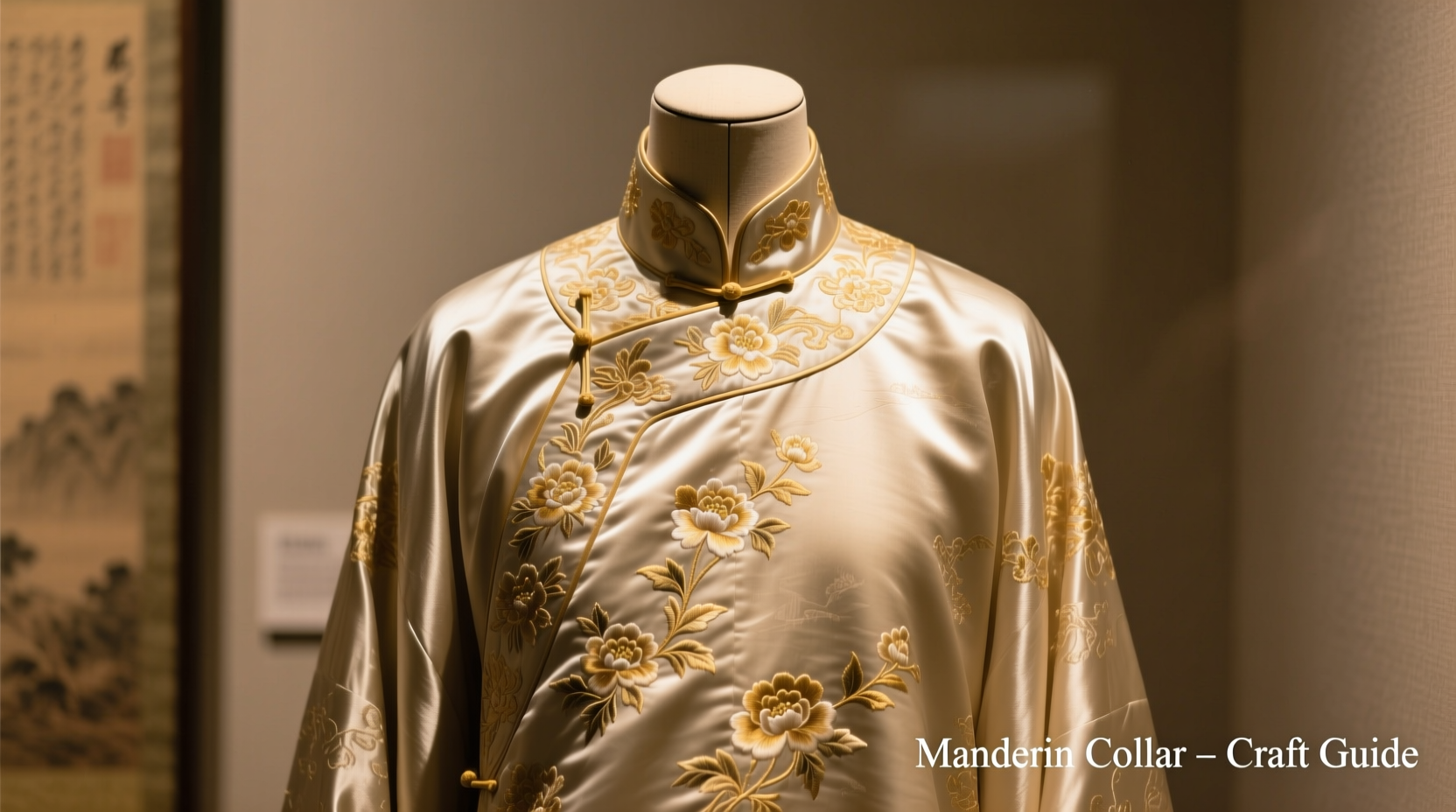
The Qipao (旗袍) represents a pivotal shift in Chinese womenswear. Originating in the 1920s in Shanghai, it blended traditional Manchu banner robes with Western 3D tailoring. The craftsmanship of a bespoke Qipao lies in its Gui (ironing and stretching) and Ba (pulling and shaping) techniques. Master tailors use heavy irons to shrink and stretch the silk along the curves of the bust and hips, minimizing the need for Western-style darts and preserving the unbroken canvas required for continuous embroidery patterns.
The hand-made Pankou (knotted buttons) are another hallmark of Qipao craftsmanship. Carved from silk-wrapped copper wire or stiffened fabric, these knots can take the shape of plum blossoms, butterflies, or swallows, requiring hours of meticulous hand-wrapping and starching.
Sourcing and Pricing: A Buyer’s Guide to Authentic Craftsmanship
Navigating the market for authentic traditional garments requires an understanding of the labor involved. Mass-produced, synthetic replicas flood e-commerce platforms, but true heritage pieces command specific price brackets based on their material and artisanal origin.
- Xiangyunsha Silk (by the yard): Authentic Gambier silk ranges from $150 to $450 USD per meter. If the fabric lacks the distinct earthy, iron-rich scent or the characteristic asymmetric two-tone coloring, it is likely chemically dyed.
- Artisanal Mamianqun: While factory-made polyester versions cost $40–$80, a genuine Ming-style skirt woven on a Jacquard loom using real silk threads and hand-set pleats will range from $250 to $600 USD.
- Bespoke Su Embroidered Qipao: Commissioning a Qipao with extensive, hand-stitched Suzhou embroidery from a master tailor in Shanghai or Suzhou starts around $2,500 USD and can easily exceed $15,000 USD for full-coverage double-sided stitching and Kesi silk bases.
- Vintage Pankou and Trims: Collectors often source deadstock 1930s Shanghai trims. Handmade vintage silk frog closures can fetch $20 to $50 per pair on specialized antique textile markets.
Preserving the Loom: Cultural Institutions and Living Heritage
The survival of these complex textile techniques relies heavily on institutional preservation and a new generation of designers who refuse to compromise on material integrity. Organizations like the Metropolitan Museum of Art's Heilbrunn Timeline of Art History document the historical evolution of these silk routes, ensuring the academic lineage of Chinese weaving is preserved.
Meanwhile, contemporary cooperatives in Suzhou and Shunde are pairing elderly master weavers with young fashion graduates, ensuring that the mud-dyed silks of the Lingnan delta and the microscopic stitches of Jiangsu continue to drape the next generation. When you invest in authentic traditional Chinese clothing, you are not merely buying a garment; you are funding the survival of a living, breathing textile ecosystem.