Chinese Dresses for Women: A Fabric & Craft Deep Dive
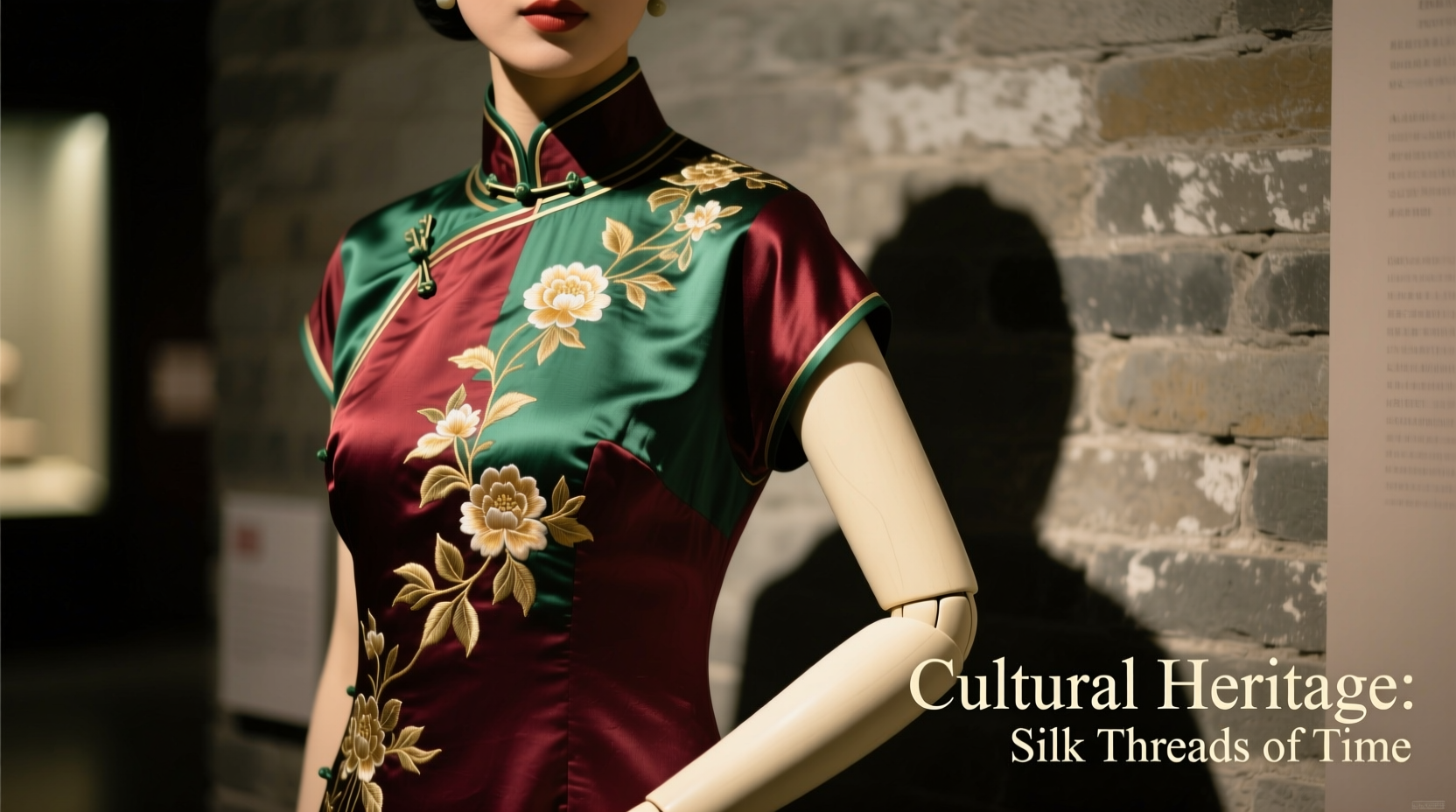
When discerning collectors and cultural enthusiasts search for authentic Chinese dresses for women, the modern market often presents a frustrating paradox. While mass-produced, polyester-blend cheongsams flood global e-commerce platforms, the true heritage of Chinese sartorial arts remains deeply rooted in centuries of complex textile engineering and artisanal craftsmanship. To understand the genuine article—whether it is a tailored 1930s-style qipao (cheongsam) or a flowing, historically accurate hanfu ensemble—one must look past the silhouette and examine the very threads that compose the garment.
The Anatomy of Authenticity: Beyond the Silhouette
The construction of traditional Chinese garments fundamentally differs from Western tailoring. Historically, Han clothing (hanfu) utilized a flat-pattern cutting method that honored the integrity of the woven cloth, avoiding darts and aggressive seam lines. The fabric was draped, pleated, and tied, allowing the textile's natural drape to dictate the garment's movement. In contrast, the modern qipao, which evolved in 1920s and 1930s Shanghai, integrated Western darting and set-in sleeves to create a form-fitting silhouette. However, even in these modernized Chinese dresses for women, the soul of the garment relies entirely on the quality of the silk and the precision of its hand-finished details.
Master Weaves: The Silk Foundation of Heritage Garments
China's sericulture heritage spans over five millennia. According to the Metropolitan Museum of Art's Heilbrunn Timeline of Art History, Chinese silk weaving evolved from simple warp-faced tabby weaves into extraordinarily complex compound structures. For high-end Chinese dresses for women, three specific heritage textiles dominate the bespoke market.
Xiangyunsha (Gambiered Guangdong Silk)
Originating from the Pearl River Delta, Xiangyunsha (香云纱) is often referred to as 'soft gold' in the textile world. It is the only silk in the world dyed using a purely botanical and mineral process. Artisans repeatedly soak mulberry silk in the tannin-rich juice of the Dioscorea cirrhosa (shuliang) tuber, then smear it with iron-rich river mud. A chemical reaction between the tannins and the iron creates a distinctive dual-toned fabric: a deep, crackled black on the face and a rich rust-brown on the reverse. Recognized by UNESCO's Intangible Cultural Heritage frameworks surrounding Chinese sericulture, Xiangyunsha is highly prized for summer qipaos due to its cooling properties, sweat resistance, and crisp, paper-like rustle.
Kesi (Cut Silk Tapestry)
Kesi (缂丝), literally translating to 'cut silk,' is a tapestry weave technique where the weft threads do not extend across the entire width of the fabric. Instead, they are woven only within the boundaries of specific color blocks, leaving microscopic slits between shapes that resemble carved negative space. Historically reserved for imperial dragon robes and high-ranking court officials, Kesi is incredibly time-consuming; a weaver may produce only a few centimeters a day. Today, it is used sparingly as accent panels or collars on luxury Chinese dresses for women.
Song Brocade (Song Jin)
Developed during the Song Dynasty (960–1279 CE), Song Jin features a complex compound weave that creates a subtle, matte-finished pattern that does not overwhelm the eye with excessive shine. Unlike the highly reflective satin brocades of later dynasties, Song Brocade offers a refined, scholarly elegance, making it a preferred choice for autumn and winter qipaos and formal Hanfu outer robes (ao).
Structured Comparison: Fabric Weight, Drape, and Best Use
Selecting the correct textile is paramount for the garment's structural integrity and cultural appropriateness. The China National Silk Museum in Hangzhou categorizes these weaves by their distinct physical properties.
| Heritage Fabric | Origin Region | Weight & Drape | Approx. Price (USD/Yard) | Best Garment Application |
|---|---|---|---|---|
| Xiangyunsha | Guangdong (Foshan) | Medium-Heavy; Crisp, structured drape | $180 - $450 | Summer Qipao, wide-leg trousers |
| Song Brocade | Jiangsu (Suzhou) | Medium; Fluid but holds pleats well | $90 - $200 | Winter Qipao, Hanfu outer robes |
| Kesi Tapestry | Jiangsu / Hebei | Heavy; Stiff, sculptural | $800 - $2,500+ | Collars, cuffs, ceremonial stoles |
| Zhangzhou Velvet | Fujian | Medium; Luxurious, light-absorbing | $120 - $250 | Evening Qipao, winter festival wear |
The Micro-Details: Artisan Embroidery and Pankou Fastenings
A genuine artisan garment is defined by its micro-details. The transition from a factory-made dress to a piece of wearable cultural art happens in the finishing techniques.
Suzhou Embroidery (Su Xiu)
When adorning Chinese dresses for women with floral or auspicious motifs, master tailors rely on Su Xiu (苏绣). This technique requires the embroiderer to split a single strand of silk thread into up to 48 microscopic filaments. Using these gossamer threads, artisans achieve photorealistic gradients and shading, particularly in motifs like the peony (symbolizing wealth) or the plum blossom (symbolizing resilience). A single hand-embroidered collar panel can take an artisan over 80 hours to complete.
The Architecture of Pankou (Frog Buttons)
The Pankou (盘扣) is the iconic knotted fastening of the qipao. Far from mere functional closures, they are structural jewelry. Traditional Pankou are hand-rolled from bias-cut strips of the dress's own silk, tightly wrapped around a core of cotton yarn or, for complex shapes, copper wire. While simple straight knots (zhi pan) are used for everyday wear, master knot-makers sculpt elaborate 'hard knots' (ying pan) into shapes like butterflies, lotus flowers, or the ruyi scepter. The tension must be mathematically perfect; too loose, and the collar gaps; too tight, and the silk warps.
Sourcing and Pricing: Navigating the Market
Understanding the pricing tiers of Chinese dresses for women is essential for buyers seeking authentic craftsmanship. The market is distinctly stratified based on textile origin and labor intensity.
- Mass-Market / Fast Fashion ($30 - $80 USD): Constructed from polyester satin or rayon blends. Features machine-stamped prints and glued, hollow Pankou. Lacks breathability and cultural provenance.
- Mid-Tier Artisan ($300 - $800 USD): Utilizes genuine mulberry silk (often crepe de chine or charmeuse) with machine-assisted embroidery. Pankou are hand-rolled but feature simple designs. Ideal for wedding guests or cultural festivals.
- Bespoke Heritage / Haute Couture ($1,500 - $10,000+ USD): Commissioned from master tailors in Shanghai, Suzhou, or Hong Kong. Incorporates heritage fabrics like Xiangyunsha or Kesi, fully hand-embroidered motifs, and custom-sculpted Pankou. These garments are treated as heirloom investments.
Cultural Protocols for Wearing and Care
Owning a heritage garment requires an understanding of yi jing (衣境)—the spiritual and respectful relationship between the wearer and the cloth. Authentic silk and mud-dyed textiles are living materials that react to their environment.
'To wear Xiangyunsha is to wear the earth and the river. It must not be treated as mere clothing, but as a landscape that rests upon the skin.' — Master Weaver of the Pearl River Delta Cooperative.
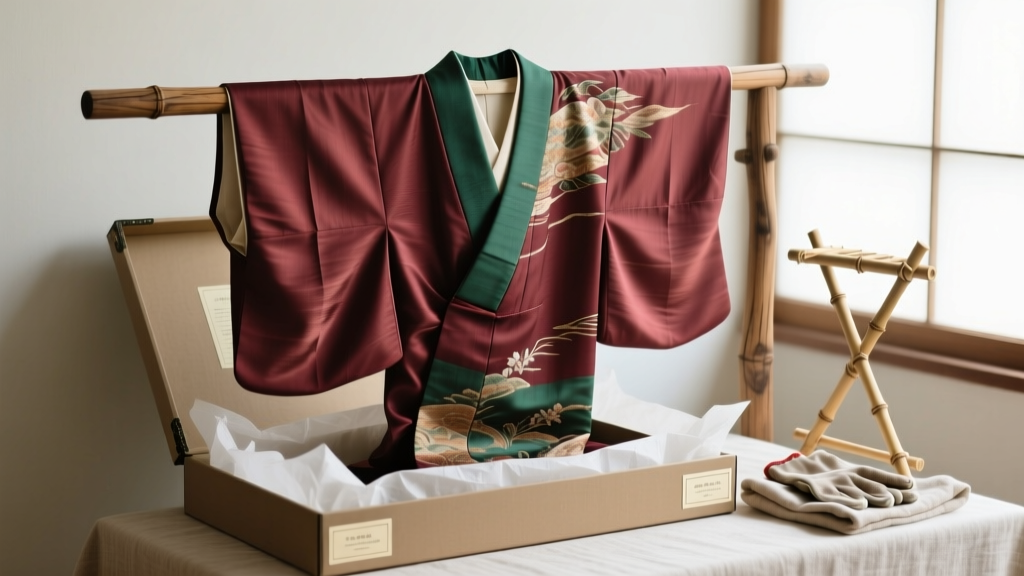
For preservation, these dresses must never be placed on wire hangers, which will permanently distort the bias-cut silk and crush the delicate Pankou knots. Garments should be stuffed with acid-free tissue paper to maintain their three-dimensional volume and stored flat in breathable cotton garment bags. Xiangyunsha, in particular, requires a unique care protocol: it should be hand-washed gently in cool water without alkaline detergents, and dried in the shade. Interestingly, Xiangyunsha is one of the few silks that softens and gains a richer patina with age and wear, making the garment a true chronological record of the woman who wears it.
By prioritizing heritage textiles and artisanal construction over fast-fashion silhouettes, collectors ensure that the profound legacy of Chinese sartorial arts continues to thrive in the modern wardrobe.