Chinese Men's Costumes: Hanfu, Changshan & Tang Suits

Decoding the Traditional Chinese Costume Men Choose Today
The landscape of men's traditional Chinese clothing is vast, spanning thousands of years of dynastic shifts, ethnic integrations, and modern revivals. When searching for the ideal traditional Chinese costume men can wear for cultural festivals, weddings, or daily heritage practice, buyers are generally met with three distinct categories: the ancient, flowing lines of Hanfu, the structured, Qing-era elegance of the Changshan, and the contemporary, festive fusion of the Tang Suit (Tangzhuang). Understanding the structural, historical, and cultural differences between these garments is essential for anyone looking to invest in authentic menswear that respects the profound legacy of Chinese textile arts.
This comprehensive guide compares these three primary styles, breaking down their unique construction techniques, appropriate occasions, and the cultural protocols that govern how they must be worn.
Hanfu: The Ancient Roots of Men's Chinese Dress
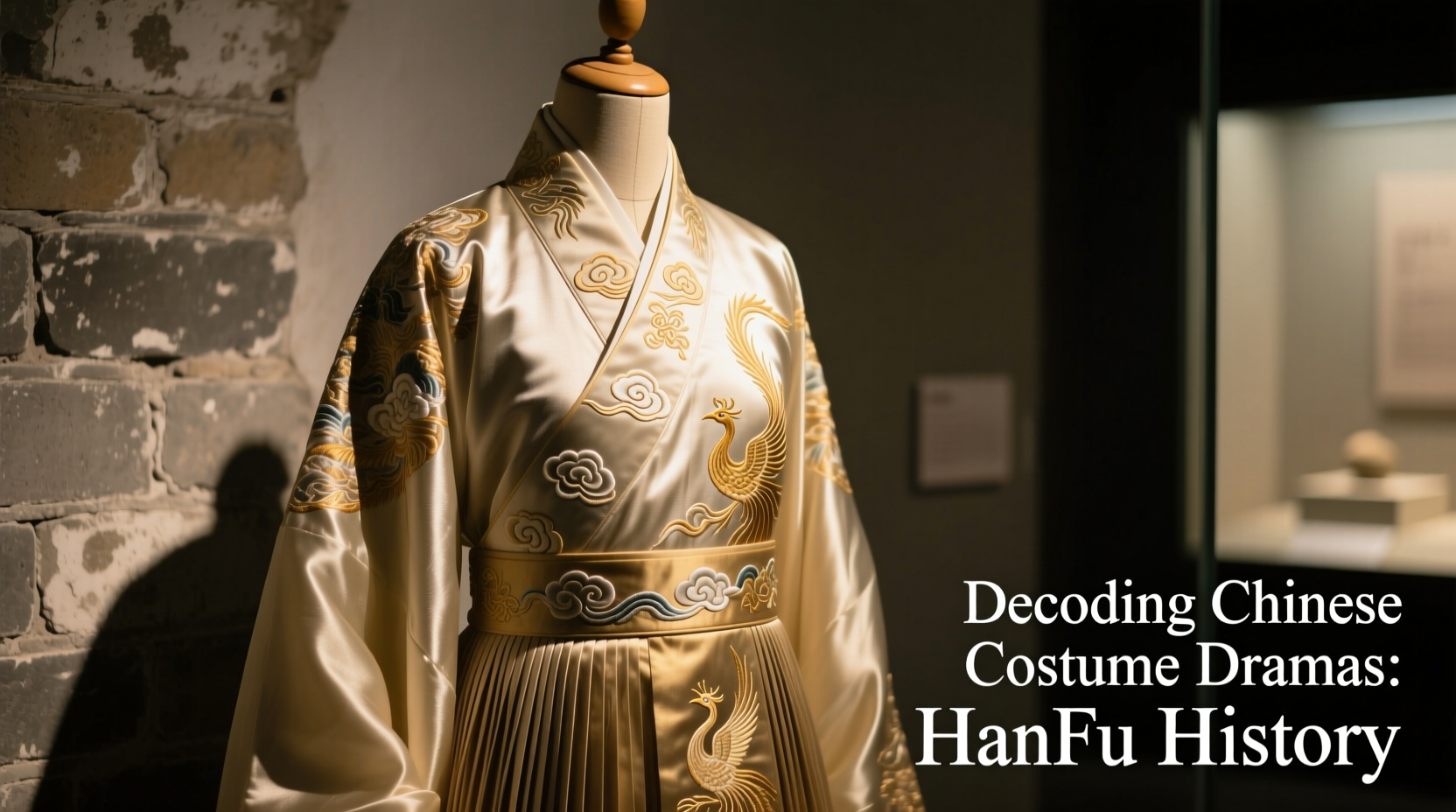
Hanfu refers to the historical clothing system of the Han Chinese, with origins tracing back over three millennia to the Huangdi and Yao eras, evolving significantly through the Han, Tang, Song, and Ming dynasties. For men, the Hanfu movement has sparked a massive revival, shifting the garment from museum exhibits to streetwear.
The Shenyi and Daopao: Core Silhouettes
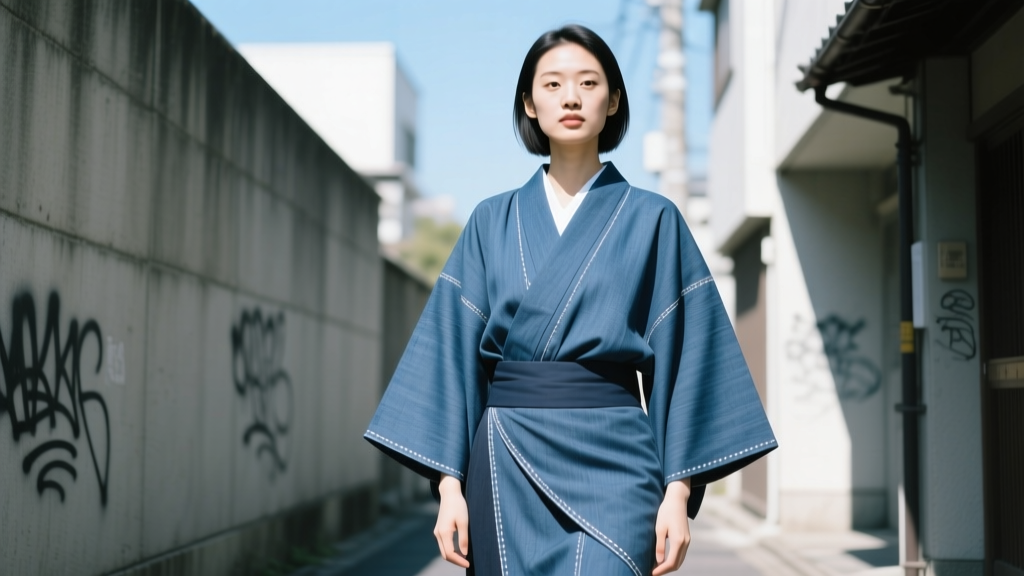
The most iconic men's Hanfu silhouettes are the Shenyi (deep robe) and the Daopao (scholar's robe). The defining characteristic of authentic Hanfu is the jiaoling youren (cross-collar, right lapel). The left side of the collar crosses over the right, forming a 'y' shape at the neck. This is not merely an aesthetic choice but a profound philosophical statement reflecting the ancient Chinese reverence for the left as the side of life and yang energy.
The Daopao, popularized during the Ming Dynasty, features wide sleeves and side slits that reveal an internal pendulum structure known as an anbai. This hidden fabric panel ensures modesty and maintains the garment's dignified drape when walking or riding. According to the Metropolitan Museum of Art's Heilbrunn Timeline, these robes were historically woven from high-grade mulberry silk for the elite, while scholars and commoners utilized ramie and hemp.
Changshan and Magua: The Qing Dynasty Legacy
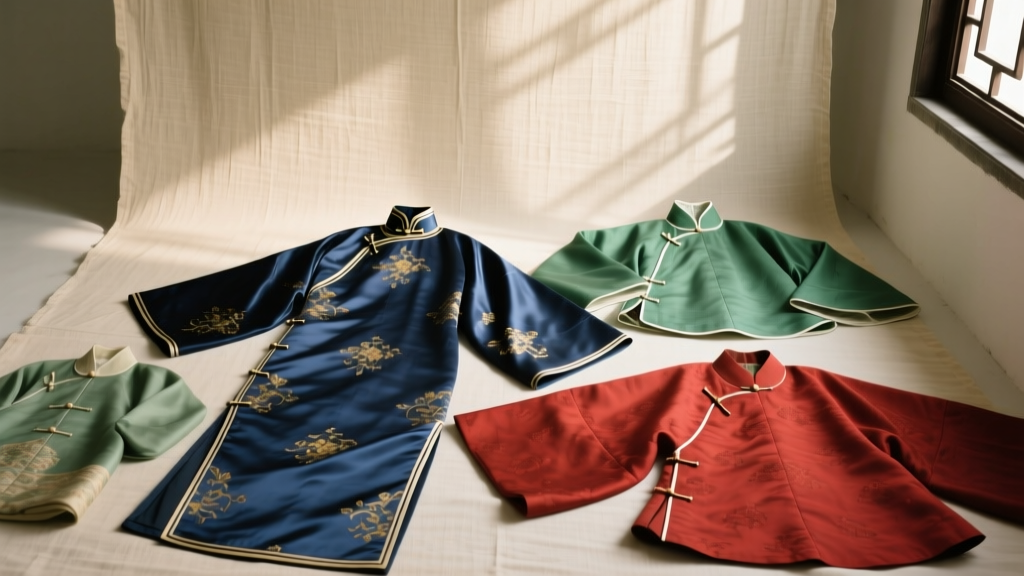
Following the Manchu conquest in 1644, the Qing Dynasty mandated a shift in menswear, introducing the Changshan (long robe) and the Magua (riding jacket). Unlike the wide-sleeved, cross-collared Hanfu, the Changshan features a high Mandarin collar, a right-side opening, and narrow sleeves designed for equestrian mobility and cold northern climates.
The Art of the Pankou
Instead of silk sashes or hidden ties, the Changshan and Magua rely on Pankou (frog buttons). These intricate, hand-knotted fasteners are crafted from bias-cut silk cords and serve as both functional closures and decorative elements. A formal men's Changshan might feature five to seven Pankou running from the collar down the right side and across the chest. The Victoria and Albert Museum's Asian Collections houses exquisite 19th-century examples of these garments, highlighting the heavy brocades and subtle tonal embroidery favored by Qing officials and wealthy merchants.
The Modern Tang Suit (Tangzhuang): A Contemporary Fusion
Despite its name, the modern Tang Suit does not originate from the Tang Dynasty (618–907 AD). It is a 21st-century hybrid garment that merges the traditional Manchu Magua jacket with Western 3D tailoring techniques. The Tangzhuang gained global prominence during the 2001 APEC Summit in Shanghai, where world leaders were photographed wearing matching silk brocade jackets.
Structural Innovations
What separates the Tangzhuang from its historical predecessor is the introduction of Western darts, set-in sleeves, and structured shoulder pads. This gives the jacket a boxier, more imposing silhouette that appeals to modern sensibilities while retaining the Mandarin collar and traditional Pankou fastenings. It is predominantly worn during the Lunar New Year, weddings, and by elder statesmen during formal cultural ceremonies.
Comparative Analysis: Fabrics, Construction, and Occasions
To select the correct garment, one must understand how fabric weight and construction dictate the garment's use. Below is a comparative breakdown of the three primary styles.
| Garment Type | Historical Era / Origin | Collar & Fastening | Primary Fabrics | Best Suited Occasions |
|---|---|---|---|---|
| Hanfu (Daopao/Shenyi) | Pre-Qing (Han to Ming) | Cross-collar, hidden ties | Raw silk, linen, jacquard | Cultural festivals, tea ceremonies, Hanfu movement events |
| Changshan & Magua | Qing Dynasty (1644-1912) | Mandarin collar, Pankou | Heavy silk brocade, wool | Traditional weddings, formal ancestral worship, martial arts |
| Tang Suit (Tangzhuang) | Modern (Post-2001) | Mandarin collar, Pankou | Satin, synthetic blends, cotton | Lunar New Year, casual cultural gatherings, elder gifting |
Sourcing and Pricing: What to Expect When Buying
The market for men's Chinese traditional clothing ranges from mass-produced synthetic costumes to bespoke, hand-loomed masterpieces. When budgeting for these garments, consider the following price tiers (estimated in USD):
- Entry-Level / Mass Market ($40 - $90): Typically found on global e-commerce platforms. These Tangzhuang and basic Hanfu sets are often made from polyester blends or artificial silk. They are suitable for one-off costume parties or casual Lunar New Year wear but lack breathability and historical accuracy.
- Mid-Tier / Artisan Ready-to-Wear ($120 - $350): Sourced from specialized heritage brands in hubs like Suzhou (for silk) and Guangzhou (for cotton/linen Hanfu). At this price, buyers receive genuine mulberry silk, authentic hand-tied Pankou, and historically accurate patterning, such as the anbai pendulum in a Daopao.
- Bespoke / Couture ($500 - $1,500+): Commissioned directly from master tailors or heritage ateliers. This tier includes custom-woven brocades (like the famous Nanjing Yunjin), hand-embroidered motifs using gold and silver threads, and precise bodily measurements. The Palace Museum in Beijing frequently collaborates with such ateliers to replicate imperial menswear techniques for high-end collectors.
Cultural Protocols: Wearing Chinese Menswear with Respect
Wearing traditional garments requires adherence to specific cultural protocols to avoid causing offense or inviting bad luck.
The Rule of the Lapel: Life vs. Death
The most critical rule in Hanfu and traditional Chinese dress is the direction of the collar. Zuo You (left over right) is the only acceptable configuration for the living. Wrapping the right side over the left (Zuo Ren) is strictly reserved for dressing the deceased for burial. Wearing a right-over-left collar in public is considered deeply inauspicious and a profound cultural faux pas.
Color Symbolism and Motifs
Color dictates the occasion. Crimson and gold are reserved for joyous events like weddings and the Spring Festival. Conversely, unadorned white or stark black-and-white combinations are historically associated with mourning and funerals. When selecting embroidery, men's garments traditionally feature the dragon (symbolizing imperial power and yang energy), the crane (longevity), or the bamboo (resilience and scholarly integrity), rather than the floral motifs typically reserved for womenswear.
By understanding the deep historical roots, structural nuances, and cultural weight of these garments, men can confidently navigate the world of traditional Chinese clothing, honoring a textile heritage that has shaped Asian aesthetics for millennia.