Decoding Symbolism When Buying Chinese Clothing Online
When you search for Chinese clothing online, you are immediately met with a dazzling array of silk, brocade, and intricate embroidery. Yet, to view these garments merely as aesthetic fashion items is to miss the profound cultural encyclopedia woven into every thread. Traditional Chinese dress—from the flowing lines of Hanfu to the structured elegance of the Qipao—operates on a complex system of semiotics. Colors, motifs, and even the direction of a collar fold carry millennia of philosophical, cosmological, and social meaning.
As global interest in Asian heritage garments grows, understanding this symbolism is crucial. It ensures cultural respect, prevents embarrassing faux pas, and helps you distinguish between authentic artisanal heritage and mass-produced, culturally inaccurate fast fashion. This guide decodes the hidden meanings you must know when evaluating Chinese clothing online, ensuring your purchase honors the living traditions it represents.
The Hidden Language of Colors
In traditional Chinese culture, color is not merely a design choice; it is deeply tied to the Wu Xing (Five Elements) theory and social hierarchy. When browsing e-commerce listings, understanding color context prevents severe cultural missteps—such as accidentally purchasing mourning attire for a wedding.
| Color | Cultural Meaning & Element | Appropriate Occasions | Online Shopping Caution |
|---|---|---|---|
| Red (Hong) | Fire, joy, vitality, luck | Weddings, Lunar New Year, festivals | Universally safe for celebrations; avoid overly dark, blood-red shades for joyous events. |
| White (Bai) | Metal, purity, but primarily mourning | Funerals, ancestral remembrance | Never buy a traditional white garment for a wedding. In modern contexts, white is accepted, but traditional white robes signify death. |
| Yellow (Huang) | Earth, imperial power, centrality | Historically reserved for the Emperor | Today, anyone can wear yellow, but bright imperial yellow on historical replica Hanfu denotes royalty. |
| Black (Hei) | Water, solemnity, scholarly pursuit | Daily wear, academic settings, Hanfu outer layers | A highly respected, elegant color in Hanfu, often paired with deep red or blue inner layers. |
| Green (Lv) | Wood, spring, harmony, growth | Spring festivals, youth, daily wear | Historically associated with lower social ranks in certain dynasties, but now universally auspicious. |
A Buyer's Guide to Auspicious Motifs
Mass-market retailers often slap generic 'Asian-inspired' patterns onto synthetic fabrics. Authentic heritage garments, however, utilize specific motifs to convey blessings, status, and philosophical ideals. According to the Victoria and Albert Museum's Chinese textile archives, these motifs were historically regulated by sumptuary laws and remain vital to cultural expression today.
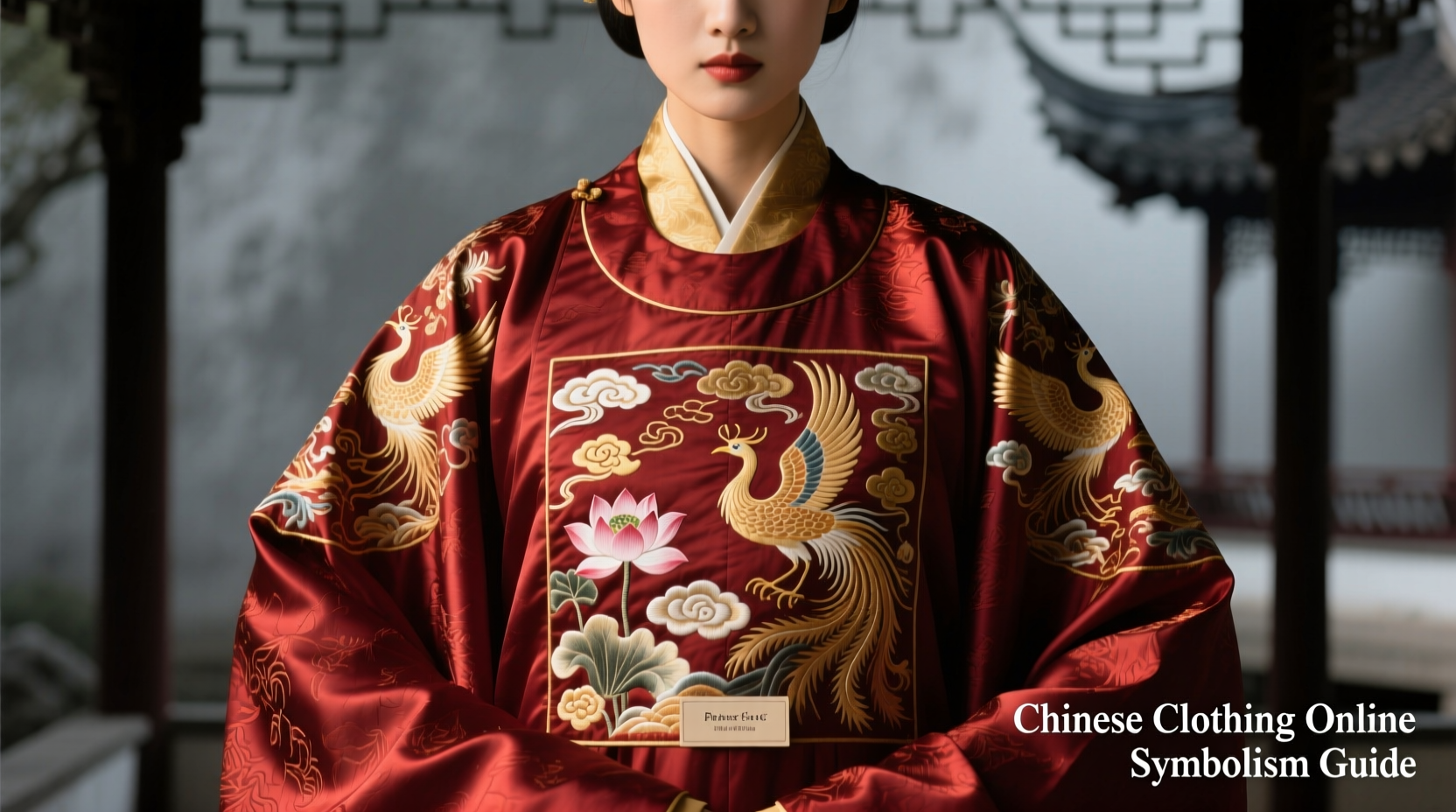
- The Dragon (Long) & Phoenix (Fenghuang): Representing Yang and Yin respectively, this pairing symbolizes marital harmony and imperial balance. When shopping for a wedding Qipao or Cheongsam online, look for the dragon and phoenix intertwined. A dragon alone traditionally denotes male power or imperial authority.
- The Peony (Mudan): Known as the 'King of Flowers,' the peony symbolizes wealth, honor, and prosperity. It is a staple on garments meant for festive gatherings and older matriarchs.
- The Bat (Fu): A visual pun, as the word for bat sounds identical to the word for 'good fortune.' A motif featuring five bats represents the Wu Fu (Five Blessings): longevity, wealth, health, virtue, and a natural death.
- The Crane (He): Symbolizing longevity and high scholarly status. Cranes amidst pine trees or clouds are common on garments intended for elders or academics.
- Rank Badges (Buzi): Originating in the Ming (1368–1644) and Qing (1636–1912) dynasties, these square patches on official robes denoted civil or military rank via specific birds or beasts. Today, they are replicated on high-end historical Hanfu and Tang suits as a mark of sartorial prestige.
Garment-Specific Semiotics: The Cut and Construction
Beyond surface decoration, the very architecture of Chinese clothing carries meaning. When evaluating product photos online, pay close attention to these structural details.
Hanfu (汉服): Cosmology in the Silhouette
The Hanfu movement has revitalized interest in pre-Qing Han Chinese dress. A critical element to verify when buying Hanfu online is the collar direction. Traditional Hanfu strictly adheres to You Ren (右衽)—the left side of the collar crosses over the right, forming a 'y' shape. Warning: The reverse (Zuo Ren, left over right) is exclusively used to dress the deceased for burial. If an online vendor's photos show Zuo Ren, you are looking at either a costume-grade prop or a culturally ignorant manufacturer.
Furthermore, the traditional Hanfu silhouette reflects the ancient cosmological concept of Tian Yuan Di Fang (Heaven is round, Earth is square). This is seen in the circular cuffs of the sleeves and the square, structured panels of the lower skirt.
Qipao (旗袍): The Architecture of Frog Fastenings
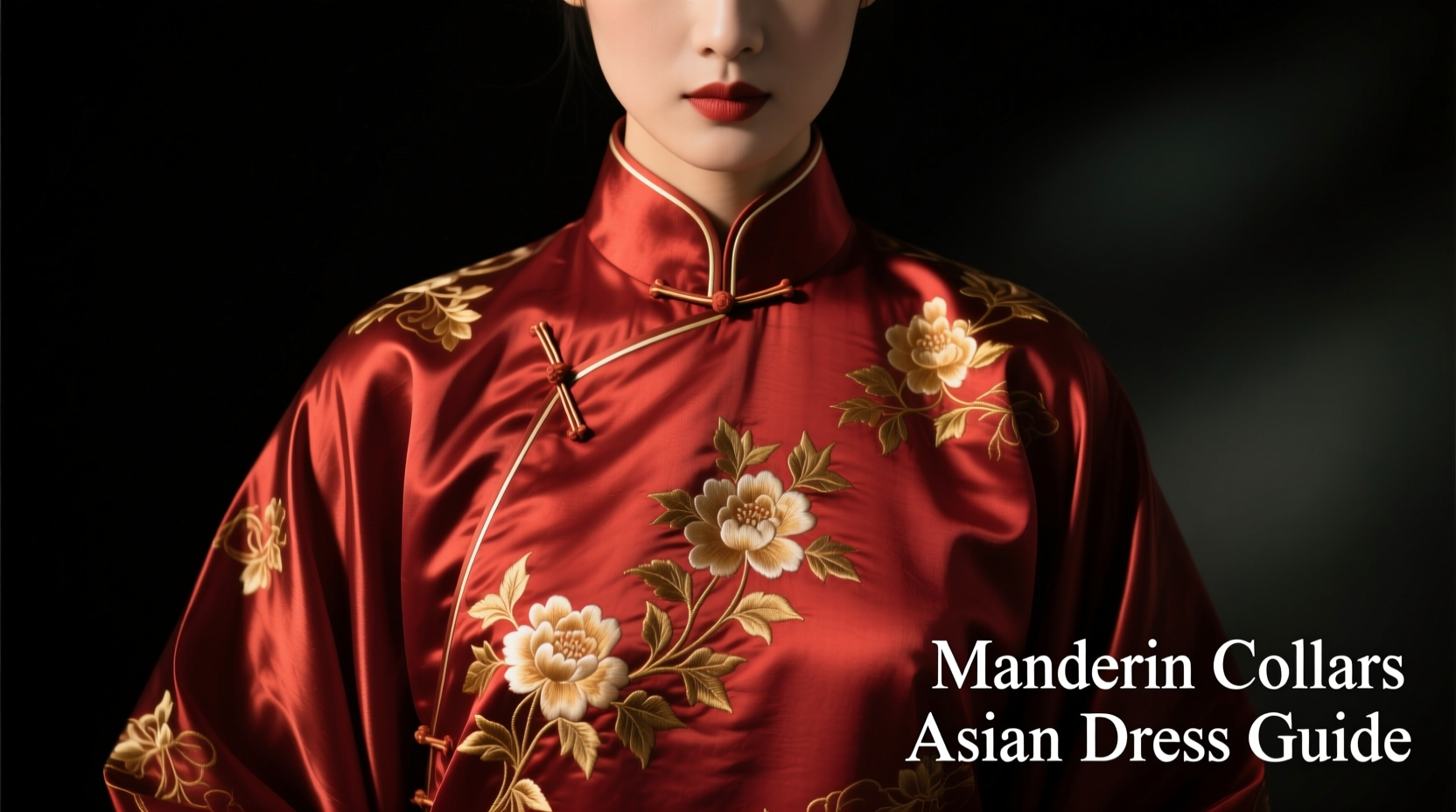
The Qipao (or Cheongsam) evolved in 1920s Shanghai as a symbol of modern female emancipation, blending Manchu tailoring with Western silhouettes. The Pan Kou (frog fastenings) are not just functional buttons; they are symbolic knots. Artisans craft these knots into shapes like plum blossoms (resilience in winter), butterflies (romance), or the Pan Chang (endless knot, symbolizing longevity and eternity). High-end online boutiques will detail the hand-knotting process of these fastenings, whereas fast-fashion sites will use machine-stamped plastic imitations.
Fabric, Embroidery, and the Price of Authenticity
Understanding symbolism also requires understanding the medium. The China Silk Museum in Hangzhou highlights the profound heritage of regional silk weaving and embroidery, which directly impacts the price and authenticity of garments found online.
'True Suzhou embroidery (Su Xiu) requires splitting a single silk thread into up to 48 finer strands to achieve the photorealistic shading of a koi fish or peony. It is a meditation in thread, taking hundreds of hours for a single garment.'
— Master Artisan of the Suzhou Embroidery Research Institute
When shopping for Chinese clothing online, use this pricing and material framework to gauge authenticity:
- Tier 1: Fast Fashion / Costume ($20 - $60 USD): Made of polyester or nylon blends. Motifs are machine-printed or poorly embroidered with thick rayon thread. Collar directions may be incorrect. Suitable for casual cosplay, but lacks cultural depth.
- Tier 2: Mid-Range Commercial Heritage ($150 - $400 USD): Often crafted from real mulberry silk or high-quality cotton/linen blends. Features genuine, albeit simple, hand-embroidered motifs and accurate You Ren construction. Ideal for cultural festivals and weddings.
- Tier 3: Artisanal / Bespoke ($800 - $3,000+ USD): Utilizes heritage fabrics like Zhangzhou velvet or Song brocade. Features authentic Su Xiu (Suzhou embroidery) or Shu Xiu (Sichuan embroidery). These are investment pieces, often requiring direct communication with ateliers via platforms like Etsy, specialized heritage boutiques, or direct-to-artisan sites.
Practical Framework: Vetting Authenticity in E-Commerce
To ensure your purchase respects the cultural weight of these garments, apply this vetting checklist before adding an item to your cart:
- Check the Collar: Zoom in on the model's neckline. Is it You Ren (left over right)? If not, abandon the listing.
- Read the Motif Descriptions: Does the seller explain the meaning of the embroidery? Heritage sellers will proudly detail the symbolism of the 'Three Friends of Winter' (pine, bamboo, plum) or the 'Lotus and Fish' (abundance).
- Verify the Fiber Content: Look for 100% Mulberry Silk, Xiangyunsha (a heritage dyed silk from Guangdong), or Ramie. Avoid listings that vaguely state 'silk blend' without percentages.
- Consult Historical Archives: Cross-reference the garment's silhouette with authoritative sources like the Metropolitan Museum of Art's Heilbrunn Timeline of Art History to ensure the historical era claimed by the seller matches the cut and sleeve shape.
Conclusion: Wearing Heritage with Respect
The digital marketplace has democratized access to some of the world's most beautiful textile traditions. However, buying Chinese clothing online should be an act of cultural appreciation, not mere consumption. By learning to read the language of colors, respecting the cosmology of the cut, and investing in authentic craftsmanship, you transform your wardrobe into a living canvas of Asian heritage. Whether you are donning a Ming-style Mamianqun (horse-face skirt) or a meticulously tailored silk Qipao, you are wearing a story that has survived centuries—ensure you are telling it correctly.