Chinese Clothing: Regional Substyles Guide

Beyond the Dynastic Timeline: The Geography of Chinese Dress
When studying chinese clothing evolution, historians and enthusiasts often default to a monolithic dynastic timeline—moving neatly from the flowing sleeves of the Han to the structured collars of the Ming. However, this top-down historical view obscures the vibrant, localized reality of garment making. True Chinese sartorial evolution is deeply geographical. Regional micro-climates, indigenous weaving hubs, and ethnic cross-pollination have historically dictated the cut, drape, and material of traditional garments just as much as imperial edicts. To understand the living traditions of Hanfu, Aoqun, and the Qipao, we must examine the regional substyles that define them.
The North-South Divide in Early Hanfu Silhouettes
The foundational silhouette of early Hanfu—the Ruqun (襦裙), consisting of a top jacket and a wrap-around skirt—diverged sharply based on the climatic demands of Northern versus Southern China. In the frigid Northern plains, the evolution of the Ru (jacket) favored the Ao (袄), a padded, lined jacket with tighter cuffs to retain body heat. Northern substyles frequently incorporated heavier hemp-wool blends and layered multiple unlined undergarments (Zhongyi).
Conversely, the humid, subtropical South drove a different evolutionary path. Southern Hanfu substyles favored the Shan (衫), an unlined, lightweight shirt woven from sheer silks like Luo (gauze) or fine ramie. The Southern aesthetic prioritized breathability and fluid draping, resulting in wider, more open sleeves and higher waistlines on the skirt to allow for air circulation. This North-South material divide laid the groundwork for centuries of regional textile specialization.
Ming Dynasty Textile Hubs and Regional Substyles
The Ming Dynasty (1368–1644) marked a critical inflection point in chinese clothing evolution, characterized by the rise of highly specialized regional weaving hubs. The silhouette of a Ming Aoqun (袄裙 - jacket and skirt) was entirely dependent on the province in which its fabric was woven. According to the Victoria and Albert Museum's Asian textile archives, local loom technologies created distinct regional 'hands' (the drape and feel) of the fabric, which in turn dictated local tailoring substyles.
The Three Great Brocades: A Material Comparison
| Brocade Type | Origin Hub | Weave Characteristics | Historical & Regional Use | Modern Revival Price (USD) |
|---|---|---|---|---|
| Yunjin (Cloud Brocade) | Nanjing | Heavy, complex metallic threads, integration of peacock feathers | Imperial dragon robes, Northern court nobility, stiff structured collars | $400 - $1,200 / meter |
| Songjin (Song Brocade) | Suzhou | Structured, geometric patterns, matte finish, softer drape | Scholar class, mounting scrolls, formal Southern Hanfu, Aoqun jackets | $150 - $400 / meter |
| Shujin (Shu Brocade) | Sichuan | Vibrant natural dyes, highly durable warp-faced weave | Southwestern trade routes, regional aristocracy, heavy winter skirts | $100 - $300 / meter |
The stiff, heavy drape of Nanjing Yunjin required Northern tailors to use wider seam allowances and rigid collars, whereas the softer Suzhou Songjin allowed Southern tailors to experiment with pleated skirts (Mamianqun) that required fluid, cascading folds.
The Qipao Divergence: Haipai vs. Cantonese Tailoring
No discussion of regional substyles is complete without analyzing the 20th-century evolution of the Qipao (Cheongsam). While globally recognized as a singular garment, the Qipao actually splintered into two distinct regional tailoring philosophies during the 1920s and 1930s: the Shanghai Haipai (海派) and the Cantonese/Guangzhou substyle.
Shanghai Haipai: The Sculpted Silhouette
Shanghai tailors, influenced by Western sartorial techniques arriving through international concessions, revolutionized the Qipao by introducing 3D darting, set-in sleeves, and a high, stiffened collar (Yuanling). The Haipai Qipao was designed to sculpt the body, utilizing heavy silks and velvets suited for Shanghai's distinct four-season climate. Today, sourcing a bespoke Haipai Qipao from a heritage master tailor in Shanghai's former French Concession will cost between $1,500 and $4,500 USD, reflecting the intensive hand-stitching and custom pattern drafting required.
Cantonese Substyle: Climate-Responsive Fluidity
In contrast, the Cantonese Qipao evolved to accommodate the sweltering, year-round humidity of Guangdong and Hong Kong. Cantonese tailors eschewed the restrictive, high stiffened collar in favor of lower, softer collars or mandarin collars with a deeper V-opening. The silhouette was intentionally cut looser, with a dropped waist and wider sleeves to promote airflow. Furthermore, Cantonese tailors heavily utilized Xiangyunsha (香云纱)—a unique regional silk dyed with persimmon juice and coated in iron-rich river mud. This fabric is naturally cooling, water-resistant, and develops a beautiful patina over time. Authentic Guangdong Xiangyunsha retails for $150 to $300 USD per meter and remains a hallmark of high-end Southern Qipao construction.
The Aoqun System: Manchu and Han Cross-Pollination
The Qing Dynasty (1644–1912) introduced the infamous 'Tifa Yifu' edict, forcing Han Chinese men to adopt Manchu dress and hairstyles. However, Han women were largely exempt from this mandate, leading to a fascinating evolutionary substyle known as the Aoqun system. As documented by the Metropolitan Museum of Art's Heilbrunn Timeline, Han women retained their Ming-style jackets and skirts but gradually incorporated Manchu decorative elements.
This regional cross-pollination birthed the Jianbian (镶边) substyle—an intricate technique of applying multi-layered, contrasting piping and embroidered borders to the cuffs, hem, and collar of the Han jacket. In the wealthy Southern trade hubs like Guangzhou, these borders featured imported metallic threads and Western-influenced floral motifs, whereas Northern Jianbian favored heavier, geometric brocade trims suited for winter layering.
'The evolution of Chinese dress is not a single river, but a delta. To understand the silhouette of a Ming dynasty Aoqun or a Republican-era Qipao, one must look at the loom, the local climate, and the ethnic cross-pollination of the province in which it was born.' — Curatorial synthesis on regional Asian textiles.
Collector’s Guide: Sourcing Regional Garments Today
For collectors, historians, and modern practitioners of the Hanfu revival movement, understanding these regional substyles is critical for authentic sourcing. The modern market is flooded with mass-produced 'ancient style' (Gufeng) garments made from synthetic polyester, which ignore historical regional tailoring entirely. To build an authentic wardrobe or collection, follow these actionable guidelines:
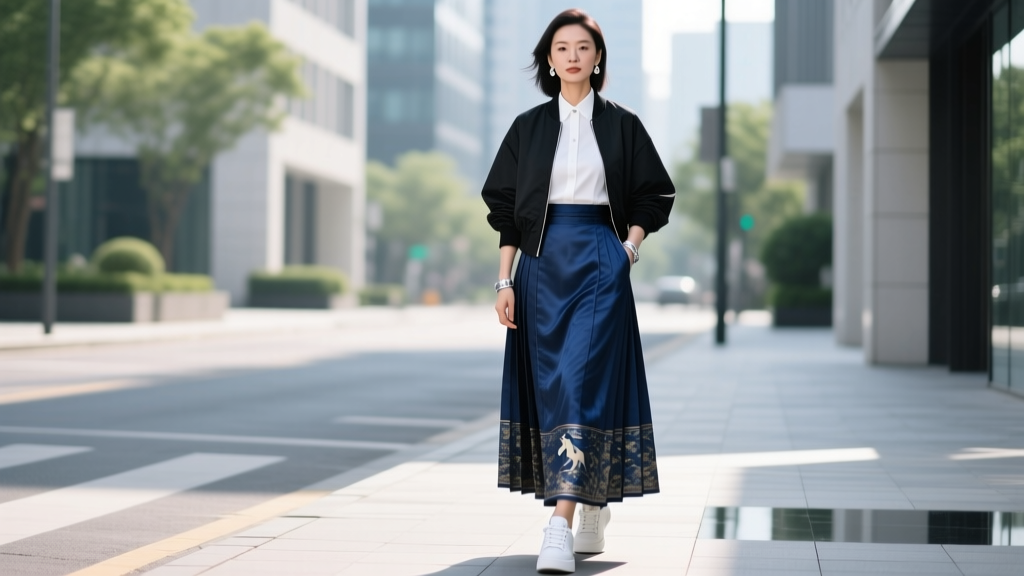
- Verify the Weave Origin: If purchasing a Ming-style Mamianqun (pleated skirt), check the fabric weight. Authentic Suzhou-style substyles should use medium-weight silks with a matte finish, while modern fast-fashion replicas often use slippery, lightweight synthetic satin that fails to hold the structural pleats.
- Invest in Regional Silks: Seek out authentic Xiangyunsha from Guangdong for summer Qipao or Hanfu. The mud-coating process gives the fabric a distinct rustling sound (often called 'singing silk') and a subtle, earthy scent that synthetic dyes cannot replicate.
- Assess Collar Construction: When buying a Republican-era vintage Qipao, examine the collar band. A true Shanghai Haipai piece will feature a stiffened, inner buckram or rice-paste lining to maintain the high collar's shape, whereas Southern or later Hong Kong variants will feature soft, unlined collars.
- Antique Market Pricing: Authentic, museum-quality late Qing Aoqun jackets with multi-layered Jianbian embroidery typically range from $2,000 to $8,000 USD at specialized Asian textile auctions, depending on the condition of the silk and the complexity of the regional stitch work.
By shifting our focus from imperial decrees to regional looms and local climates, the true richness of Chinese clothing evolution reveals itself. It is a testament to the adaptability and ingenuity of regional artisans who shaped fabric to fit both the land and the culture.