Chinese Traditional Candy Aesthetics: Styling Hanfu & Qipao

The Sweet Intersection: Culinary Heritage and Sartorial Art
In the rich tapestry of Chinese material culture, the boundaries between culinary arts and sartorial expression frequently blur. While most fashion encyclopedias focus solely on textiles, a deeper understanding of Chinese aesthetic philosophy reveals that visual inspiration often stems from everyday cultural touchstones—including food. Today, the visual language of chinese traditional candy has transcended the palate to heavily influence modern Hanfu and Qipao styling. From the vibrant, translucent hues of street-side sweets to the intricate, thread-like structures of pulled sugar, these culinary artifacts offer a unique framework for color theory, motif selection, and practical festival styling.
For the modern wearer, integrating these 'sweet' aesthetics requires a nuanced understanding of historical garment construction, regional textile techniques, and the practical realities of attending traditional festivals. This guide explores how to translate the beloved visuals of Chinese confectionery into sophisticated, culturally respectful garment styling.
Decoding the 'Tanghulu' Palette in Ming Dynasty Revivals
No item of chinese traditional candy is more visually iconic than Tanghulu (糖葫芦)—skewered hawthorn berries encased in a hardened, translucent maltose glaze. The striking contrast between the deep, tart crimson of the fruit and the glass-like amber of the sugar has birthed a specific color palette in modern Hanfu design, often referred to as shanhuse (coral-red) and hupose (amber).
Layering with Luo (Gauze) Silk
To replicate the visual effect of the Tanghulu sugar glaze, contemporary Hanfu stylists utilize luo (罗), a traditional Chinese gauze weaving technique characterized by its sheer, breathable, and slightly textured surface. According to the China National Silk Museum, luo weaving dates back over 3,000 years and was historically prized for summer garments due to its ventilated structure.
- The Base Layer: A Ming Dynasty-style ao (jacket) in a saturated shanhu hong (coral red) mulberry silk, featuring traditional pipa (lute-shaped) sleeves.
- The Glaze Layer: A sheer, amber-tinted luo silk beizi (cloak) or bijia (sleeveless vest) worn over the jacket. The translucent overlay mimics the hardened sugar shell, creating a dynamic interplay of light and color that shifts as the wearer moves.
This layering technique not only achieves the 'candy' aesthetic but also adheres to historical Ming Dynasty layering protocols, where sheer outer garments were used to temper the brightness of inner silks, creating a sense of refined elegance.
Dragon's Beard Candy and Song Dynasty Minimalism
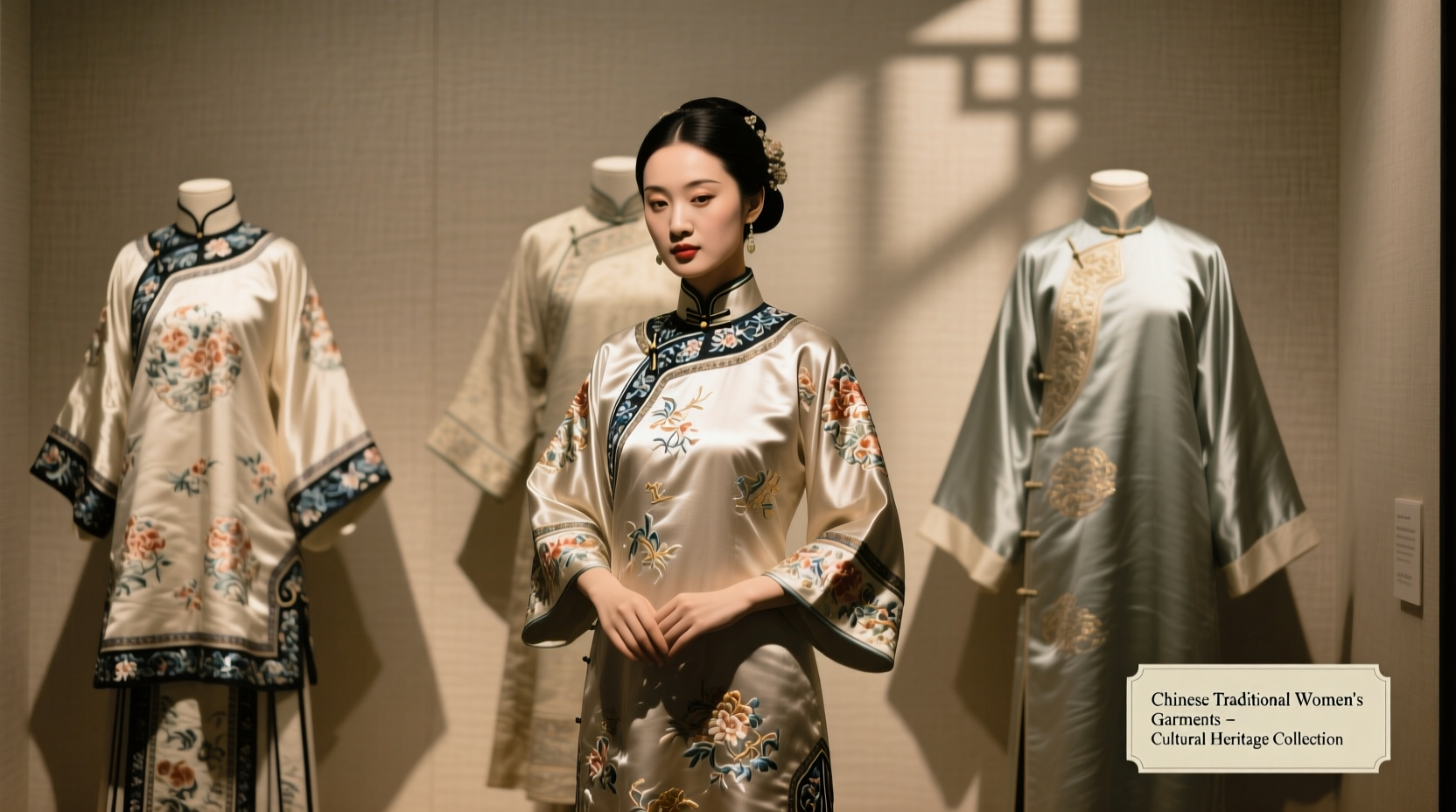
Longxutang, or Dragon's Beard candy, is a marvel of culinary engineering, consisting of maltose pulled into thousands of microscopically fine, silvery threads. This aesthetic of delicate, linear fragility translates beautifully into the minimalist, intellectual styling of Song Dynasty Hanfu and the intricate embroidery of Republican-era Qipao.
Silver Threadwork and Fringe
In modern Qipao styling, the 'Dragon's Beard' aesthetic is achieved through panjin (coiled gold/silver) embroidery and delicate fringe work. Artisans use metallic silver threads to create linear, geometric patterns on dark navy or charcoal silk crepe, mimicking the pulled sugar threads. For Hanfu, this translates to the songku (Song-style trousers) and beizi featuring subtle, high-twist silver yarns woven directly into the fabric, catching the light with a subtle, icy sheen reminiscent of the candy's powdered exterior.
Practical Festival Styling: Navigating the Temple Fair
The true test of any traditional garment is its wearability in its native cultural environment. The Miaohui (Temple Fair) is the primary venue where chinese traditional candy like Sugar Paintings (tanghua) and sticky maltose treats are consumed. Navigating crowded, food-heavy festivals in flowing Hanfu requires strategic styling and historical utility.
The Art of Panbo (Sleeve Ties)
Wide, sweeping sleeves are a hallmark of traditional Hanfu, but they are a liability around sticky street food. The historical solution is the panbo (襻膊), a functional cord used since the Song Dynasty to tie back wide sleeves during labor or cooking. Modern Hanfu enthusiasts have revived the panbo as a stylish, practical accessory for festival wear. By looping a braided silk cord across the shoulders and under the arms, the wide sleeves are elegantly secured, keeping them far away from dripping sugar and hot syrup.
Managing the Mamianqun (Horse-Face Skirt)
The mamianqun features deep, structured pleats that can easily dip into low food stalls or brush against crowded tables. For Temple Fair styling, consider the following practical adjustments:
- Length Adjustment: Opt for a modernized, mid-calf length mamianqun rather than the traditional floor-sweeping length. This preserves the structural integrity of the pleats while preventing the hem from dragging through spilled syrup or crowded pathways.
- Fabric Composition: While 100% mulberry silk is luxurious, it is highly susceptible to water and sugar stains. For festival wear, select a high-quality silk-polyester blend (e.g., 30% silk, 70% polyester). These blends maintain the drape and luster of silk but offer stain resistance and machine-washability, crucial for recovering from accidental encounters with sticky candies.
Motif & Accessory Guide: From White Rabbit to Sugar Paintings
Beyond color and texture, specific candies inspire distinct motifs and accessory pairings. The following table outlines how to translate iconic Chinese sweets into cohesive garment and accessory ensembles.
| Candy Inspiration | Visual Characteristics | Garment Translation | Accessory Pairing |
|---|---|---|---|
| Tanghulu (Sugar Hawthorn) | Translucent amber, deep crimson, spherical shapes | Ming Dynasty aoqun with coral-red base and sheer amber luo overlay | Resin and carnelian hairpins featuring spherical, berry-like clusters |
| White Rabbit (Creamy Toffee) | Cream white, navy blue, red accents, cellophane twists | 1930s Shanghai Qipao in cream crepe with Art Deco navy geometric borders | Enamel brooches and twisted silk pankou (frog buttons) mimicking wrapper ends |
| Tanghua (Sugar Painting) | Golden brown, fluid line art, zodiac animals, dragons | Dark emerald Hanfu beizi with golden-brown kesi (cut silk) tapestry motifs | Gold filigree buyao (step-shake hairpins) featuring fluid, dragon or phoenix line-work |
Sourcing Candy-Inspired Garments and Artisan Textiles
When seeking garments that embody these sweet aesthetics, it is vital to support authentic artisans and reputable manufacturers who understand the historical context of Chinese textiles. The The Palace Museum in Beijing frequently hosts exhibitions detailing the intersection of imperial culinary and sartorial arts, providing a benchmark for authentic color matching and motif accuracy.
Price Ranges and Market Tiers
- Entry-Level Festival Wear ($40 - $90 USD): Mass-produced Hanfu sets utilizing synthetic chiffon and polyester blends. While these lack the historical accuracy of luo weaving, their stain-resistant properties make them highly practical for eating chinese traditional candy at crowded fairs. Look for shops specializing in 'Hanfu daily wear' on platforms like Taobao or specialized international retailers.
- Mid-Tier Artisan Qipao ($150 - $400 USD): Custom-tailored Qipao featuring 'candy color' (tángguǒ sè) silks. These garments often utilize genuine pankou knotting techniques and offer a sophisticated nod to the White Rabbit aesthetic through subtle color-blocking and premium silk-cupro blends.
- High-End Heritage Hanfu ($500 - $1,500+ USD): Museum-grade reproductions utilizing authentic luo gauze and kesi tapestry weaving. These pieces are investments in cultural heritage and should be reserved for formal cultural events rather than messy street-food festivals.
Conclusion: A Holistic Approach to Cultural Styling
Styling traditional garments is not merely about putting on historical clothing; it is about engaging with the living, breathing culture that produced them. By drawing inspiration from chinese traditional candy, wearers can explore a vibrant, joyful spectrum of color and texture while honoring the practical ingenuity of historical Chinese dress. Whether you are tying back your sleeves with a panbo to enjoy a skewer of Tanghulu, or donning a silver-threaded Song Dynasty cloak that mirrors the delicacy of Dragon's Beard candy, you are participating in a holistic cultural experience where the culinary and the sartorial beautifully intertwine.