Chinese Traditional Dress Female: 2026 Buyer's Guide

Decoding the Search: Beyond the 'Costume' Misconception
When international buyers search for 'chinese traditional dress female', they are often met with a confusing array of mass-produced polyester garments, theatrical costumes, and historically inaccurate fusion wear. As a cultural garment encyclopedia, our goal is to guide you away from novelty shops and toward authentic, culturally significant attire. The reality of Chinese women's traditional clothing is a rich tapestry spanning over three millennia, defined by distinct dynastic silhouettes, complex weaving techniques, and profound philosophical symbolism.
In 2026, the global appreciation for authentic Chinese dress has never been higher, driven by the Hanfu Yundong (Hanfu revival movement) and a renaissance in bespoke tailoring. Whether you are seeking a historically accurate Ming Dynasty skirt for a cultural festival, a silk Qipao for a formal gala, or a ceremonial bridal ensemble, understanding the nuances of construction and regional textiles is essential. This comprehensive buying guide will equip you with the knowledge to identify quality, understand pricing, and connect with legitimate artisans.
The Big Three: Navigating Core Garment Categories
To shop effectively, you must first understand the three primary categories of traditional female dress that dominate the market today. Each serves a different cultural and aesthetic purpose.
1. Hanfu (汉服): The Historical Revival
Hanfu refers to the historical clothing of the Han Chinese people, spanning from the Huangdi era to the late Ming Dynasty (1644). It is not a single dress, but a vast system of garments. For female buyers, the most popular and accessible styles today include:
- Mamianqun (马面裙 - Horse-Face Skirt): Originating in the Song and popularized in the Ming Dynasty, this wrap-around skirt features two flat, overlapping front and back panels with heavily pleated sides. It is highly versatile and often paired with modern blouses or traditional Shangyi (upper garments).
- Ruqun (襦裙): A classic ensemble consisting of a short jacket or blouse (Ru) tucked into a high-waisted, flowing skirt (Qun). The chest-high variation is iconic to the Tang Dynasty.
- Beizi (褙子): A long, open-front jacket popular in the Song Dynasty, characterized by its elegant, slender silhouette and side slits, often worn over a camisole and skirt.
Buyer's Note: Authentic Hanfu strictly adheres to Jiaoling Youren (交领右衽), meaning the left lapel crosses over the right. A right-over-left collar is historically reserved for burial garments and must be avoided.
2. Qipao / Cheongsam (旗袍): The Tailored Classic
Often mistakenly considered 'ancient', the Qipao actually evolved in 1920s Shanghai as a modernization of traditional Manchu robes. It is the quintessential Chinese formal dress today. A true, traditional Qipao is constructed using flat-pattern cutting. Unlike Western dresses that use darts to contour the bust and waist, a high-quality Qipao relies on the natural drape of the silk, the strategic placement of side slits, and the structural integrity of the collar to flatter the body.
- Pankou (盘扣): The intricate knotted frog buttons are not merely decorative; they are functional fasteners that require artisanal hand-crafting.
- Dajin (大襟): The asymmetric curved front opening that sweeps from the collar down to the side seam.
3. Xiuhefu (秀禾服): The Ceremonial Bridal Standard
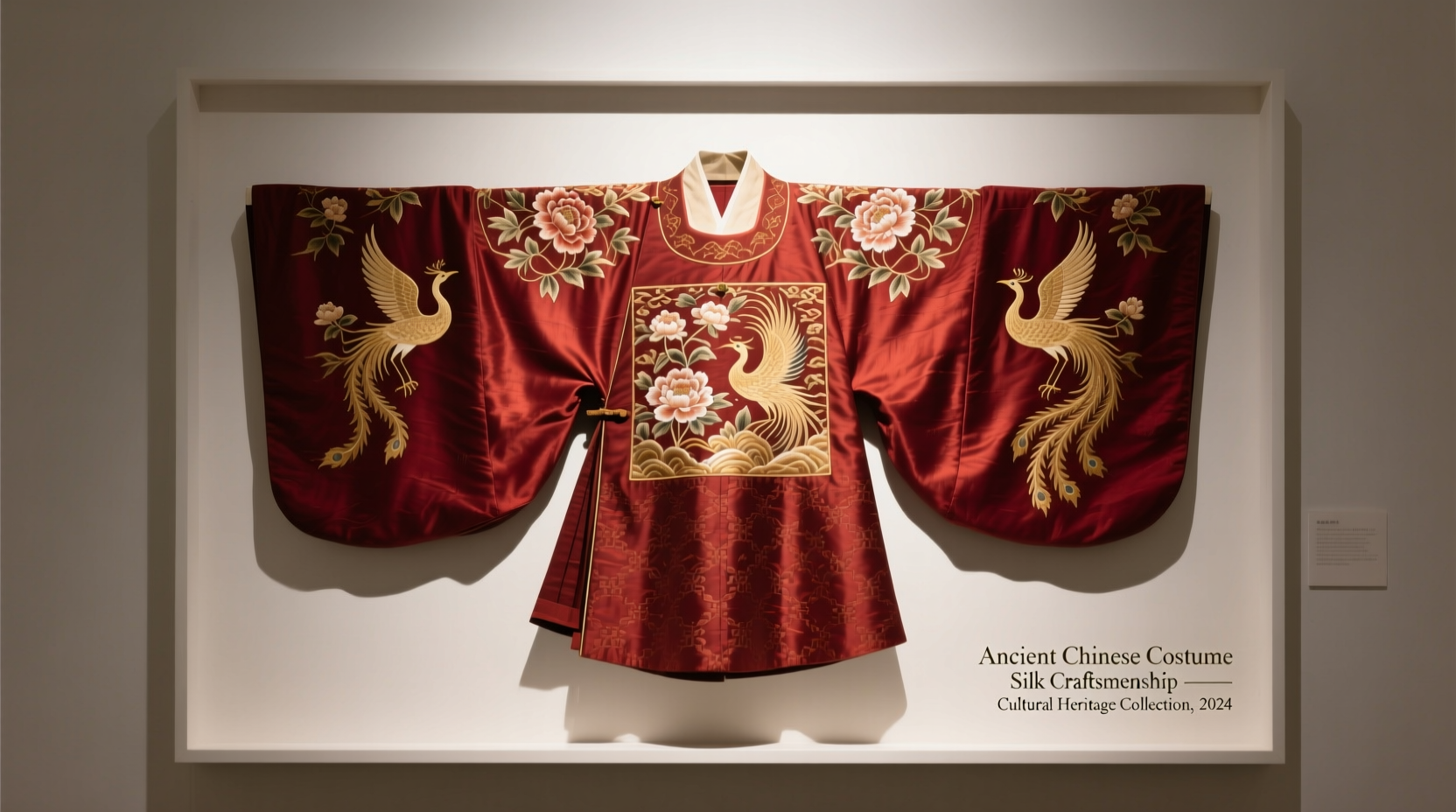
For brides, the Xiuhefu is the gold standard. It is a two-piece jacket and skirt ensemble heavily influenced by late Qing and early Republic-era Han Chinese ceremonial wear. It is distinguished by its宽松 (loose, flowing) fit and overwhelming Panjin (gold and silver thread couching) embroidery, typically featuring phoenixes, peonies, and bats to symbolize prosperity and joy.
Fabric & Construction: Spotting Quality vs. Costume
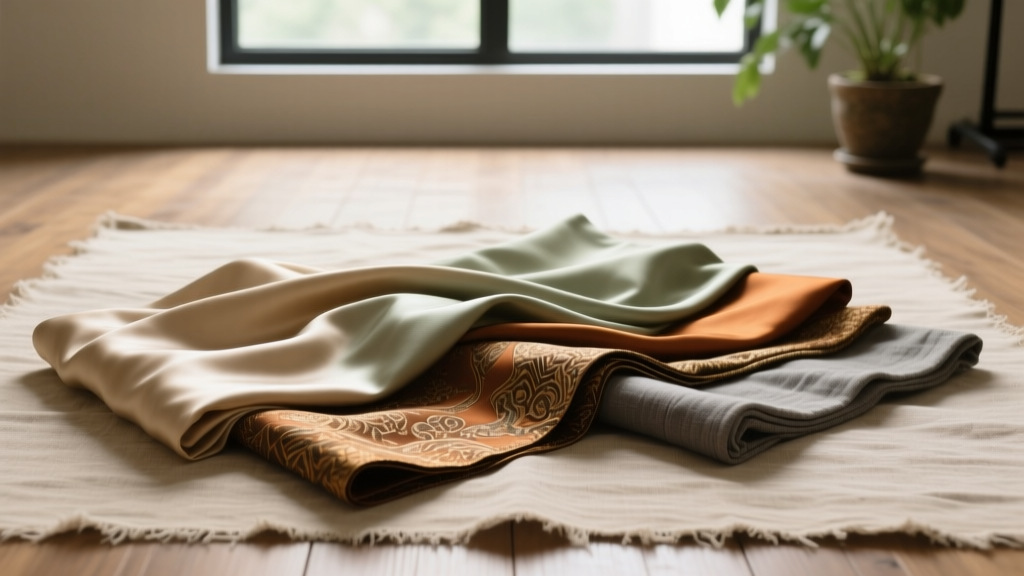
The difference between a $40 tourist-shop costume and a $400 artisanal garment lies entirely in the textile and the loom. As documented by the Victoria and Albert Museum's Chinese textile archives, historical Chinese weaving techniques like Kesi (silk tapestry) and Zhuanghua (brocade) require immense technical mastery. When shopping, look for these authentic fabrics:
- Xiangyunsha (香云纱 - Gambiered Canton Gauze): A UNESCO-recognized intangible cultural heritage from Guangdong. Silk is dyed with the juice of the Dioscorea cirrhosa yam and coated with iron-rich river mud, then sun-baked. It results in a dark, crackled, water-resistant fabric that sounds like rustling paper when walked in. It is highly prized for premium Qipaos and summer Hanfu.
- Song Brocade (宋锦): Originating from Suzhou, this fabric features intricate, multi-colored geometric and floral patterns woven directly into the silk. It has a matte finish and a structured drape, making it ideal for Mamianqun and outer jackets.
- Lu (罗 - Gauze Weave Silk): A highly breathable, open-weave silk used for summer garments, particularly in Tang and Song dynasty revival styles.
Red Flag Warning: If a product description uses terms like 'stretch silk', 'brocade polyester', or 'costume satin', you are buying mass-market fast fashion. Authentic silk brocade has very little mechanical stretch and possesses a distinct, complex texture that synthetic fibers cannot replicate.
2026 Price Matrix: What to Expect
Pricing for authentic Chinese traditional dress varies wildly based on the origin of the silk, the complexity of the embroidery, and whether the garment is ready-to-wear or bespoke. Below is a realistic pricing guide for the current market (prices in USD).
| Garment Category | Entry-Level (Authentic Silk) | Artisan / Mid-Tier | Bespoke / Heirloom |
|---|---|---|---|
| Mamianqun (Skirt) | $80 - $150 | $200 - $450 | $600 - $1,500+ |
| Complete Hanfu Set | $150 - $250 | $300 - $800 | $1,000 - $3,000+ |
| Ready-to-Wear Qipao | $120 - $250 | $350 - $800 | N/A (See Bespoke) |
| Bespoke Tailored Qipao | N/A | $800 - $1,500 | $2,000 - $10,000+ |
| Xiuhefu (Bridal) | $300 - $600 | $800 - $2,500 | $3,000 - $15,000+ |
Where to Shop: Trusted Hubs and Artisans
Finding legitimate makers requires looking beyond standard Western e-commerce platforms. The heart of traditional garment production remains in specific Chinese municipalities, each specializing in different crafts. The China National Silk Museum frequently highlights the regional specialization of Chinese sericulture, which directly correlates to where you should source your garments.
Sourcing Hanfu
The Hanfu market is heavily driven by specialized domestic brands that employ historical consultants to ensure accuracy based on unearthed textiles and museum relics.
- Minghuatang (明华堂): Widely considered the pinnacle of Ming Dynasty Hanfu reproduction. They use custom-woven silks and historically accurate patterns. Prices are high, and wait times can exceed six months, but the quality is museum-grade.
- Shiyin (拾音): Excellent for Song Dynasty aesthetics, focusing on elegant, minimalist silhouettes and premium natural fabrics.
- Zhiyu (织羽集): A great entry-to-mid-tier brand that bridges the gap between historical accuracy and modern wearability, offering beautiful Mamianqun that integrate well into contemporary wardrobes.
Sourcing Qipaos
For a Qipao, fit is everything. While you can buy ready-to-wear online, the true experience is bespoke tailoring.
- Shanghai's Changle Road & Maoming Road: These streets remain the historic epicenter of Qipao tailoring. Shops like Hanart or bespoke independent tailors offer custom measurements, allowing you to select your silk and Pankou knot styles in person.
- Suzhou Artisan Cooperatives: For the fabric itself, sourcing directly from Suzhou silk cooperatives ensures you are getting genuine Song Brocade or Zhang缎 (satin), which you can then take to a local tailor in your home country.
Cultural Protocols: Wearing Traditional Garments Respectfully
Traditional Chinese clothing is deeply intertwined with philosophy, social hierarchy, and cosmology. Wearing these garments respectfully requires an understanding of their underlying rules. As noted in the Metropolitan Museum of Art's Heilbrunn Timeline of Art History, the production and wearing of silk in China was historically governed by strict sumptuary laws and philosophical beliefs.
The Rule of the Collar
As mentioned earlier, the Jiaoling Youren (left over right) rule is non-negotiable for Hanfu. The left side represents Yang (life, light, masculinity), and the right represents Yin (death, dark, femininity). Wrapping the left over the right symbolizes Yang embracing Yin, the natural order of life. Reversing this is a profound cultural taboo associated with mourning and death.
Color Symbolism and Occasion
- Red (红): Symbolizes luck, joy, and prosperity. Essential for weddings, Lunar New Year, and major celebrations. However, it is generally avoided for somber events.
- White (白): Historically the color of mourning and funerals in traditional Han culture. While modern contexts have adopted white for Western-style weddings, wearing a pure white, unadorned traditional dress to a festive cultural event may still raise eyebrows among older generations.
- Yellow/Gold (黄/金): Historically reserved for the Emperor and the imperial family. Today, it is a symbol of wealth and is frequently used in bridal Xiuhefu embroidery, but wearing a solid, bright imperial-yellow Hanfu as a casual garment is sometimes viewed as historically pretentious.
Final Thoughts for the Conscious Buyer
Investing in a Chinese traditional dress is an investment in a living heritage. By prioritizing authentic textiles like Xiangyunsha and Song Brocade, supporting specialized artisanal brands, and adhering to cultural protocols, you elevate your wardrobe from mere costume to a profound expression of Asian sartorial history. Take the time to research the specific dynasty or era that resonates with you, measure yourself according to traditional sizing charts (which differ vastly from Western vanity sizing), and embrace the rich, layered beauty of authentic Chinese dress.