Crafting the Ancient Chinese Costume: Fabrics and Techniques
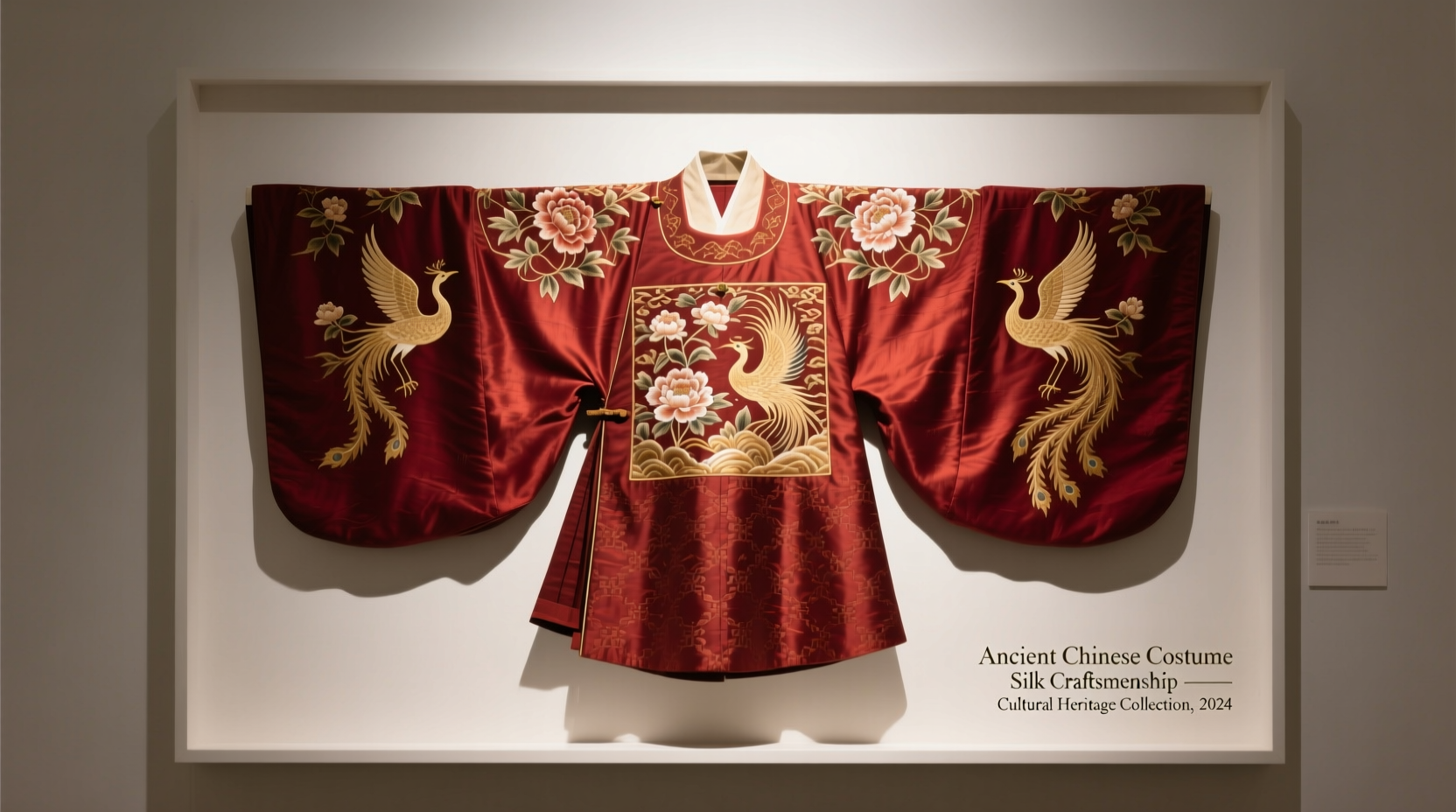
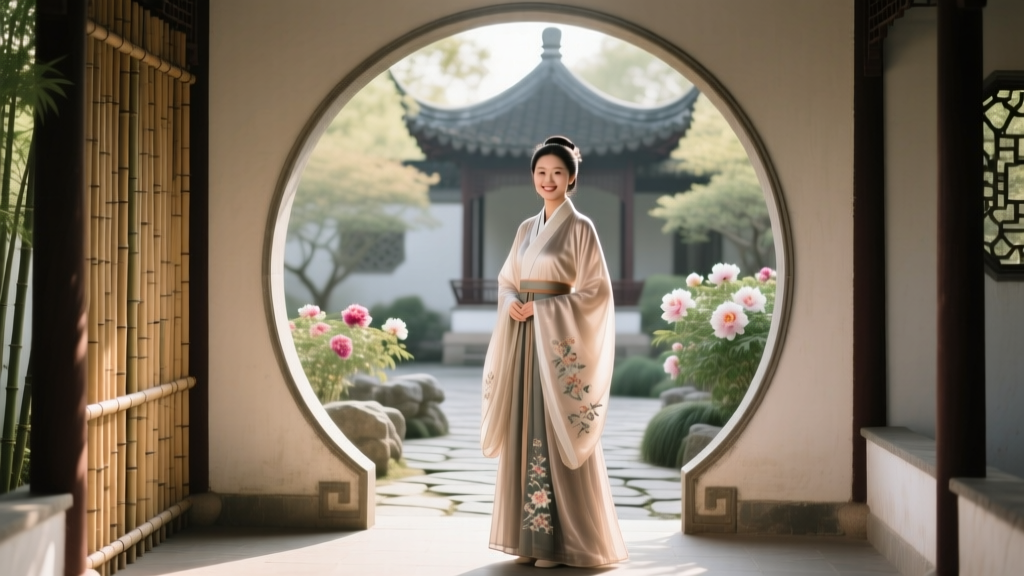
When enthusiasts and historians discuss the ancient Chinese costume, the conversation often gravitates toward the sweeping silhouettes of the *Hanfu* (汉服) or the intricate motifs of dynastic robes. However, the true genius of historical Chinese dress lies not merely in its shape, but in the profound material culture that birthed it. To understand these garments is to understand a civilization’s mastery over the natural world—from the cultivation of the silkworm (*Bombyx mori*) to the complex mathematics of the drawloom. This deep dive explores the structural philosophy, weaving techniques, and artisanal craftsmanship that define the historical Chinese wardrobe.
The Architecture of the Ancient Chinese Costume: Flat-Cutting Philosophy
Unlike Western tailoring, which evolved to sculpt fabric to the three-dimensional contours of the human body using darts and curved seams, the ancient Chinese costume was rooted in a flat-cutting philosophy. This approach was deeply tied to Daoist and Confucian ideals of harmony, respecting the natural integrity of the woven cloth. Traditional looms produced silk bolts with a narrow width, typically between 50 and 60 centimeters. Rather than cutting the fabric into small, curved pieces, tailors utilized the full width of the bolt, folding and draping the material to create volume.
The foundational silhouette of the *Jiaoling Youren* (交领右衽)—the cross-collared robe with the left lapel crossing over the right—relied on geometric precision. Garments like the *Shenyi* (深衣), a deep robe connecting the upper and lower body, were constructed using rectangular panels. Excess fabric was managed through strategic pleating, gussets, and wide sashes rather than aggressive cutting. This zero-waste approach meant that an entire bolt of silk could be transformed into a garment with virtually no scrap material left behind, a testament to the high value placed on silk production in agrarian China.
Silk Weaving Mastery: From Zhangduan to Kesi Tapestry
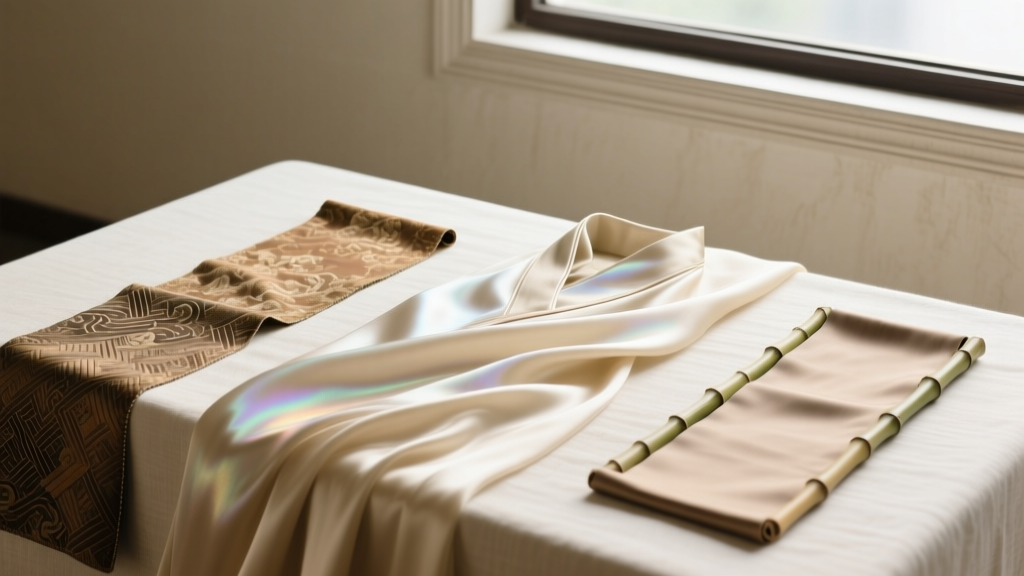
The soul of the ancient Chinese costume is woven from silk. While plain weave (*Juan*) and gauze (*Luo*) were staples for everyday wear and summer garments, the zenith of Chinese textile artistry is found in its complex patterned weaves. According to the China National Silk Museum, the evolution of the drawloom allowed weavers to create intricate, repeating motifs that signified social rank and cosmological beliefs.
One of the most revered techniques is *Kesi* (缂丝), or 'cut silk' tapestry. Unlike continuous weft weaving, *Kesi* employs a weft-faced technique where the colored weft threads are woven only where the specific color is needed in the pattern, turning back on themselves. This creates tiny slits between color blocks, giving the fabric the appearance of being carved or cut. A single meter of high-quality *Kesi* could take an artisan several months to complete, making it the premier fabric for imperial dragon robes and sacred Buddhist sutras during the Song and Ming dynasties.
Equally magnificent is *Yunjin* (云锦), or 'cloud brocade,' originating from Nanjing. This complex *Zhuanghua* (妆花) technique involves weaving supplementary wefts of gold thread, silver thread, and even iridescent peacock feather filaments into the silk base. The sheer complexity of the *Yunjin* drawloom required two operators: the weaver managing the shuttle, and the 'drawboy' sitting atop the loom, pulling the warp threads according to a complex punch-card-like memory system.
The Four Great Embroideries: Regional Stitchcraft
While weaving provided the canvas, embroidery (*Cixiu*) provided the narrative. The ancient Chinese costume was heavily embellished to denote auspicious wishes, seasonal changes, and bureaucratic rank via the *Buzi* (补子) or rank badges. By the Qing dynasty, four distinct regional schools of embroidery had been codified, each bringing unique technical innovations to historical dress.
Su, Shu, Xiang, and Yue: A Technical Breakdown
- Su Embroidery (Suzhou): Famous for its refined elegance and double-sided stitching. Artisans are known to split a single silk thread into as many as 48 microscopic strands to achieve photorealistic gradients, often used for delicate floral motifs on women's *Ruqun* (襦裙) and scholar's robes.
- Shu Embroidery (Sichuan): Characterized by soft, muted colors and a thick, satin stitch that creates a plush, three-dimensional texture. It was heavily used for heavy winter cloaks and ceremonial borders.
- Xiang Embroidery (Hunan): Known for its striking realism and bold use of black, white, and gray to mimic traditional ink wash paintings. The Xiang school excelled in depicting fierce motifs like lions and tigers, often adorning military or official garments.
- Yue Embroidery (Guangdong): Distinguished by its extensive use of metallic threads. Yue artisans mastered the couching technique, laying gold and silver wires on the fabric surface and securing them with tiny silk stitches, creating the brilliant, light-catching dragon and phoenix motifs seen on wedding garments and court attire.
The preservation of these techniques is vital. Institutions like the Metropolitan Museum of Art's Asian textile archives frequently highlight how the structural integrity of these embroideries allowed garments to survive centuries, provided they were shielded from light and moisture.
Natural Dyeing and Color Symbolism in Dynastic Dress
The vibrant palette of the ancient Chinese costume was achieved through *Cao mu ran* (草木染), the art of botanical dyeing. Color was never merely decorative; it was a rigid language of cosmology, governed by the Five Elements (Wu Xing) theory and strict sumptuary laws. During the Ming dynasty, for instance, the use of bright yellow was strictly reserved for the Emperor, while crimson and deep purples were earmarked for high-ranking officials.
Artisans extracted colors from a vast botanical library. Indigo leaves (*Dian lan*) were fermented to produce a spectrum of blues, from pale sky to deep navy. Madder root (*Qian cao*) and safflower (*Hong hua*) yielded rich reds, though safflower required a complex alkaline extraction process to isolate the true red pigment from its yellow water-soluble components. The buds of the pagoda tree (*Huai shu*) were boiled to create a brilliant, lightfast yellow, while the acorns of the oak tree and the bark of the gallnut tree provided deep, somber blacks and browns for mourning attire and commoner wear. The Victoria and Albert Museum's research on Asian dyes notes that the mordanting processes used by Chinese dyers—often utilizing alum or iron-rich mud—were remarkably advanced, allowing colors to remain vibrant despite the delicate nature of the silk protein.
Sourcing Authentic Replicas: Modern Artisans and Price Guide
The contemporary *Hanfu* movement has sparked a renaissance in historical textile reproduction. For collectors, historians, and cultural practitioners seeking to acquire an authentic ancient Chinese costume replica, understanding the market is crucial. Mass-produced, synthetic 'costumes' flood e-commerce platforms, but true craftsmanship requires sourcing from specialized ateliers in Suzhou, Nanjing, and Hangzhou that utilize genuine silk and traditional looms.
When commissioning or purchasing a historically accurate garment, buyers must scrutinize the fiber content (100% mulberry silk), the weave structure, and the finishing techniques. Below is a comparative guide to the primary historical fabrics used in modern high-end reproductions, including estimated market prices for authentic, artisan-woven materials.
| Fabric Type | Historical Peak | Modern Reproduction Price (Per Meter) | Primary Garment Application |
|---|---|---|---|
| Kesi (Tapestry) | Song / Ming | $800 - $3,500+ USD | Imperial robe panels, ceremonial collars, high-end accessories. |
| Yunjin (Cloud Brocade) | Ming / Qing | $500 - $2,000 USD | Winter jackets (*Ao*), formal skirts (*Mamianqun*), rank badges. |
| Luo (Gauze) | Tang / Song | $150 - $450 USD | Summer outer layers, lightweight *Beizi* (jackets), veils. |
| Juan (Plain Silk) | Han / Wei | $60 - $180 USD | Undergarments, linings, foundational *Ru* (tops) and trousers. |
Investing in an authentic ancient Chinese costume is an investment in living history. By supporting the artisan cooperatives and master weavers who keep the drawlooms active and the dye vats fermenting, modern enthusiasts ensure that the profound material legacy of Chinese civilization continues to be worn, studied, and revered for generations to come.