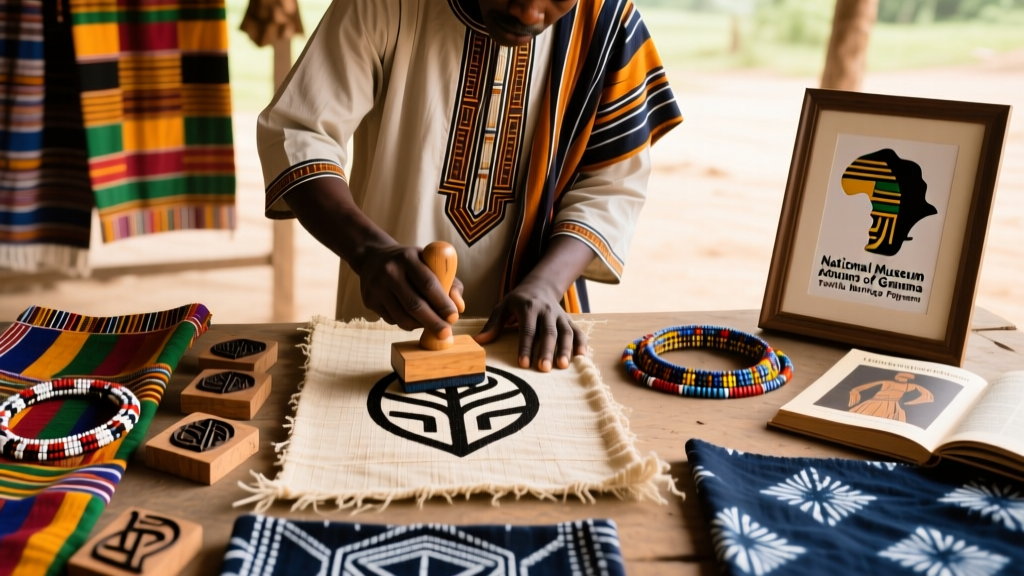
Bogolan Mud Cloth: Dyeing Techniques
Understanding Bogolan Dye Chemistry
Bogolan, Mali's iconic mud cloth, relies on a fascinating chemical reaction between plant tannins and iron-rich mud. This ancient dyeing technique produces striking dark patterns on cotton fabric.
The Two-Step Process
First, cloth is soaked in a yellow dye bath made from n'gallama leaves, which are rich in tannic acid. This creates a light yellow base. Then, fermented mud (collected from riverbeds and aged for up to a year) is painted onto the cloth in patterns.
The Chemical Reaction
When the iron-rich mud contacts the tannin-soaked cloth, a dark brown-black compound forms through an iron-tannin reaction. Areas not painted with mud retain the yellow color, which can later be bleached to white using caustic solutions from baobab bark.
Modern Adaptations
Contemporary artisans experiment with additional natural dyes — indigo, kola nut, and mango bark — expanding the traditional palette. Some cooperatives now produce bogolan for international fashion markets while maintaining hand-dyeing methods.
- Fermented mud improves with age
- Each village has signature pattern vocabulary
- UNESCO intangible cultural heritage status