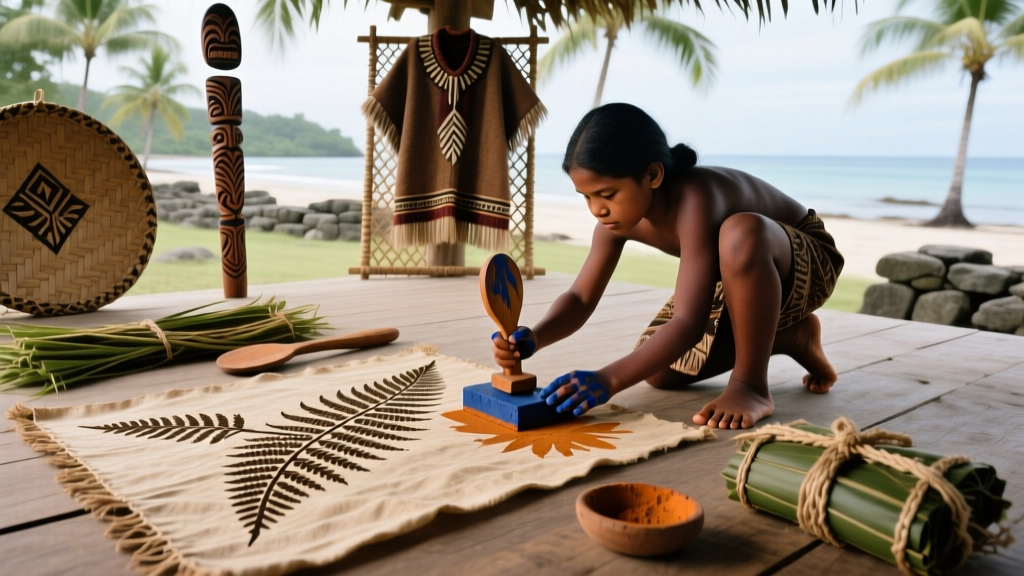
Tongan Ngatu Tapa Cloth Art
Tonga Living Tradition
Ngatu is the Tongan word for tapa cloth — large panels of beaten bark fabric decorated with distinctive geometric patterns called kupesi. Among all Pacific tapa traditions, Tongan ngatu stands out for its monumental scale, with some ceremonial pieces measuring over 60 feet long.
Production Process
Ngatu is made from the inner bark of the hiapo (paper mulberry) tree. Women beat the bark with wooden beaters (ike) to create thin sheets, then join sheets by overlapping and beating the edges together. The characteristic brown patterns are created by rubbing the cloth over a kupesi tablet — a relief pattern board made from coconut midrib.
Kupesi Patterns
- Manulua — bird motifs representing chiefly authority
- Fata-ki-nima — hand-width geometric borders
- Kahokaho — chevron patterns representing coconut fronds
- Tokelau — star motifs connected to navigation
Ceremonial Uses
Ngatu is central to every Tongan life event. At weddings, enormous lengths of ngatu are exchanged between families. At funerals, the deceased is wrapped in ngatu, and mourners wear ngatu skirts (taovala). At royal coronations, ngatu lines the processional route. The quality and quantity of ngatu presented reflects the giver's status and generosity.