Tongan Ngatu: Bark Cloth of Royalty

The Royal Cloth of Tonga
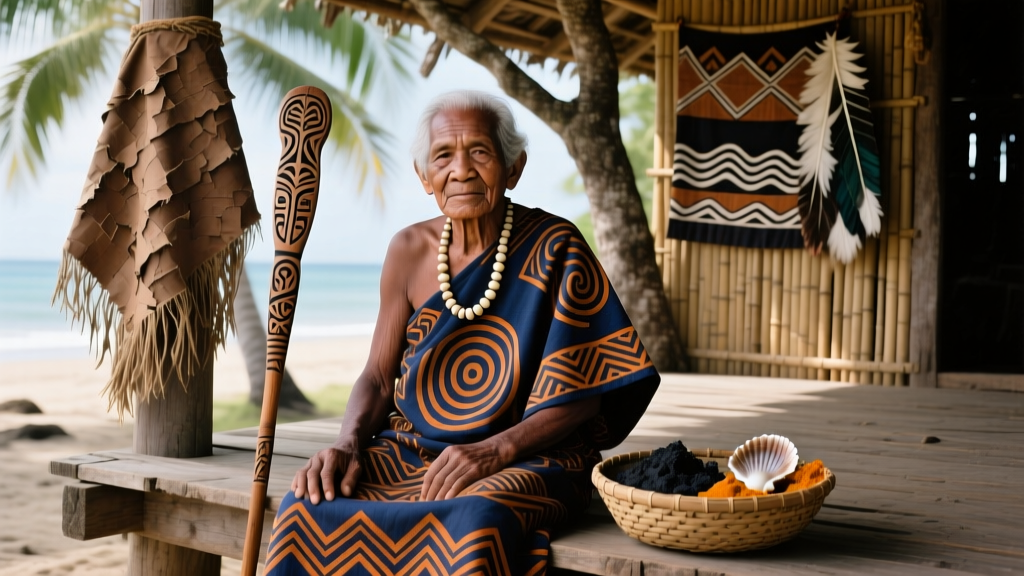
Ngatu is the Tongan term for tapa cloth, and it holds a position of extraordinary cultural importance in the Kingdom of Tonga — the only remaining indigenous monarchy in the Pacific. Unlike Fijian masi or Samoan siapo, Tongan ngatu is distinguished by its large scale, intricate kupesi (design tablets), and role in royal ceremonies.
Production Process
Making ngatu is a communal activity performed by groups of women called kautaha. The bark of the hiapo (paper mulberry) tree is stripped, dried, soaked, and beaten into thin sheets. These sheets are then glued together with arrowroot starch to form large panels called feta'aki.
Kupesi Design System
The distinctive feature of Tongan ngatu is the kupesi — a design tablet made from coconut fiber lashed to a board. The feta'aki is placed over the kupesi and rubbed with koka bark dye, transferring the raised pattern onto the cloth. This rubbing technique allows for consistent, repeatable designs across large pieces.
Ceremonial Functions
Ngatu is essential at every major Tongan life event: births, weddings, funerals, and royal coronations. At weddings, the bride's family presents ngatu to the groom's family, with the quantity and quality reflecting social standing. Royal funerals may involve ngatu pieces hundreds of meters long, draped across entire buildings.
Preserving the Tradition
The Tongan government and cultural organizations actively support ngatu production through women's cooperatives and educational programs. However, the labor-intensive process and declining availability of hiapo trees pose ongoing challenges. Some communities have established hiapo plantations to ensure sustainable supply.