Tapa Cloth: Pacific Island Bark Cloth Art
Priya Nambiar·Published ·Updated

From Tree to Textile
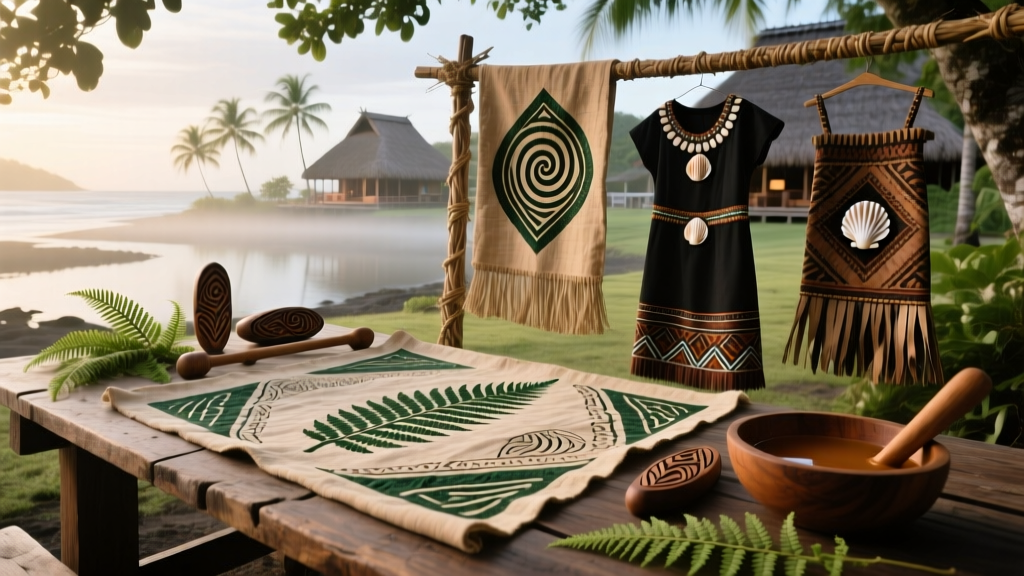
Tapa (also called siapo, kapa, masi, or ngatu) is bark cloth made from the inner bark of the paper mulberry tree. This ancient Pacific art form spans from Hawai'i to Fiji to Tonga.
Production Process
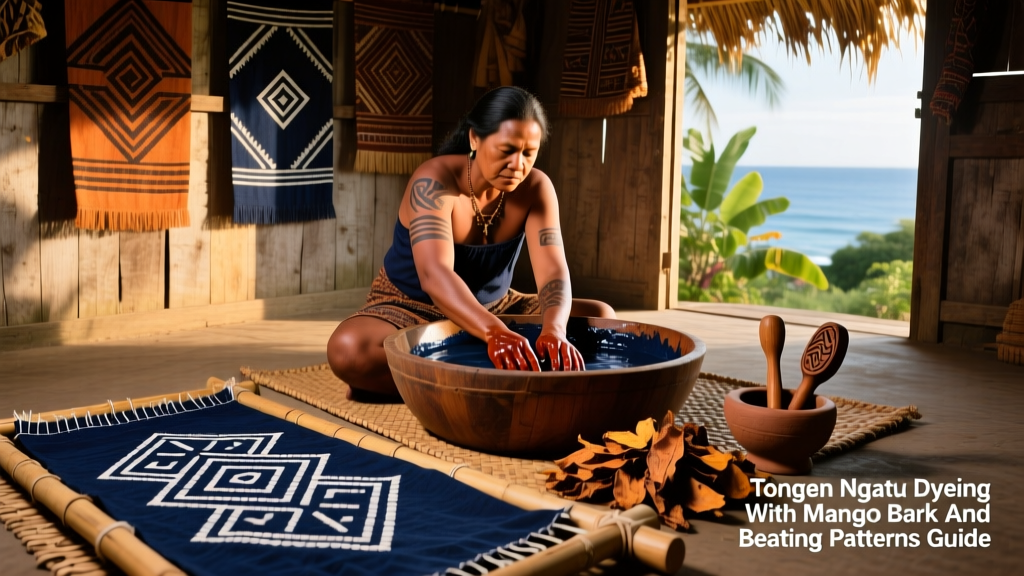
Women strip the bark, soak it, then beat it with wooden mallets (i'e) on stone anvils until fibers fuse into flat sheets. Hours of rhythmic beating produce a single piece.
Decoration Techniques
- Hawaii: Stamped geometric patterns with natural pigments
- Samoa: Stenciled designs using pandanus leaf templates
- Tonga: Large sheets with repeating kupesi motifs
- Fiji: Smoked and painted with black and brown pigments
Cultural Roles
Tapa serves as ceremonial clothing, wedding gifts, funeral wrappings, and room dividers. In Tonga, a bride's dowry may include hundreds of yards of ngatu.