Samoan Lavalava: Daily & Ceremonial Wear

Samoan Lavalava: Daily & Ceremonial Wear
The lavalava (also known as 'ie lavalava) is the foundational garment of Samoan culture — a wraparound cloth worn by men and women in every context of Samoan life, from fishing in the lagoon to addressing the village council. Its simplicity belies its deep cultural significance.
Everyday Lavalava
For daily wear, the lavalava is typically made from cotton or polyester in bright prints — floral patterns, geometric designs, or brand logos. It is wrapped around the waist and secured with a tuck or knot. Men wear it above the knee for active work; women wear it longer, to the calf. In Samoa's tropical climate, the lavalava is far more practical than trousers — cool, loose, and quick to dry after swimming.
Formal Lavalava
For formal occasions, Samoan men wear the 'ie faitaga — a tailored lavalava with pockets and a waistband, often in dark solid colors. This is paired with a white shirt and tie, creating a formal look that is the Samoan equivalent of a Western suit. Government officials, church deacons, and matai (chiefs) regularly wear 'ie faitaga for official duties.
Ceremonial Garments
'Ie Toga (Fine Mat)
The most prestigious Samoan textile is the 'ie toga — a finely woven pandanus mat so delicate it can be folded to the size of a handkerchief. These mats are not worn as clothing but are essential to fa'a Samoa (the Samoan way) — exchanged at weddings, funerals, and title-bestowing ceremonies. Some 'ie toga are centuries old and carry enormous cultural value.
Siapo (Bark Cloth)
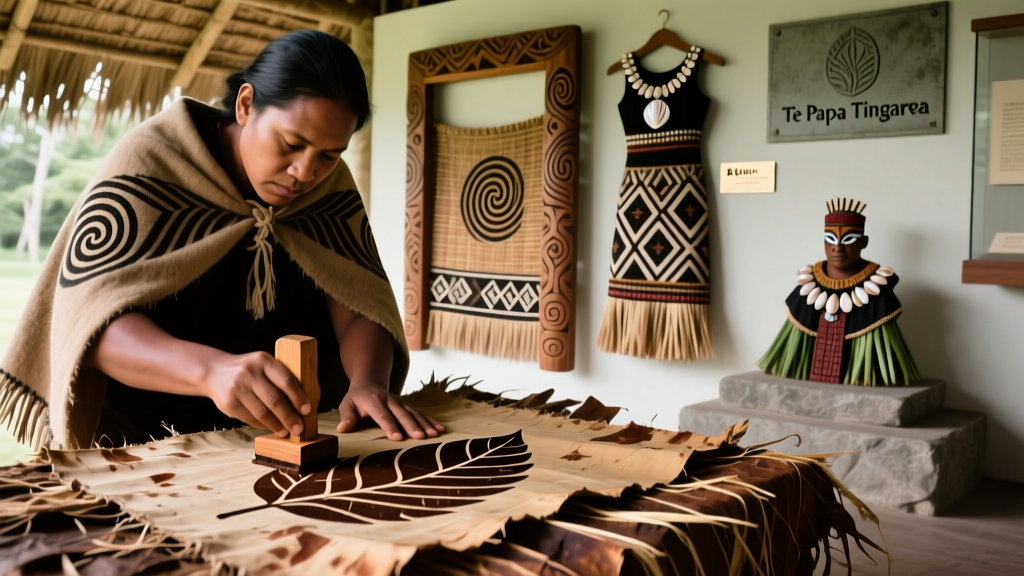
Siapo is Samoan tapa cloth, made from beaten mulberry bark and decorated with geometric patterns using natural dyes. While no longer everyday wear, siapo is used in ceremonial contexts and as prestigious gifts.
Pe'a: The Tattoo Connection
The lavalava serves an important function in displaying the pe'a, the traditional Samoan male tattoo that covers the body from waist to knee. The lavalava is worn at the precise height to reveal the upper edge of the pe'a, signaling the wearer's status as a soga'imiti — a man who has endured the painful tattooing process.