Maori Korowai: New Zealand Cloak Weaving Heritage

The Sacred Korowai
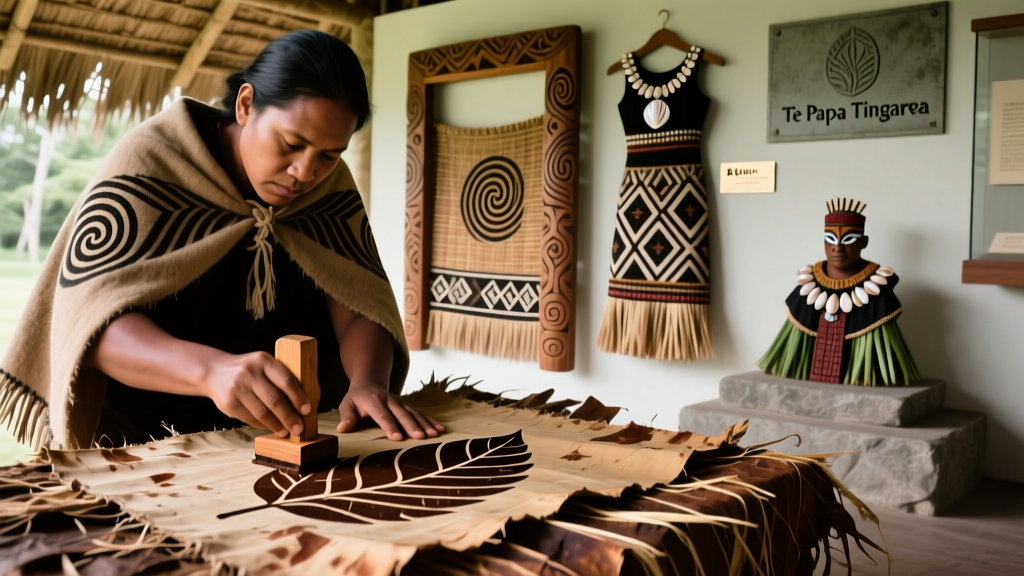
The korowai is a prestigious Maori cloak woven from harakeke (New Zealand flax) and adorned with hukahuka (tassels) or feathers. Considered taonga (treasured possessions), korowai carry the mana (spiritual authority) of their weavers and wearers, connecting generations through material culture.
Whatu Weaving Technique
Korowai are created using whatu — a finger-weaving technique that predates loom technology. Master weavers (tohunga raranga) twist pairs of muka (scraped flax fiber) threads without any tools, relying entirely on hand tension and memory. A full-size korowai requires 3-6 months of daily work.
Types of Maori Cloaks
- Korowai: General term for decorated cloaks with hukahuka tassels
- Kahu kiwi: Cloaks covered entirely with kiwi feathers, the most prestigious type
- Kahu huruhuru: Feather cloaks using native bird plumage (kereru, kaka, tui)
- Kaitaka: Fine plain-weave cloaks with taniko (geometric border) bands
- Parawai: Rain capes made from overlapping flax leaves for weather protection
Cultural Protocols
Korowai are worn during significant life events: graduations, weddings, funerals, and political ceremonies. The act of placing a korowai on someone's shoulders is a profound gesture of respect, honor, and protection. New Zealand's Prime Ministers wear korowai at official events as symbols of bicultural partnership.
Preservation and Revival
The Maori Arts and Crafts Institute (MACI) in Rotorua runs weaving programs training the next generation of tohunga raranga. Notable weavers like Dame Rangimarie Hetet (1892-1995) preserved techniques that might otherwise have been lost, and her students continue teaching today.