Hawaiian Kapa Making: Techniques and Art
Kapa: Hawaii's Bark Cloth Legacy
Kapa (also spelled tapa) is the Hawaiian tradition of creating cloth from the inner bark of the wauke (paper mulberry) plant. This ancient art form was essential to daily Hawaiian life before Western contact.
Traditional Process
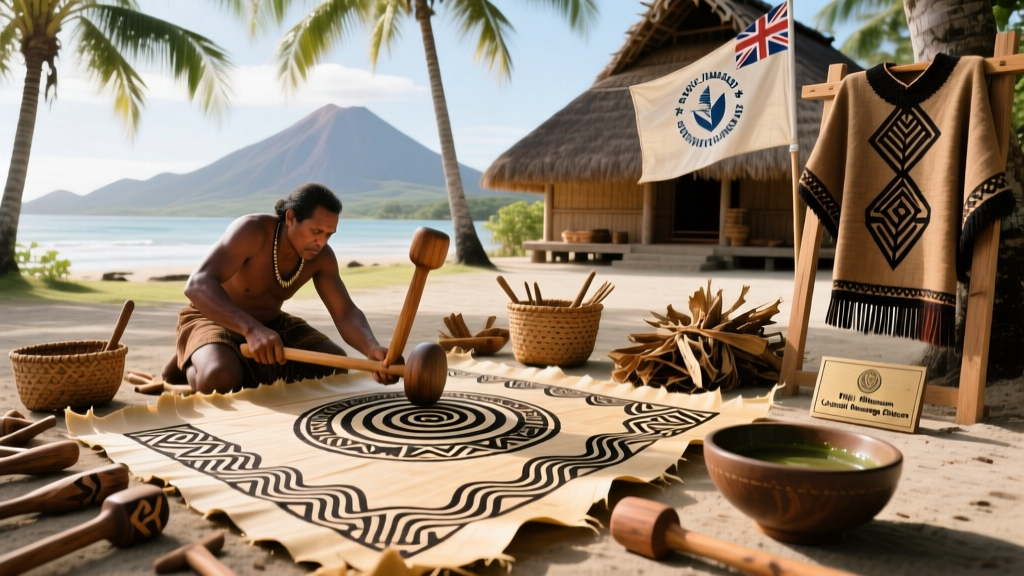
Hawaiian kapa makers soak the bark, then beat it with carved wooden beaters (hohoai and i'e kuku) on stone anvils. The distinctive watermark patterns (ho'ailona) are created using bamboo stamping tools dipped in natural dyes.
Unique Hawaiian Methods
Unlike other Pacific tapa traditions, Hawaiian kapa features a second beating process that creates extremely fine, almost fabric-like sheets. Some ceremonial kapa measured over 30 feet in length.
Revival Movement
After near-extinction in the 19th century, kapa making has experienced a renaissance since the 1970s Hawaiian cultural revival. Practitioners like Puanani Van Dorpe and Dalani Landgraf have reconstructed lost techniques from museum specimens.
- Pa'a Pono program teaches traditional methods
- Bishop Museum holds over 3,000 kapa pieces
- Modern artists blend traditional and contemporary designs