Fijian Masi: Bark Cloth of the Pacific

Masi: Fiji's Bark Cloth Heritage
Masi, the Fijian word for bark cloth (known as tapa elsewhere in the Pacific), holds deep cultural significance in Fijian society. Made from the inner bark of the paper mulberry tree (Broussonetia papyrifera), masi is central to ceremonies marking birth, marriage, and death.
Production Process
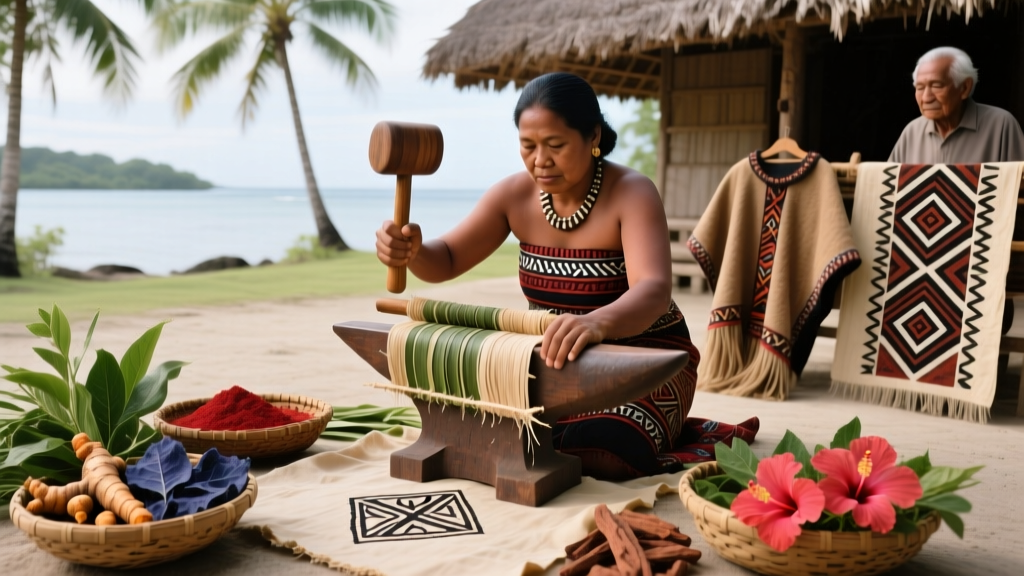
Women harvest paper mulberry branches, strip the inner bark, soak it, then beat it on wooden anvils (ike) with wooden beaters. The rhythmic beating thins and widens the bark into sheets. Multiple sheets are joined with natural adhesives to create larger pieces.
Design Traditions
Fijian masi features distinctive geometric patterns applied with natural dyes. Masi kesa uses stencil-printed patterns, while masi kuvui is rubbed over design tablets. The village of Vatulele is particularly renowned for its masi production, with techniques passed down through generations.
Ceremonial Uses
Masi features prominently in Fijian ceremonies — as wedding gifts, chiefly garments, burial wraps, and ceremonial exchange items. Large presentation pieces can measure several meters, symbolizing social bonds and community wealth.