Fijian Masi Cloth: Cultural Significance
Masi in Fijian Culture
Masi, the Fijian bark cloth, holds profound cultural significance across the islands. Crafted from the vau (hibiscus) or malo (paper mulberry) bark, masi serves as both utilitarian fabric and sacred ceremonial object.
Production and Design
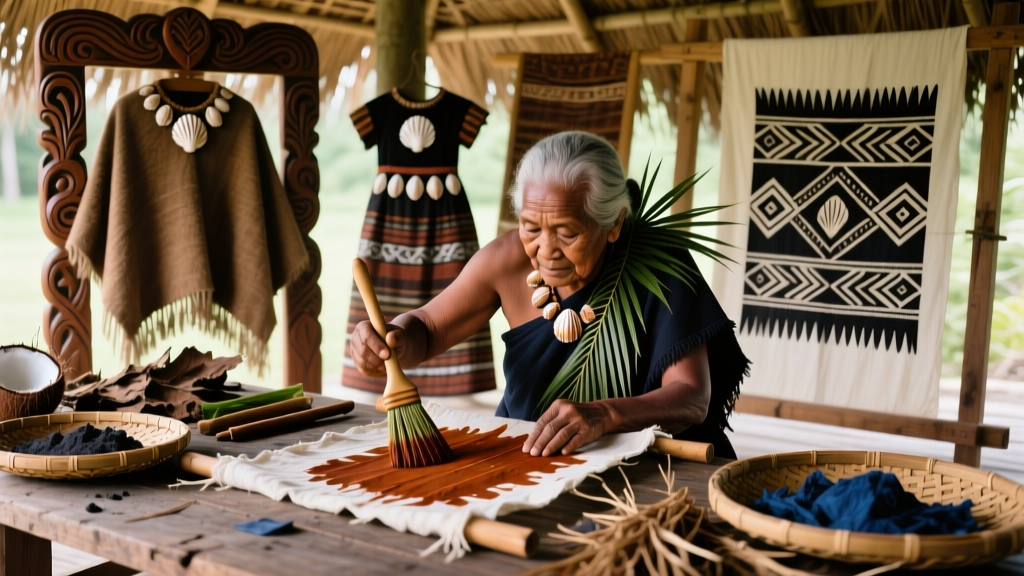
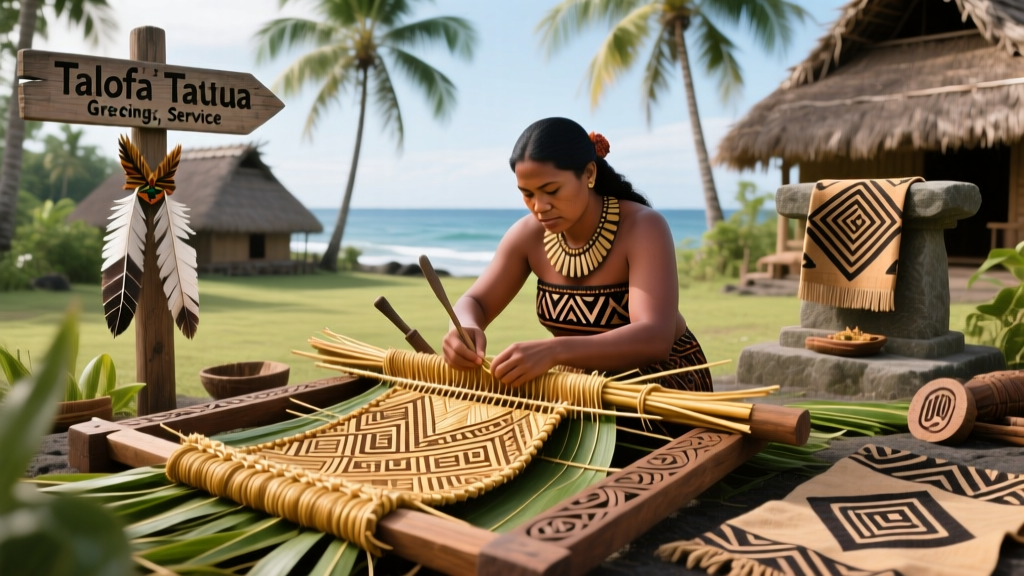
Fijian women create masi through a communal beating process, often working together on large sheets that can exceed 20 meters. The distinctive Fijian geometric patterns are applied using stencils made from banana leaves and coconut fiber brushes.
Color Palette and Dyes
Traditional Fijian masi features earth tones: deep brown from mangrove tannin, black from candlenut soot, and red-brown from the lala tree bark. Each color carries symbolic meaning related to rank and occasion.
Ceremonial Use
Masi features prominently in Fijian weddings, funerals, and chiefly installations. The presentation of masi (sevusevu) serves as a formal offering that cements social bonds and acknowledges hierarchy.
- Chiefly masi features exclusive patterns
- Wedding masi can span entire village squares
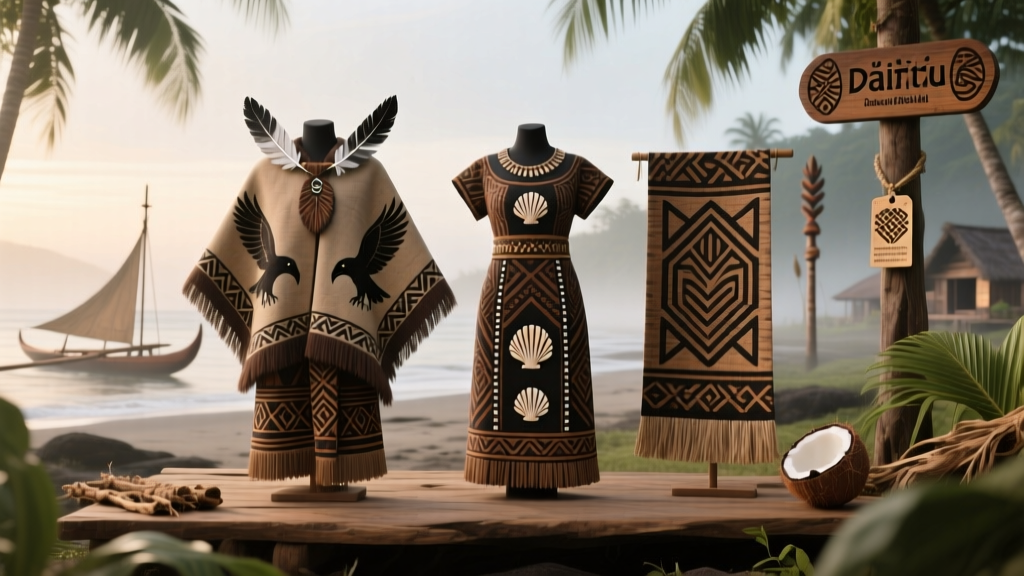
- Modern Fijian designers incorporate masi motifs into fashion