Fijian Masi: Ceremonial Bark Cloth Art

Masi Bark Cloth
Masi is Fijian bark cloth made from paper mulberry bark. Distinguished by its bold black stenciled patterns on natural or dyed backgrounds, masi plays a vital role in Fijian culture.
Production Method
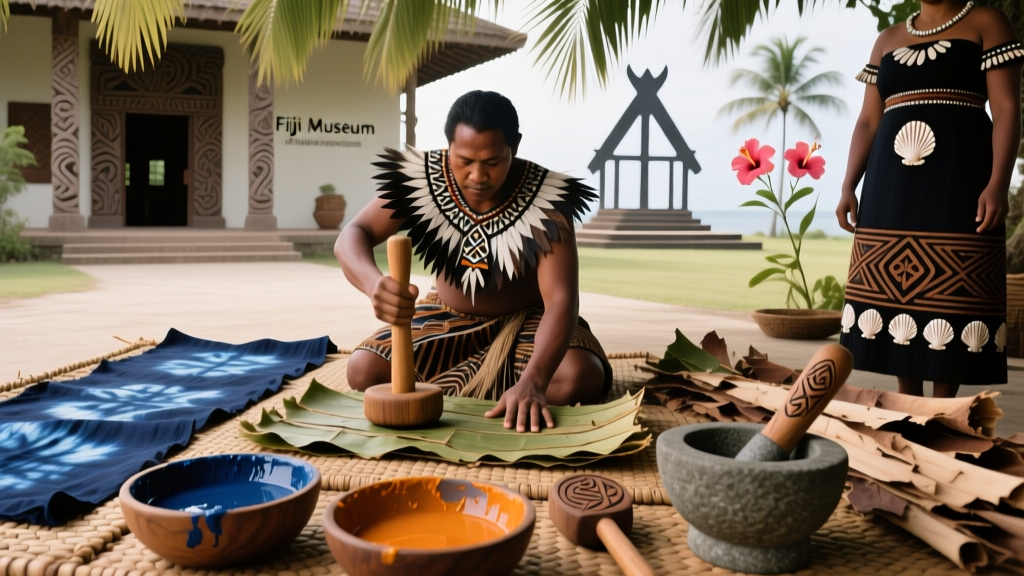
Women harvest and beat paper mulberry bark into sheets, then join them to create large cloths. The distinctive patterns are applied using banana leaf stencils cut into geometric shapes.
Masi Kesa Technique
The most valued masi type is masi kesa, featuring stenciled patterns in black and red-brown on a white background. Each pattern has a name and cultural meaning.
Ceremonial Importance
Masi is exchanged at weddings, presented to chiefs, and used to wrap newborn babies. During chiefly installations, the new chief is wrapped in specially prepared masi.
Modern Applications
Contemporary Fijian designers use masi patterns on clothing, accessories, and home decor. The Fiji Arts Council promotes masi as a national art form.