Fijian Masi: Tapa Cloth Art Explained

Bark to Beauty: The Masi Process
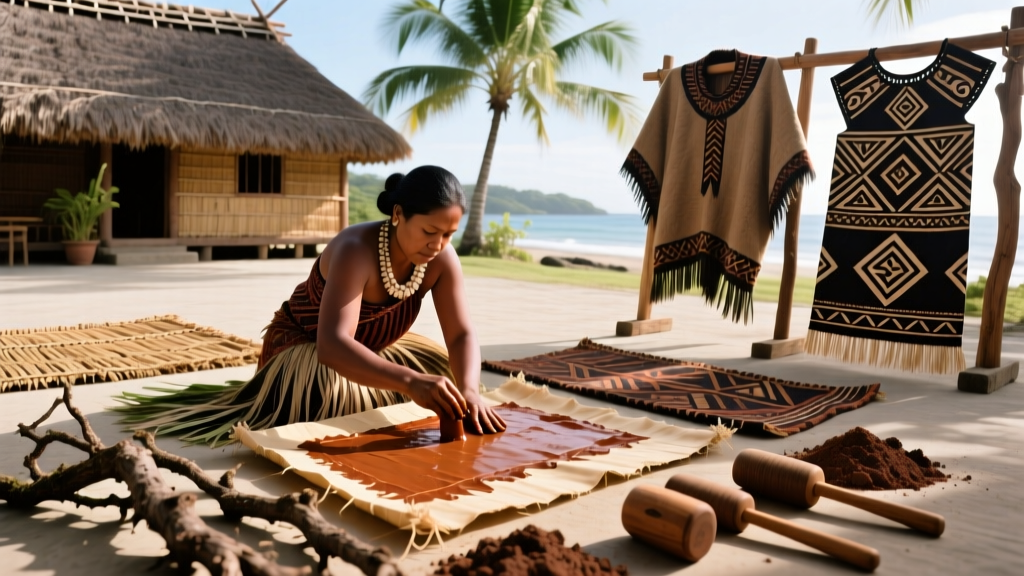
Masi is the Fijian term for tapa cloth, made from the inner bark of the paper mulberry tree (Broussonetia papyrifera). The process begins by stripping the bark, soaking it in seawater, then beating it with wooden mallets (ike) on stone anvils until the fibers spread into thin, felt-like sheets.
Joining and Sizing
Individual sheets are joined edge-to-edge using starch paste from arrowroot or cassava. Skilled makers can produce cloths several meters wide, suitable for ceremonial use. The largest masi pieces, called gatu, can span entire rooms during chiefly presentations.
Design and Symbolism
Traditional Fijian masi features geometric patterns applied with natural brown and black dyes from mangrove bark and candlenut soot. Common motifs include zigzag lines representing ocean waves, diamond shapes symbolizing fishing nets, and cross-hatching denoting woven mat patterns.
Ceremonial Uses
Masi plays a central role in Fijian ceremonies: weddings, funerals, chiefly installations, and yaqona (kava) ceremonies. The presentation of masi between groups signifies respect, alliance, and social obligation. A well-crafted masi is considered among the most prestigious gifts in Fijian culture.
Contemporary Challenges
Fewer women practice traditional masi making today due to the labor-intensive process and availability of commercial fabrics. However, cultural organizations and tourism demand are helping sustain the practice, with workshops now available for visitors in villages across Fiji.