Fijian Masi Bark Cloth Art Guide
Claire Fontaine·Published
What Is Masi?
Masi is the Fijian term for bark cloth, made from the inner bark of the paper mulberry tree (Broussonetia papyrifera). Known elsewhere in the Pacific as tapa, masi holds deep cultural significance in Fijian society.
The Making Process
Women harvest branches, soak them in water, then beat the inner bark with wooden mallets on stone anvils. The resulting cloth is dried in the sun before decoration begins.
Traditional Motifs
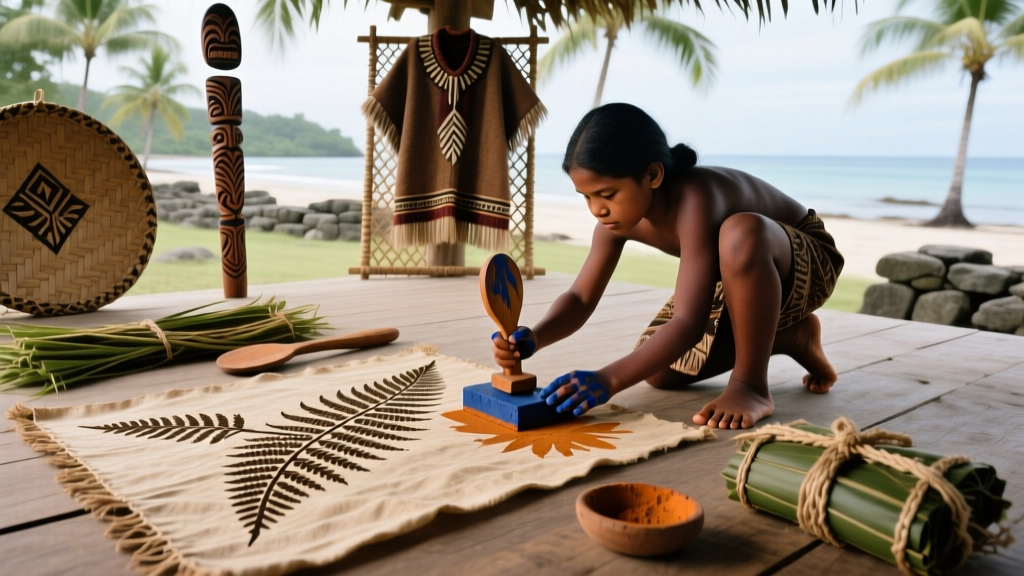
- Masi kesa — stenciled patterns using banana leaves
- Masi ruve — rubbed relief patterns
- Masi boliti — hand-painted free designs
Cultural Significance
Masi is presented at weddings, funerals, and chiefly installations. Large sheets can span 10 meters and are worn as ceremonial garments by high chiefs.
Modern Revival
Fijian artists are blending masi techniques with contemporary fashion. Designers in Suva now use masi patterns in printed garments sold to tourists and locals alike.