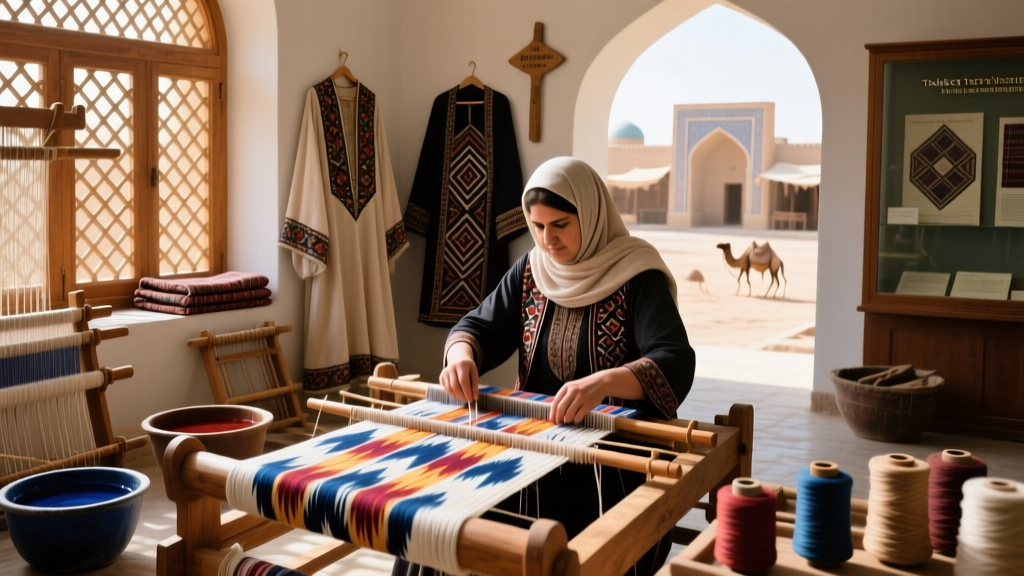
Uzbek Suzani: Central Asian Needlework

Suzani: Needle Art of Uzbekistan
Suzani (from the Persian suzan, meaning "needle") is a type of embroidered textile produced in Uzbekistan and Tajikistan. These large, vibrantly colored pieces serve as wall hangings, bed covers, and ceremonial textiles.
Production Process
Traditionally, a suzani is created as a dowry piece — the bride's mother begins embroidery when her daughter is born, working on it for years. Cotton or silk fabric is stretched on a frame, and designs are drawn freehand or transferred using stencils before embroidery begins.
Regional Styles
Bukhara: Dense embroidery with sun and moon motifs, primarily in red, gold, and green. Uses bokhara couching — thread laid on the surface and secured with tiny stitches.
Shakhrisabz: Bold geometric patterns with large floral medallions. Known for the palak (sky) design.
Nurata: Delicate floral sprays on white or cream ground, more restrained than other regional styles.
Symbolism
Pomegranates symbolize fertility. Pepper motifs ward off the evil eye. Sun discs represent life force. Tulips and carnations signify beauty and spring. Every motif carries protective or auspicious meaning.