Uzbek Chapan: Silk Road Striped Coats Guide

What Is a Chapan?
The chapan is a long, quilted coat worn across Central Asia, particularly in Uzbekistan. Made from ikat-dyed silk called adras, it features bold vertical stripes in vibrant reds, yellows, and blues.
Materials and Construction
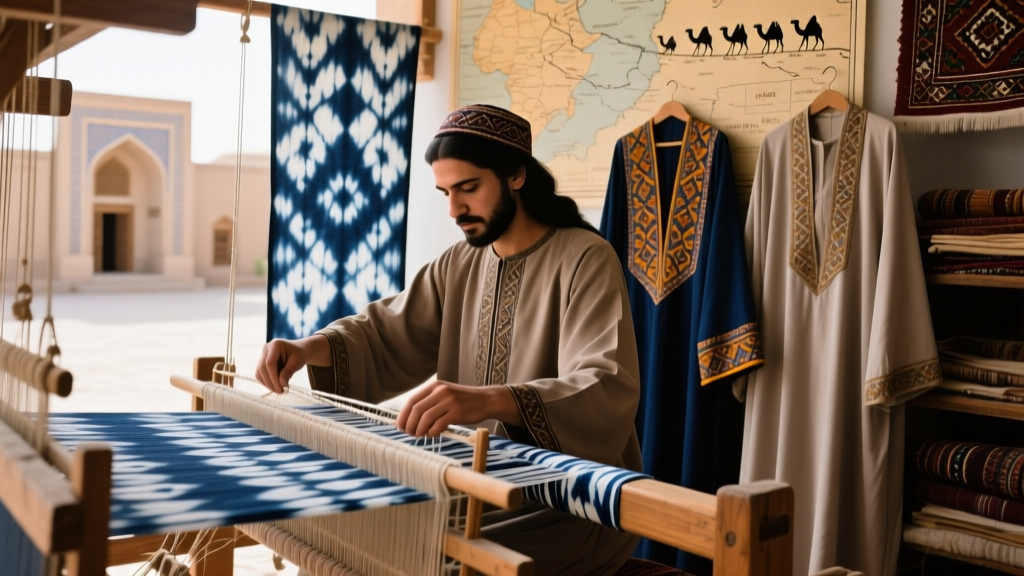
Traditional chapans use silk warp threads dyed with natural pigments before weaving. The ikat technique involves resist-dyeing bundles of thread, creating the characteristic blurred stripe edges. Cotton or wool filling provides warmth.
Silk Road Heritage
Chapan production flourished along the Silk Road. Cities like Bukhara and Samarkand became centers of textile production, with master weavers passing techniques through generations.
Cultural Significance
In Uzbek culture, presenting a chapan as a gift signifies respect and honor. Elders receive elaborate versions for weddings and holidays. The coat quality and pattern indicate social status.
Modern Revival
Contemporary designers in Tashkent are reviving traditional chapan techniques, blending heritage craftsmanship with modern silhouettes for fashion-conscious buyers.