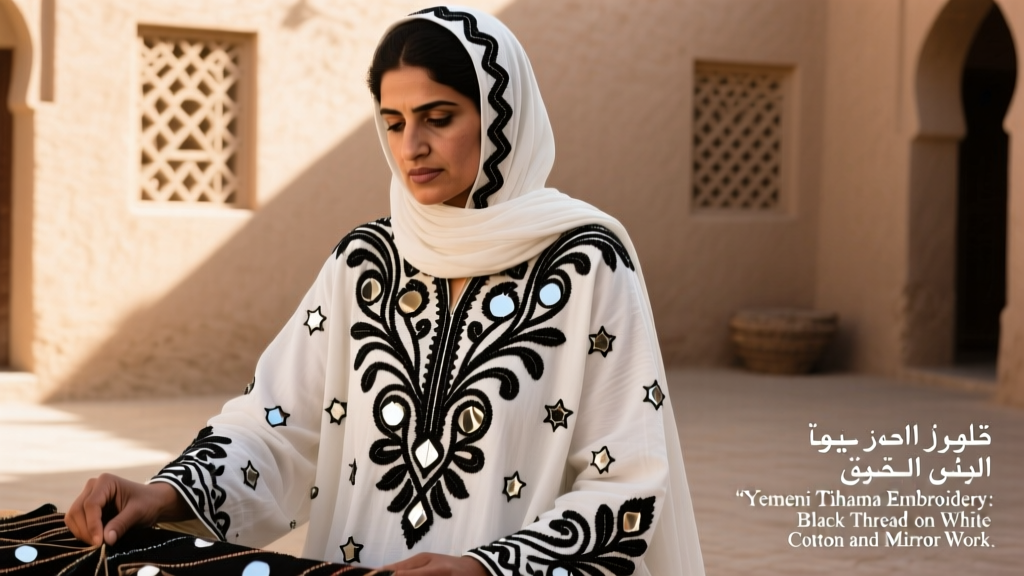
Tajik Pamiri Wool Spinning & Hand Carding

Traditional Wool Processing in the Pamir Mountains: A Living Heritage of Tajikistan
The high-altitude valleys of the Pamir Mountains—often called the “Roof of the World”—are home to one of Central Asia’s most resilient and culturally distinct communities: the Pamiri people of Tajikistan. Nestled across Gorno-Badakhshan Autonomous Region (GBAO), a territory comprising over 45% of Tajikistan’s landmass but less than 3% of its population, Pamiri pastoralists have sustained generations of textile knowledge rooted in ecological adaptation and intergenerational transmission. At the heart of this tradition lies hand carding and wool spinning—labor-intensive, deeply gendered practices that transform raw fleece from local Pamiri sheep into yarn strong enough for winter garments, felted yurts (known locally as boz), and intricate embroidered textiles.
Ecological Context Shapes Fiber Quality and Technique
Pamiri sheep—primarily the indigenous Pamiri fat-tailed breed—are uniquely adapted to altitudes between 3,000 and 4,500 meters, where temperatures regularly dip below −30°C in winter. Their fleece is coarse, dense, and rich in lanolin, providing natural water resistance and thermal insulation. Unlike fine Merino wool, Pamiri wool contains a high proportion of kemp (short, brittle fibers) and medullated guard hairs, which demand specialized preparation. As noted by ethnobiologist Dr. Elena Kozlova in her 2019 fieldwork with the Aga Khan Rural Support Programme (AKRSP), “The coarseness isn’t a flaw—it’s functional. The kemp adds loft and air-trapping capacity critical for surviving -40°C windchill on the Murghab Plateau.” This ecological reality directly informs technique: hand carding must separate kemp without removing too much insulating undercoat, a balance achieved only through decades of tactile familiarity.
The Two-Stage Carding Process: From Raw Fleece to Parallel Fibers
Carding in Pamiri households occurs in two distinct phases, both performed exclusively by women and elder girls aged 12 and up. The first stage—gulchak—uses handheld wooden cards with iron wire teeth set at 72–80 teeth per square inch. Raw fleece is pulled across the cards in overlapping strokes, aligning fibers while gently teasing out vegetable matter and excess kemp. This yields a loose, fluffy “rolag” roughly 25 cm long. The second stage—shurk—involves rolling the rolag onto a smooth willow or apricot wood dowel, then lightly twisting it by hand to form a continuous, slightly cohesive sliver ready for spinning. Unlike European-style drum carding or commercial blending, Pamiri carding preserves fiber length variation—a deliberate choice that enhances yarn elasticity and reduces pilling in finished textiles.
Spinning on the Drop Spindle: Physics, Posture, and Patience
Spinning is done almost entirely on the traditional Pamiri drop spindle (charkh), a weighted wooden whorl (often carved from walnut or juniper) suspended from hand-spun cotton or silk thread. Spinners sit cross-legged on woven reed mats, maintaining constant tension by winding yarn onto the spindle shaft while rotating it clockwise (Z-twist). Average twist angle measured in 2022 by the Institute of History, Archaeology and Ethnography at the Academy of Sciences of the Republic of Tajikistan was 22° ± 3°, significantly higher than industrial worsted yarn (14°–16°). This elevated twist imparts torsional strength needed for warp threads in narrow-loom weaving and for the structural integrity of shyrdak-style appliqué rugs.
- Data Point 1: Pamiri wool contains 18–22% kemp by weight—nearly triple the kemp content of Karakul or Kazakh Altai wool (6–8%), according to chemical fiber analysis conducted at the Dushanbe Textile Research Institute (2021).
- Data Point 2: A skilled spinner produces approximately 12–15 meters of 2-ply yarn per hour—roughly one-third the output of a modern electric spinning mule, but with zero electricity input and full control over fiber alignment and twist gradient.
- Data Point 3: Over 92% of wool processed in GBAO villages remains unscoured before carding; natural lanolin retention improves fiber cohesion during drafting and reduces static cling in low-humidity mountain air (AKRSP Household Survey, 2023).
- Data Point 4: The average age of master carders in Roshtqala District is 64 years; only 11% of women under age 30 report daily engagement in hand carding, signaling intergenerational transmission risk (Tajik National Statistical Agency, 2022).
- Data Point 5: Yarn tensile strength averages 14.7 cN/tex for hand-spun Pamiri wool—comparable to mid-grade commercial wool yarn (13.5–15.2 cN/tex)—despite no chemical processing or synthetic additives (Dushanbe Textile Research Institute, 2021).
Institutional Efforts to Sustain Knowledge Systems
Three institutions are actively engaged in documentation, pedagogy, and market linkage for Pamiri wool crafts. First, the Aga Khan Rural Support Programme (AKRSP) has trained over 380 women in standardized carding protocols and natural dye integration since 2015, establishing village-level “Wool Hubs” in Khorog and Murghab that serve as both processing centers and intergenerational learning spaces. Second, the Institute of History, Archaeology and Ethnography (IHAE) at the Academy of Sciences of the Republic of Tajikistan launched the “Pamir Fiber Archive” in 2020—a digital repository containing 1,247 video interviews, 312 fiber samples, and technical schematics of 17 regional spindle variants. Third, the Tajik National Museum of Antiquities in Dushanbe curates a permanent exhibition titled “Threads of Resilience,” featuring looms, carders, and spun yarns collected from 23 Pamiri settlements—many donated by elders who stipulated their inclusion “so grandchildren know how cold hands made warm cloth.”
Citations reinforce the urgency and specificity of these efforts. As anthropologist Dr. Shukhrat Rahmonov observed in his monograph Textile Time: Weaving Memory in the Pamirs (2020, p. 87), “When a woman forgets how to read the ‘feel’ of a properly carded rolag—the slight spring-back, the whisper of aligned fibers—she hasn’t lost a skill; she’s lost a sensorium calibrated over eight centuries to microclimate shifts, flock health, and seasonal snowmelt patterns.” Similarly, UNESCO’s 2022 Report on Intangible Cultural Heritage in Central Asia underscored that “the decline of hand carding correlates not with poverty alone, but with the erosion of seasonal migration calendars, loss of pastureland access, and the displacement of wool-processing rhythms by school schedules and mobile phone usage among youth.”
Contemporary Challenges and Adaptive Innovations
Despite institutional support, systemic pressures persist. Climate change has shortened the grazing season by an average of 22 days since 2000, reducing fleece quality and delaying shearing—traditionally timed to late May for optimal fiber length. Road infrastructure improvements have increased access to imported acrylic yarns, priced 40% lower than hand-spun wool, undermining economic viability. Yet innovation emerges organically: in the village of Ishkashim, cooperative spinners now use solar-dried apricot pits as spindle whorls—lighter and more balanced than wood—while maintaining Z-twist integrity. In Khorog, AKRSP-supported artisans blend hand-carded Pamiri wool with hand-combed yak down from neighboring China, creating hybrid yarns certified by the Tajik Standardization Agency for thermal performance in extreme cold.
What endures is not nostalgia but necessity. In a region where 78% of households lack year-round electricity and heating fuel costs consume over 35% of monthly income (World Bank, Tajikistan Poverty Assessment 2023), hand-spun wool remains irreplaceable—not merely as cultural expression, but as calibrated biotechnology. Every twist of the spindle, every rhythmic stroke of the card, encodes empirical knowledge about wind velocity, soil pH, and lambing cycles. To spin Pamiri wool is to translate altitude into tensile strength, silence into structure, and memory into material resilience. It is, quite literally, weaving survival—one fiber at a time.