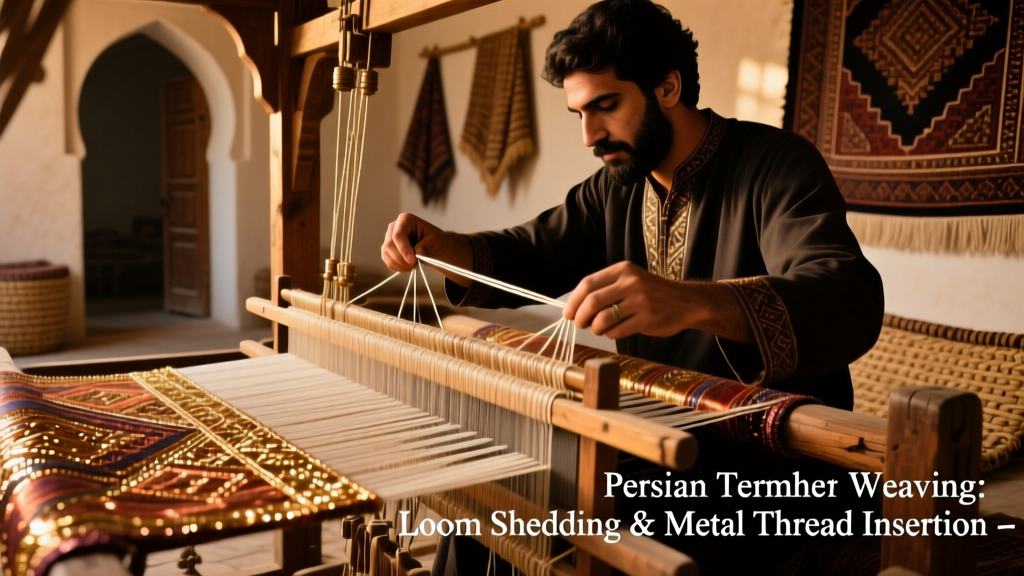
Persian Termeh Weaving Tradition
Iranian Luxury Textile
Termeh, the luxurious handwoven fabric of Iran, has been prized for centuries as a symbol of wealth and refinement. Produced primarily in Yazd and Kerman, this intricate textile features complex patterns woven with silk and metallic threads.
Weaving Process
Termeh weaving requires exceptional skill and patience. Weavers use a specialized loom with multiple harnesses to create the characteristic paisley (boteh) patterns. A skilled weaver produces only a few centimeters per day, making authentic termeh a luxury commodity.
Design Elements
The boteh (paisley) motif dominates termeh design, representing the cypress tree (eternal life) or a flame (divine light). Shah Abbasi flowers, arabesques, and garden scenes create layered compositions that reward close examination.
Modern Applications
While traditional termeh served as tablecloths, prayer rugs, and clothing, contemporary Iranian designers incorporate termeh into fashion accessories, home decor, and ceremonial garments. Government-supported workshops in Yazd maintain traditional techniques while training new generations of weavers.