Persian Termeh: Luxury Brocade of Iran

Persian Termeh: Luxury Brocade of Iran
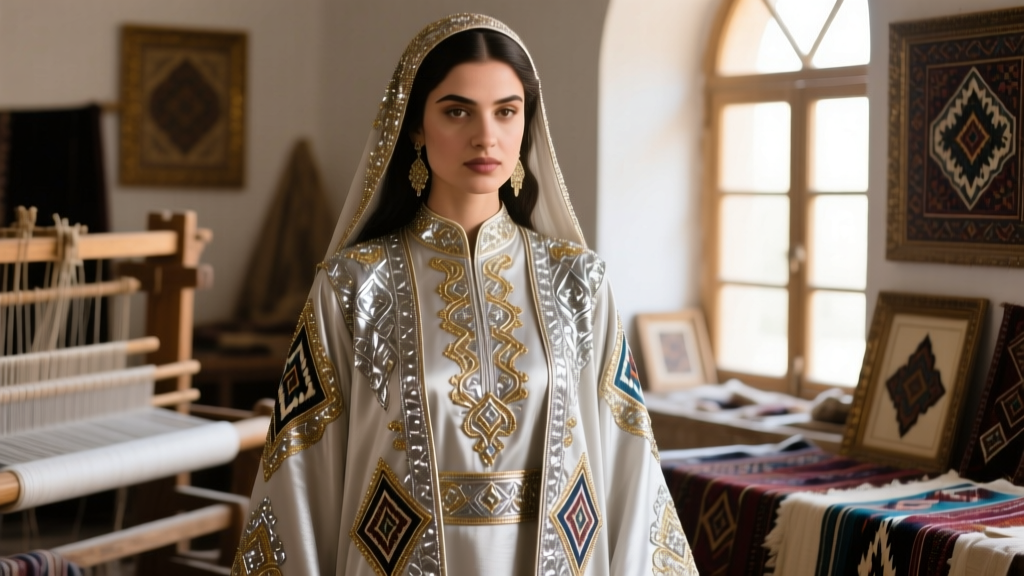
Termeh is a luxurious handwoven brocade textile that has been produced in Iran for over four centuries. Characterized by its dense, intricate patterns and rich color palette, termeh represents one of the highest achievements of Persian textile arts. Once reserved for royal courts and aristocratic households, termeh continues to be woven in the city of Yazd, where master weavers maintain this demanding craft.
Origins and History
Termeh weaving flourished during the Safavid Dynasty (1501-1736), when Persian textile arts reached their zenith. The royal workshops of Isfahan produced termeh for the Shah's court, for diplomatic gifts, and for the robes of honor (khal'at) bestowed upon dignitaries. European travelers of the period marveled at the fineness of Persian textiles, comparing them favorably to the best fabrics of Venice and Lyon.
Materials and Technique
Traditional termeh is woven from:
- Silk warp: Fine silk threads forming the structural foundation
- Silk or wool weft: Creating the dense, plush surface
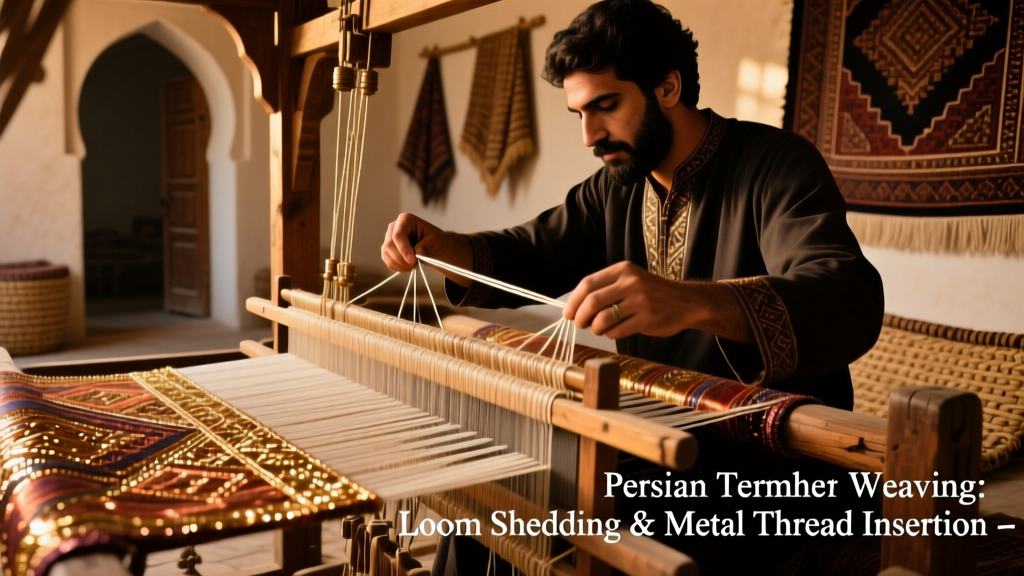
- Gold and silver thread (golabetoon): Woven into the pattern for shimmer and prestige
The weaving is done on a drawloom, requiring both a weaver and an assistant who manages the complex pattern harnesses. A single piece of termeh may require months of labor, with the weaver producing only a few centimeters per day.
Signature Patterns
- Boteh (paisley): The teardrop motif, possibly representing a cypress tree or a flame — the most iconic Persian design element
- Shah Abbasi: Elaborate floral medallions named after the Safavid ruler
- Toranj: Central medallion designs resembling a mandala
- Sarv (cypress): Symbolizing eternity and resilience
Termeh Today
While industrial textiles have largely replaced hand-woven fabrics in daily life, termeh remains valued for special occasions. It is used for sofreh aghd (wedding spreads), prayer rugs, cushion covers, and luxury accessories. The city of Yazd remains the center of termeh production, where family workshops continue traditions passed down through generations.