Bedouin Thobe: Embroidery as Identity Map
Tom Renshaw·Published

The Thobe: A Canvas of Identity
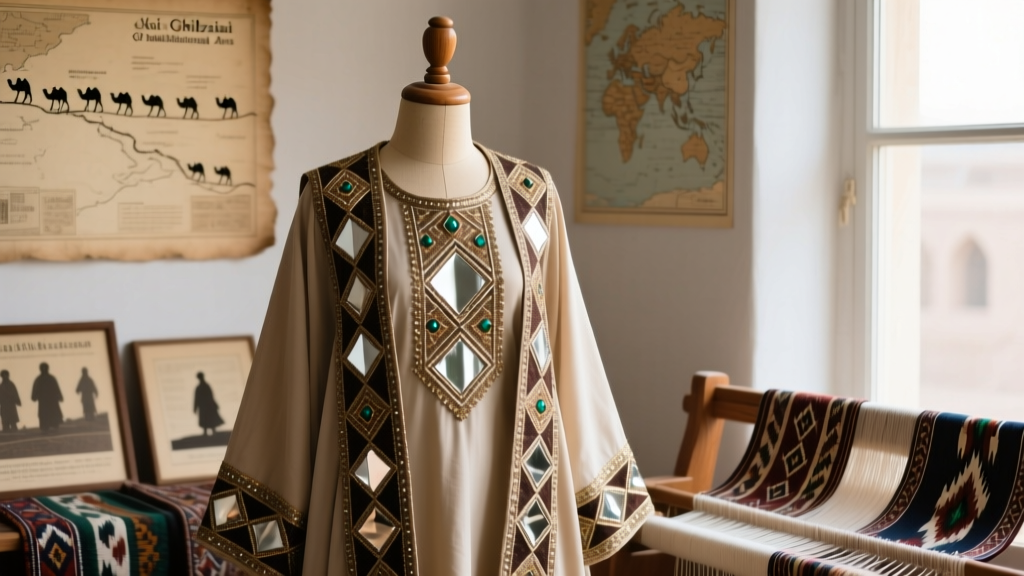
The Bedouin thobe is a long, loose garment that serves as a visual autobiography. Every element — color, stitch, motif placement, and density — communicates information about the wearer's tribe, marital status, age, and region.
Regional Variations
Palestinian Bedouin thobes from the Negev feature cross-stitch in red for unmarried women and blue for widows. Sinai Bedouin thobes are known for their heavily embroidered chest panels and coin-adorned face veils.
Key Embroidery Zones
- Chest panel (qabbeh): most densely embroidered, signals tribal affiliation
- Sleeve bands: geometric patterns specific to sub-clans
- Hem and side panels: protective motifs against the evil eye
Preservation Efforts
Organizations like the Tiraz Centre in Amman and the Palestinian Heritage Foundation work to document and preserve these embroidery traditions. Workshops teach younger generations the stitch vocabulary that once was passed from mother to daughter.