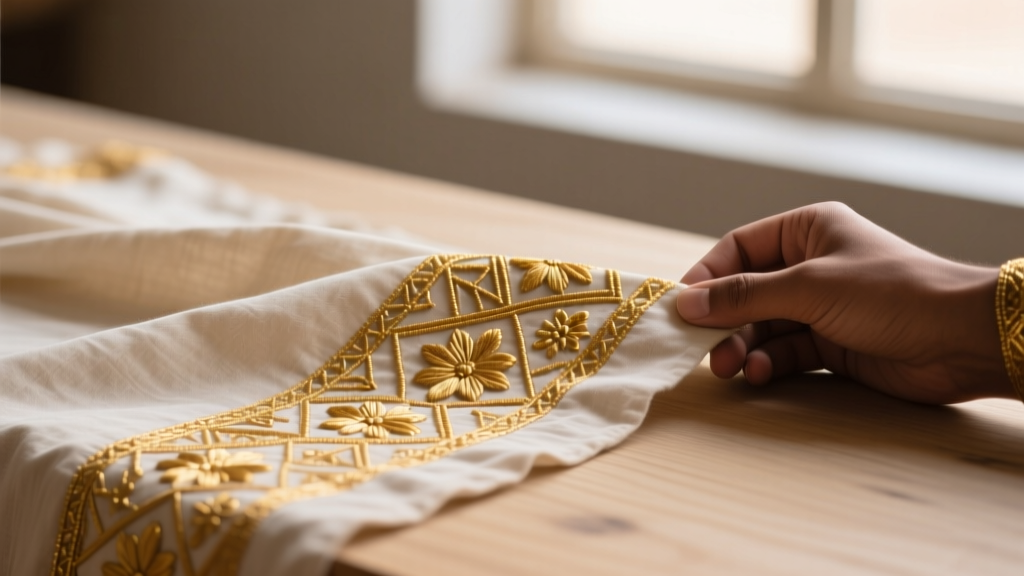
Bedouin Sadu Weaving of the Desert
Sadu: Weaving the Desert Home
Sadu is the traditional weaving practice of Bedouin women across the Arabian Peninsula. Using goat hair, camel hair, and sheep wool, they create tents, dividers, cushions, and storage bags decorated with bold geometric patterns.
The Horizontal Loom
Bedouin women weave on portable ground looms staked into the sand. The warp is stretched between two beams, and the weaver sits on the ground, beating the weft with a wooden comb.
Symbolic Patterns
- Dentistry pattern — triangular teeth motifs representing protection
- Coffee pot — hospitality symbol
- Chain — unity and family bonds
- Tree — life and fertility
UNESCO Recognition
In 2020, UNESCO inscribed sadu weaving (joint submission from Saudi Arabia, Kuwait, Oman, Qatar, and UAE) on its Intangible Cultural Heritage list, recognizing its role in preserving Bedouin identity.
Modern Context
As Bedouins settle into permanent homes, demand for traditional tents has declined. However, sadu patterns now appear in fashion accessories, interior décor, and national art programs across the Gulf states.