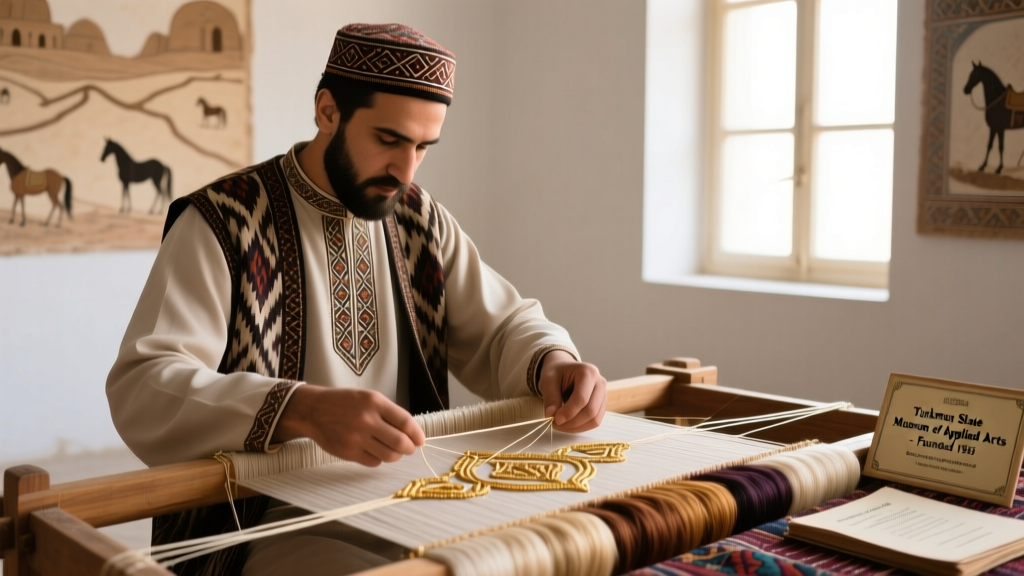
Armenian Needlepoint Lace Art
Ancient Art of Knots
Armenian needlepoint lace (also called Armenian knotted lace) is one of the world oldest lace-making traditions, with roots tracing back over 3,000 years. Unlike European bobbin or needle lace, Armenian lace is built from a series of knotted loops worked in concentric rounds, creating a fabric that is both delicate and remarkably strong.
Technique
The fundamental unit of Armenian lace is a simple knot — similar to the knot used in carpet weaving, but worked with fine cotton or silk thread. The lace maker creates a chain of knots, each anchored to the previous round, building outward from a central point.
- Work is done with a single needle and continuous thread
- Patterns expand in concentric circles or rows
- No backing fabric is used — the lace is freestanding
- A single doily can contain tens of thousands of individual knots
Design Motifs
Armenian lace draws from the same symbolic vocabulary as Armenian carpet weaving and khachkar (cross-stone) carving:
- Eternity symbols and endless knots
- Pomegranate and grape vine motifs
- Geometric rosettes and star patterns
- Cross forms and ecclesiastical symbols
Diaspora Preservation
Following the Armenian Genocide of 1915, lace-making knowledge was carried to diaspora communities across Lebanon, Syria, France, the United States, and beyond. Today, Armenian lace is taught in cultural centers worldwide, and contemporary artists incorporate the knotting technique into jewelry, sculpture, and fashion accessories.