The Chilean Mapuche Makun Poncho: A Heritage of Loom Weaving & Cultural Resilience
The Chilean Mapuche Makun Poncho: A Heritage of Loom Weaving & Cultural Resilience
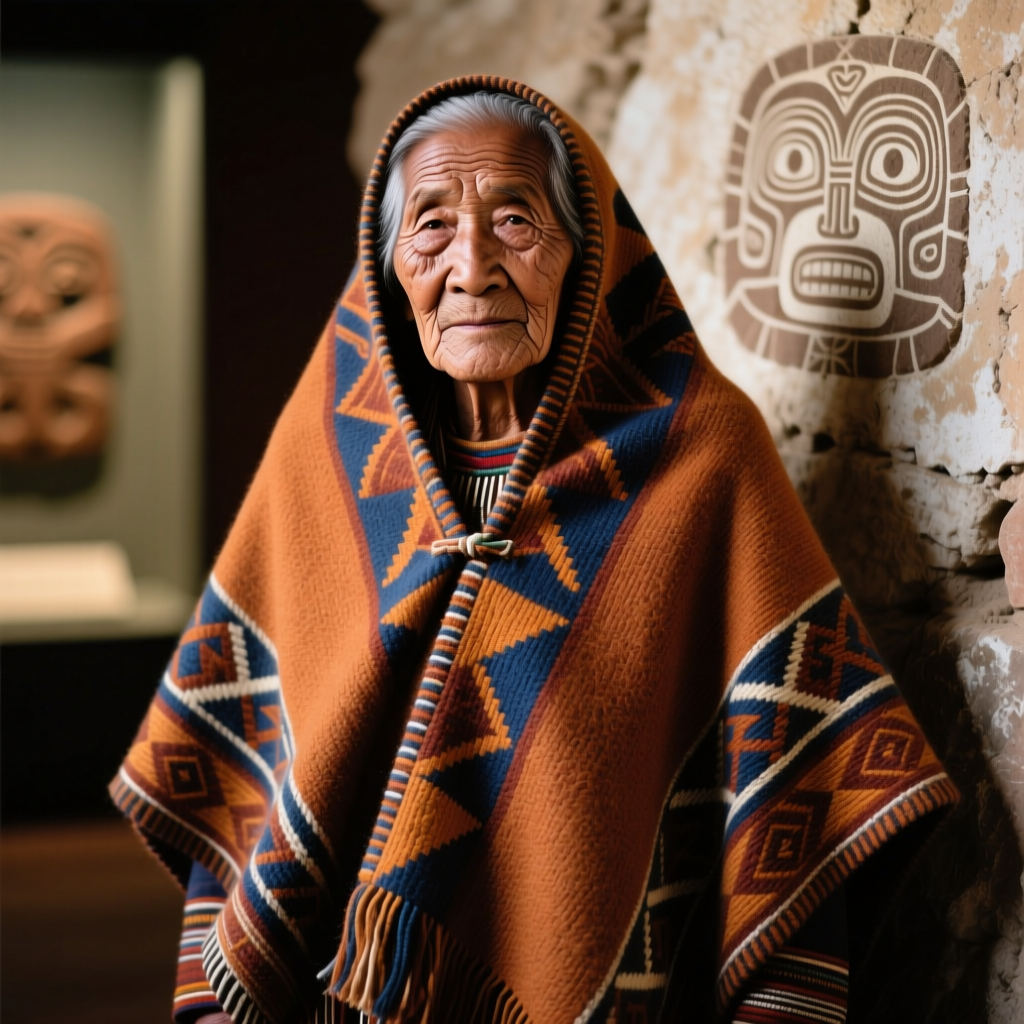
Deep within the emerald valleys, ancient forests, and rugged coastlines of southern Chile, the Mapuche people—whose name translates to 'People of the Earth'—have cultivated a rich cultural heritage that has withstood centuries of external pressure. Among the most profound expressions of this enduring legacy is the Makun (or Makuñ), the traditional Mapuche poncho. Far more than a mere garment designed to ward off the biting winds of Patagonia and the Araucanía, the Makun is a woven tapestry of history, spirituality, and identity. It serves as a map of the cosmos, a marker of social standing, and a testament to the unparalleled craftsmanship of Mapuche women.
In the study of global textile history, few garments carry the weight of ancestral memory quite like the Makun. To understand this iconic piece of South American outerwear is to understand the Mapuche cosmovisión—a worldview where the natural, spiritual, and human realms are inextricably linked. This comprehensive guide explores the intricate loom weaving techniques, the deep cultural symbolism, and the ongoing efforts to preserve the heritage of the Chilean Mapuche Makun poncho for future generations.
The Cultural Significance of the Makun in Mapuche Society
In traditional Mapuche society, textiles are not simply functional items; they are imbued with kimün (ancestral knowledge) and newen (spiritual energy). The Makun is a central pillar of this textile tradition. Historically, the quality, pattern, and color of a man's poncho communicated his lineage, his social status, and his role within the community. A Lonko (tribal chief) or a Werken (messenger and diplomat) would wear a Makun of exceptional finery, featuring complex geometric motifs and deep, vibrant dyes that commanded respect during negotiations and gatherings.
The spiritual dimensions of the Makun are equally profound. During the Nguillatun, the most sacred Mapuche ceremony of prayer and thanksgiving, the poncho acts as a conduit between the earthly plane and the spiritual realm. The weaver, always a woman, infuses the garment with her thoughts, prayers, and protective intentions. It is believed that a Makun woven with a pure heart and focused intention provides spiritual armor to the wearer, shielding them from malevolent forces and guiding them through life's transitions.
Furthermore, the Makun plays a critical role in the rites of passage. A finely woven poncho is often given as a prestigious gift during marriages, serving to forge alliances between families. Upon the passing of a community elder, their most cherished Makun may be used in burial rites, ensuring they are wrapped in the protective embrace of their ancestors and the earth. Through these practices, the poncho transcends its material form, becoming a living participant in the social and spiritual fabric of the Mapuche people.
The Craftsmanship of Traditional Mapuche Loom Weaving
The creation of an authentic Makun is a labor-intensive process that requires immense patience, physical strength, and a deep understanding of natural materials. The entire process, from the shearing of the sheep to the final tying of the fringe, is traditionally the domain of Mapuche women, who pass their kimün down through matrilineal lines.
From Fleece to Thread: Preparation and Spinning
While pre-colonial Mapuche weavers utilized the wool of the guanaco and llama, the introduction of sheep by European settlers fundamentally shifted the material base of Mapuche textiles. Today, sheep wool is the primary fiber used. The wool is sheared, sorted by quality, and washed using the saponin-rich bark of the Quillaja saponaria (soapbark) tree, a natural cleanser that preserves the lanolin and softness of the fiber.
Once cleaned and carded, the wool is spun into yarn using a huso (drop spindle). The spinner's skill dictates the thickness and consistency of the yarn. The warp threads, which form the structural foundation of the textile, are spun tightly to withstand the immense tension of the loom, while the weft threads may be spun slightly looser to provide warmth and a soft drape.
The Witral: The Vertical Loom
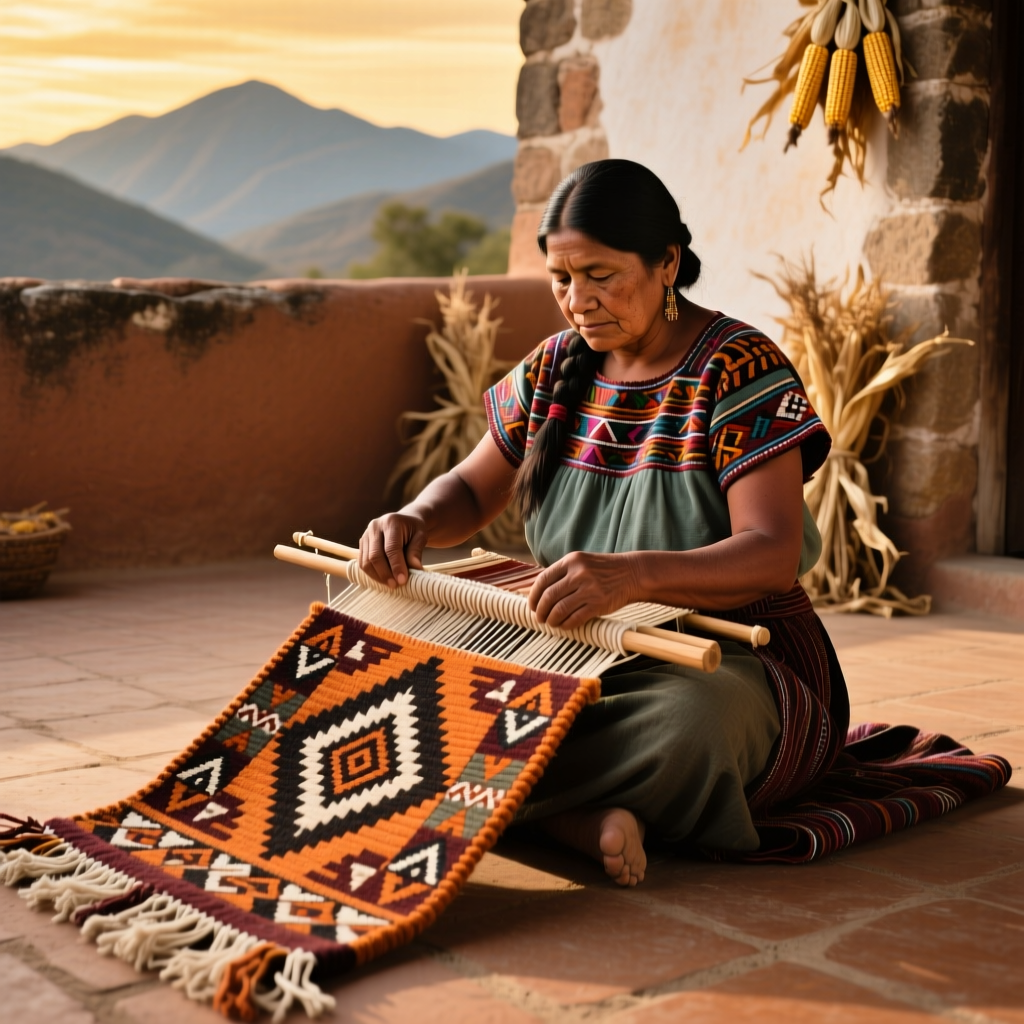
The traditional Mapuche loom, known as the Witral, is a vertical frame constructed from local wood. Setting up the Witral is a complex architectural feat. The warp threads are meticulously measured and tied to the top and bottom beams. The weaver sits on the ground, using her body weight to maintain tension, and works from the bottom up. This intimate physical connection between the weaver and the loom is often described as a dance, where the rhythm of the wooden sov (batten) beating the weft into place mimics the heartbeat of the earth.
For those interested in the broader context of indigenous weaving techniques, our archives on Andean textile traditions offer a fascinating comparison between the vertical Witral and the backstrap looms used further north.
The Alchemy of Natural Dyes
The striking color palette of the Makun is derived entirely from the local flora & fauna, as well as the earth itself. The Mapuche weavers are master botanists, possessing an encyclopedic knowledge of natural wool dyes.
- Reds and Oranges: Achieved using the roots of the michi-michi plant or the bark of the maqui tree, often modified with acidic or alkaline mordants.
- Yellows and Greens: Extracted from the leaves of the radal tree, chilco (fuchsia), and various native shrubs.
- Blacks and Deep Browns: Created through a complex process involving iron-rich mud from riverbeds, combined with tannins from tree bark.
- Blues and Purples: Historically rare and highly prized, sometimes derived from specific berries or, in later centuries, through trade for indigo.
Symbolism, Patterns, and Regional Variations
The visual language of the Makun is composed of geometric patterns that serve as a codified system of meaning. Unlike Western decorative arts, where patterns may be purely aesthetic, Mapuche motifs are deeply symbolic, representing elements of the natural world, ancestral lineages, and philosophical concepts.
The Language of Geometric Motifs
The most iconic motif found on a Makun is the Guemil, a stepped diamond or zigzag pattern. The Guemil represents the interconnectedness of all living things, the cyclical nature of time, and the ancestral lineage. It is often interpreted as a stylized representation of the Canelo tree, which holds immense sacred significance in Mapuche spirituality, serving as the axis mundi that connects the underworld, the earthly realm, and the heavens.
Other common motifs include the Llellipun (representing stars or the eyes of the creator), the Ngümin (representing the tracks of the puma or the path of life), and various stylized representations of birds, rivers, and mountains. The arrangement of these motifs across the body of the poncho is never random; it is a deliberate composition that tells a story or invokes specific spiritual protections.
Regional Variations Across the Mapuche Territory
The Mapuche territory spans diverse ecological zones, and the textiles produced in these regions reflect their unique environments. Exploring our heritage archives reveals how geography shapes material culture.
- The Lafkenche (People of the Coast): Residing along the Pacific coast, Lafkenche weavers often incorporate darker, cooler tones, reflecting the moody oceanic climate. Their patterns may feature motifs inspired by ocean waves, coastal flora, and marine life.
- The Pehuenche (People of the Pehuén): Inhabiting the higher altitudes of the Andes, the Pehuenche rely on the Araucaria (Pehuén) tree for sustenance. Their Makuns are often woven with a heavier, denser weave to withstand the harsh mountain winters, and their motifs frequently pay homage to the Araucaria's distinct geometric branches and seeds.
- The Wenteche (People of the Valleys): Living in the fertile central valleys, Wenteche textiles are renowned for their intricate, tightly packed geometric patterns and vibrant use of reds and greens, reflecting the agricultural abundance of their homeland.
- The Nagche (People of the Plains): Historically known for their equestrian culture, Nagche ponchos were designed for life on horseback, often featuring bold, expansive designs and heavy fringes that provided protection against the sweeping winds of the pampas.
The Evolution and Modern Preservation of the Makun
The history of the Mapuche people is one of fierce resistance. They successfully repelled the Inca Empire and held off the Spanish conquistadors for over three centuries in a conflict known as the Arauco War. Throughout this immense historical upheaval, the Makun remained a steadfast symbol of Mapuche sovereignty and cultural continuity. Even as colonial forces attempted to assimilate indigenous populations and suppress their languages and customs, the loom remained a quiet but powerful site of cultural preservation.
Challenges in the Contemporary Era
In the modern era, the traditional Makun faces new threats. The rise of fast fashion and mass-produced textiles has led to widespread cultural appropriation, with cheap, machine-made imitations of Mapuche patterns flooding tourist markets. These knock-offs not only undercut the economic livelihoods of indigenous weavers but also strip the sacred motifs of their cultural and spiritual context.
Furthermore, the environmental degradation of southern Chile's forests threatens the native plants required for natural dyeing, while the younger generation's migration to urban centers poses a risk to the intergenerational transmission of weaving kimün.
Revival, Cooperatives, and Conscious Fashion
Despite these challenges, a powerful movement of cultural revitalization is underway. Across the Araucanía and Los Lagos regions, Mapuche women have formed weaving cooperatives. These organizations serve multiple vital functions: they provide a fair-trade economic platform for weavers, they create communal spaces for elder women to teach the youth, and they advocate for the legal protection of Mapuche intellectual property and geographical indications.
For conscious consumers and enthusiasts of sustainable fashion, acquiring a genuine Makun is an act of cultural support. When exploring our comprehensive poncho style guide, we always emphasize the importance of provenance. Purchasing directly from Mapuche cooperatives or certified fair-trade organizations ensures that the financial benefits return to the community, empowering the weavers to continue their ancestral practice. A genuine, hand-loomed Makun is an investment in a masterpiece of human heritage—a garment that carries the soul of the weaver and the enduring spirit of the Mapuche people.
Frequently Asked Questions About the Mapuche Makun
What is the difference between a Makun and a standard poncho?
While the term 'poncho' is a generic descriptor for a sleeveless outer garment with a slit for the head, the Makun is a highly specific, culturally sacred garment originating from the Mapuche people. A standard poncho may be mass-produced from synthetic materials with printed patterns. In contrast, an authentic Makun is hand-woven on a traditional vertical Witral loom using naturally dyed sheep wool. Every geometric motif on a Makun carries deep ancestral, spiritual, and cosmological significance, making it a profound cultural artifact rather than just a piece of clothing.
How long does it take to weave a traditional Mapuche Makun?
The creation of a high-quality, traditionally dyed Makun is an extraordinarily time-consuming process. From the shearing and washing of the wool, to the hand-spinning of the yarn, the foraging and boiling of natural dyes, and finally the meticulous weaving on the Witral, the entire process can take anywhere from three to six months of dedicated labor. A highly complex ceremonial Makun, featuring intricate tapestry techniques and rare dyes, may take a master weaver up to a year to complete.
What materials are used to dye the wool for a Makun?
Authentic Mapuche weavers rely entirely on natural materials sourced from their local environment to dye their wool. The color palette is derived from native plants, tree barks, roots, and minerals. For example, the michi-michi root yields vibrant reds and oranges, radal leaves produce yellows and greens, and iron-rich river mud combined with tannins creates deep blacks and browns. The use of natural mordants, such as wood ash or alum, helps fix the colors, ensuring the poncho remains vibrant for decades.
Can anyone wear a Mapuche Makun poncho?
The Mapuche community's perspective on who can wear a Makun is nuanced and deeply tied to the concept of respect. While Mapuche people generally welcome the appreciation of their culture, they strongly oppose cultural appropriation and the wearing of sacred ceremonial garments by non-Mapuche individuals as mere fashion statements or costumes. If you purchase an authentic, everyday-wear Makun directly from a Mapuche weaver or cooperative with the intention of honoring the craft, supporting the community, and treating the garment with the utmost respect, it is generally viewed as a positive exchange. However, specific ceremonial ponchos reserved for spiritual leaders should never be worn by outsiders.
How can I support authentic Mapuche weavers?
The most impactful way to support Mapuche weavers is to purchase textiles directly from indigenous-led cooperatives, fair-trade organizations, or certified artisan markets in regions like Temuco, Villarrica, or Chol-Chol. Avoid buying 'Mapuche-style' ponchos from mass-market retailers or unverified tourist shops, as these are often machine-made imitations that exploit indigenous designs without compensating the community. Additionally, educating yourself and others about the cultural significance of the Makun helps combat the erasure of Mapuche heritage in the global fashion industry.
Conclusion
The Chilean Mapuche Makun poncho is a masterclass in the intersection of utility, art, and spirituality. It is a garment that has weathered the storms of colonization, adapting to new materials while fiercely guarding its ancestral soul. To study the Makun is to read the history of the Mapuche people written in warp & weft. As we continue to document and celebrate global textile heritage, the Makun stands as a powerful reminder of the resilience of indigenous knowledge and the profound beauty that emerges when human hands weave the stories of the earth.