Traditional Dress Europe: A Regional Variant Comparison
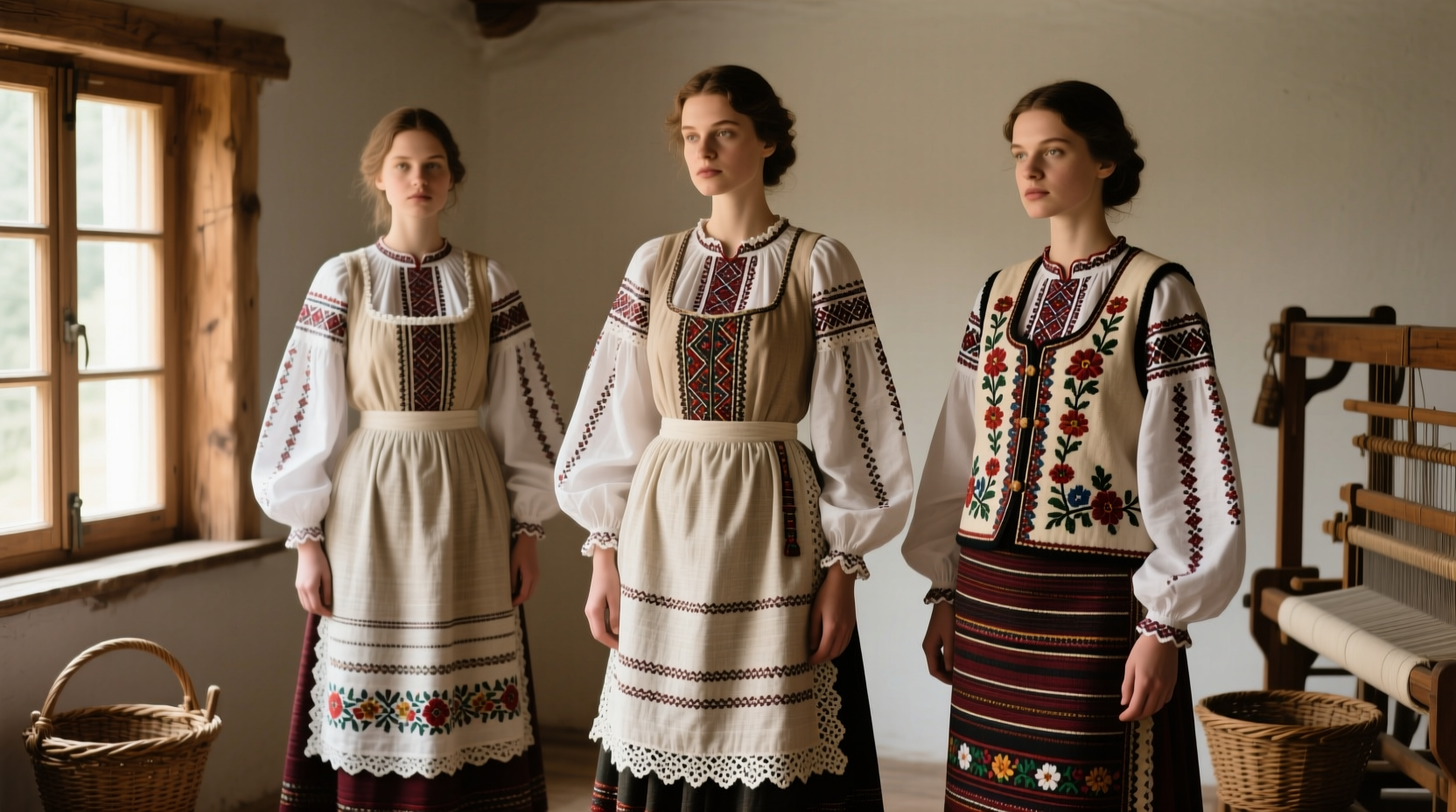
When examining traditional dress Europe offers a masterclass in how geography, climate, and socio-political history weave themselves into the very fabric of a culture. Far from being static museum relics or mass-produced Oktoberfest caricatures, European folk garments are living traditions. They are governed by strict regional protocols, crafted from highly specific local materials, and serve as profound markers of identity. To truly understand these garments, one must look beyond the superficial and compare the structural and cultural nuances across different regions.
The Architecture of Alpine Heritage: Bavarian Trachten vs. Austrian Dirndl
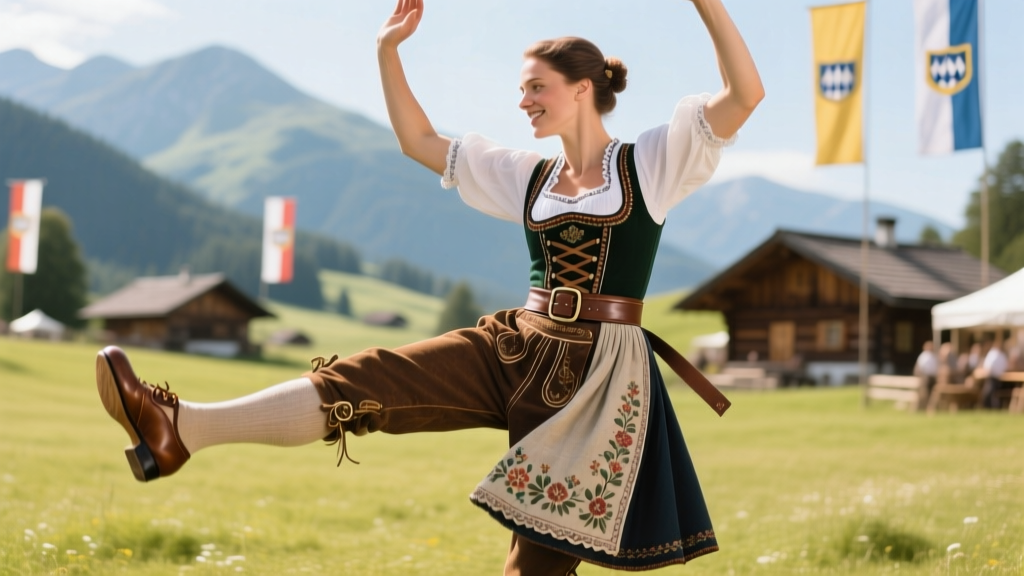
The Alpine regions of Germany and Austria are globally synonymous with Tracht (traditional clothing). However, conflating all Alpine dress under a single umbrella ignores the deep regional divergences between Bavarian and Austrian variants. The women’s Dirndlgwand (dirndl) and men’s Lederhosen evolved from 18th-century rural workwear into codified symbols of regional pride during the 19th-century romantic nationalist movement.
Fabric, Construction, and Regional Markers
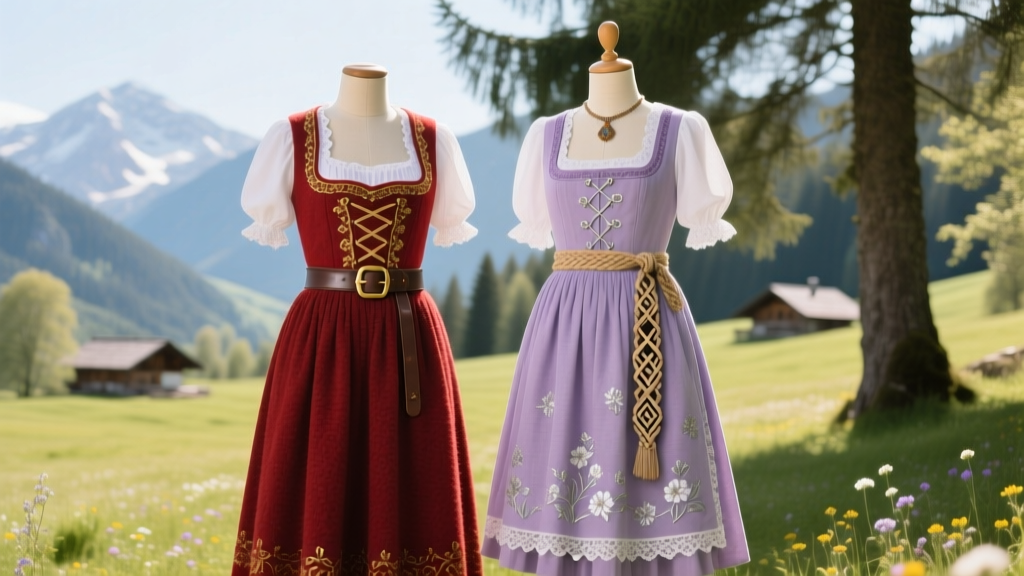
An authentic dirndl is a three-piece ensemble consisting of the Mieder (bodice), Rock (skirt), and Schürze (apron). In Bavaria, particularly around the Miesbach and Werdenfels regions, the bodice is often heavily structured, utilizing a front-lacing mechanism with silver hooks and a contrasting silk Brusttuch (chest piece). Austrian variants, such as the Ausseer dirndl from the Salzkammergut region, favor a more subdued, elegant silhouette with pastel-colored cottons and a distinct lack of heavy front-lacing, relying instead on a hidden side-zip or back-lacing.
For men, authentic Lederhosen are crafted from deer or chamois leather, tanned using traditional brain-tanning or vegetable-tanning methods to ensure the leather remains supple and breathable. The embroidery (Säcklernähterei) on the suspenders and the front flap (Latz) is highly localized; the oak leaf motif is prevalent in Bavaria, while the edelweiss and alpine rose are distinctly Austrian.
The Economics of Alpine Artisans
Mass-market 'costume' dirndls made of polyester can be found for €50 to €100, but these lack cultural validity and structural integrity. A genuine, bespoke Maßdirndl crafted by a master tailor (Trachtenschneiderei) using pure linen, virgin wool, and silk brocade ranges from €800 to over €2,000. Authentic hand-embroidered Lederhosen from artisan cooperatives in Garmisch-Partenkirchen or Salzburg typically start at €1,200 and can exceed €3,500, reflecting hundreds of hours of hand-stitching.
Scandinavian Silver and Wool: Deconstructing the Norwegian Bunad
Nowhere in Europe is traditional dress more fiercely protected and economically significant than in Norway. The bunad is not merely a folk costume; it is a vital piece of cultural capital, worn at weddings, confirmations, and National Day (May 17th) celebrations. According to the Norsk Folkemuseum (Norwegian Museum of Cultural History), there are over 450 distinct bunad variations, each tied to a specific valley, fjord, or municipality.
Regional Divergence: Hardanger vs. Telemark
The structural differences between regional bunads highlight Norway's historically isolated topography. The Hardangerbunad, often called the 'first bunad,' originates from the Hardanger fjord region. It is characterized by a black wool skirt and bodice, heavily contrasted with a white linen shirt featuring intricate Hardangersøm (whitework embroidery and drawn-thread work).
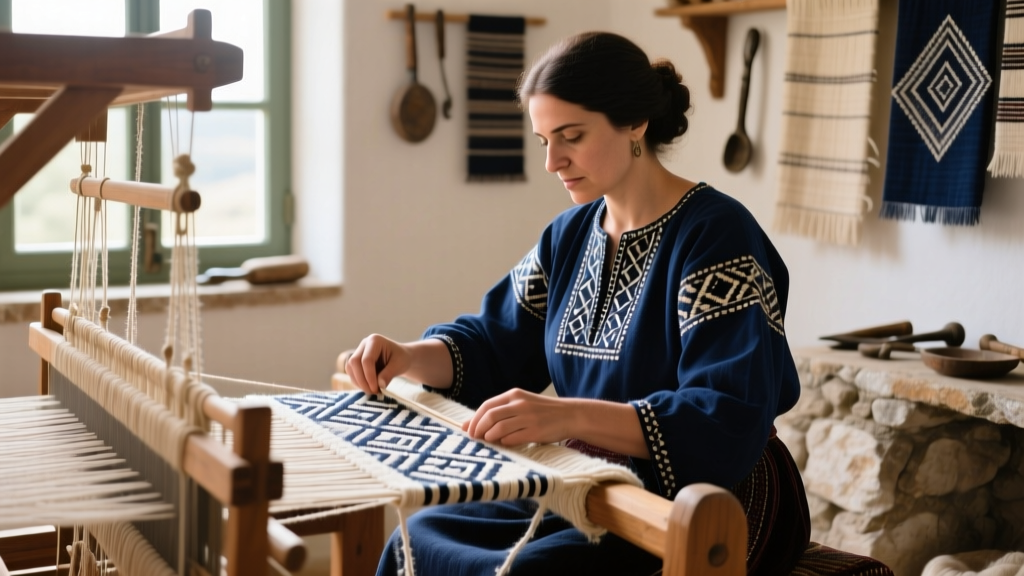
Conversely, the Telemarksbunad from the inland Telemark region relies on deep, rich colors—navy, burgundy, or forest green—woven in a traditional rosespath (rosepath) twill weave. The embroidery here is vibrant, utilizing silks in reds, yellows, and blues, reflecting the region's historical wealth from timber and trade.
The Role of Sølv (Silver) and the Bunad Council
No bunad is complete without sølv (silver jewelry). A full set includes a neck ring (halssmykke), brooches (søljer), cufflinks, and a belt buckle. The silver is traditionally oxidized to give it a darkened, antique patina, symbolizing the passing down of heirlooms through generations. The creation and modification of these garments are strictly overseen by the Bunad- og folkedraktrådet (Bunad and Folk Dress Council), ensuring historical accuracy in stitch counts, fabric weights, and dye colors. Because of this rigorous standardization, a complete women’s bunad with silver typically costs between 30,000 and 60,000 NOK (€2,500 to €5,000), making it a significant lifelong investment.
Woven Identity: The Scottish Kilt and Tartan Protocols
While the Alpine and Scandinavian traditions focus heavily on embroidery and tailoring, the Scottish Highland dress is defined by its textile: the tartan. The kilt is a masterclass in garment engineering, utilizing a single, continuous piece of woven wool to create a garment that is both highly structured and remarkably fluid.
Weight, Weave, and the Anatomy of the Sett
An authentic Highland kilt is not a simple wrap skirt. A traditional '8-yard kilt' uses exactly eight yards of double-width tartan wool. The fabric is pleated at the back—either to the sett (repeating the pattern exactly so the tartan looks unbroken) or to the stripe (creating a vertical line effect). The National Museums Scotland archives detail how the heavy worsted wool, typically weighing 16oz per yard, provides the necessary 'swing' and weather resistance required in the Highlands.
The tartan pattern itself, known as the sett, is registered and regulated. While 'ancient' tartans feature softer, vegetable-dyed hues (muted greens and blues), 'modern' tartans use vibrant chemical dyes. Weathered or 'reproduction' tartans mimic the faded look of cloth buried in the bogs, a nod to the post-Culloden era when Highland dress was banned under the Dress Act of 1746.
Formal vs. Daywear Etiquette
Scottish traditional dress operates on a strict formality spectrum. Daywear involves an Argyll jacket, a tweed waistcoat, and a leather sporran with simple hair or leather tassels. Formal evening wear requires a Prince Charlie coatee (a tailcoat with silver buttons), a lace jabot (cravat), and a full-dress fur sporran. The sgian-dubh (a small, single-edged knife) is tucked into the top of the kilt hose (socks), with only the hilt visible—a historical remnant of a time when hidden weapons were necessary for self-defense.
Comparative Matrix: European Folk Dress at a Glance
To synthesize the vast differences in construction, material, and cultural application, the following matrix compares these three dominant traditions.
| Region | Primary Garment | Core Materials | Base Price Range (Authentic) | Defining Accessory |
|---|---|---|---|---|
| Alpine (Bavaria/Austria) | Dirndl / Lederhosen | Linen, Wool, Deer Leather | €800 - €2,500+ | Silk Schürze (Apron) / Charivari (Silver chain) |
| Scandinavia (Norway) | Bunad | Wool Twill, Linen, Silk Thread | €2,500 - €5,000+ | Oksidert Sølv (Oxidized Silver Jewelry) |
| Highlands (Scotland) | 8-Yard Kilt | 16oz Worsted Wool Tartan | £400 - £900+ | Sporran & Sgian-dubh |
Sourcing Authentic Pieces: Avoiding Fast-Fashion Imitations
When acquiring traditional dress Europe markets are flooded with cheap, synthetic imitations that strip these garments of their cultural significance. To ensure authenticity and support living heritage:
- For Alpine Tracht: Avoid shops selling 'costumes' near major tourist hubs. Seek out certified Trachtenschneidereien (tailors) in rural Bavaria or the Salzkammergut. The Bayerisches Nationalmuseum frequently hosts exhibitions that highlight certified artisan makers.
- For Norwegian Bunads: You must have a documented ancestral or residential link to the specific region to ethically wear its bunad. Purchase only from authorized Bunadtilvirkere (certified bunad makers) who are members of the Norwegian Bunad Manufacturers Association.
- For Scottish Kilts: Ensure the kilt is hand-stitched in Scotland using wool woven at historic mills like Lochcarron or Marton Mills. A machine-stitched kilt using acrylic blend poly-viscose will not hold its pleats or provide the correct drape.
Conclusion: The Living Thread of European Heritage
Exploring traditional dress Europe reveals that these garments are far more than aesthetic choices; they are complex archives of regional history, trade routes, and social structures. Whether it is the meticulous silverwork of a Telemark bunad, the hand-tanned deer leather of a Bavarian lederhosen, or the precisely pleated worsted wool of a Scottish kilt, each garment demands respect for its origins. By understanding the regional variants and investing in authentic, artisan-crafted pieces, we ensure that these profound expressions of European cultural identity continue to thrive in the modern era.