Traditional Clothing in China: Regional Variants Compared
Decoding the Tapestry of Traditional Clothing in China
When discussing traditional clothing in China, it is a common misconception to view it as a monolith. In reality, Chinese dress is a vast, intricate matrix of historical evolution, ethnic diversity, and regional textile mastery. From the sweeping, flat-cut silhouettes of Han dynasty scholars to the tailored elegance of 1920s Shanghai, and the vibrant, indigo-dyed pleats of Guizhou's Miao communities, Chinese garments represent some of the most sophisticated textile engineering in human history. For collectors, historians, and cultural enthusiasts, understanding these regional variants and structural differences is essential for authentic appreciation and ethical sourcing.
Hanfu: The Foundation of Han Sartorial Identity
The term Hanfu (汉服) translates literally to 'Han clothing,' referring to the historical dress of the Han ethnic majority prior to the Qing dynasty (1644–1912). Unlike Western tailoring, which relies on darts and complex seam lines to contour the body, traditional Hanfu utilizes a flat-pattern cutting system. Garments are constructed from rectangular panels of fabric, honoring the integrity of the woven textile and minimizing waste.
Core Structural Elements
- Jiaoling Youren (交领右衽): The defining feature of Hanfu is the intersecting collar that wraps over the chest, with the left side crossing over the right. This 'right lapel' rule is deeply tied to Confucian philosophy and the concept of yin and yang. Wrapping left-over-right is strictly reserved for dressing the deceased.
- Ruqun (襦裙): A staple ensemble consisting of a short, crossed-collar top (ru) tucked into a high-waisted, wrap-around skirt (qun). This silhouette dominated the Tang dynasty (618–907), often featuring vibrant, heavily patterned silks influenced by Silk Road trade.
- Mamianqun (马面裙): The 'horse-face skirt,' popularized during the Ming dynasty (1368–1644). It features two overlapping flat panels at the front and back, with deep, structured pleats on the sides. Modern reproductions of the mamianqun are currently at the forefront of the Hanfu revival movement.
The Qipao and Cheongsam: Tailoring the Silhouette
While Hanfu represents ancient continuity, the Qipao (旗袍) or Cheongsam represents China's sartorial modernization. Originating from the loose, floor-length changpao worn by Manchu women during the Qing dynasty, the Qipao was radically reimagined in 1920s Shanghai. Tailors integrated Western construction techniques—such as set-in sleeves, bust darts, and waist suppression—creating the form-fitting silhouette recognized globally today.
According to archives at the Metropolitan Museum of Art, the 1930s Qipao became a canvas for cross-cultural exchange, utilizing imported European lace, Art Deco geometric prints, and high-standing collars fastened with intricate pankou (knotted fabric buttons). The Qipao remains a living tradition, frequently worn at weddings, diplomatic functions, and formal banquets.
Structural Comparison: Hanfu vs. Qipao vs. Minority Dress
To understand the engineering differences across traditional clothing in China, we must compare the underlying construction methodologies. The following table outlines the primary structural divergences:
| Feature | Hanfu (Han Majority) | Qipao / Cheongsam | Miao Traditional (Guizhou) |
|---|---|---|---|
| Cutting Method | Flat-pattern, geometric panels | Contoured, Western darts | Flat-cut, heavily layered |
| Collar Style | Crossed (Jiaoling) or round | Mandarin / High-standing | Crossed or collarless |
| Fastening | Silk ties, hidden ribbons | Pankou (knotted buttons) | Silver clasps, woven sashes |
| Primary Fabric | Mulberry silk, ramie, hemp | Brocade, crepe, velvet | Hand-woven cotton, indigo |
Regional and Ethnic Variants: Beyond the Han Majority
China is home to 55 recognized ethnic minority groups, many of which possess textile traditions that rival the imperial courts in complexity. These regional variants are defined by their localized climates, spiritual beliefs, and indigenous raw materials.
Miao Indigo and Silverwork (Guizhou Province)
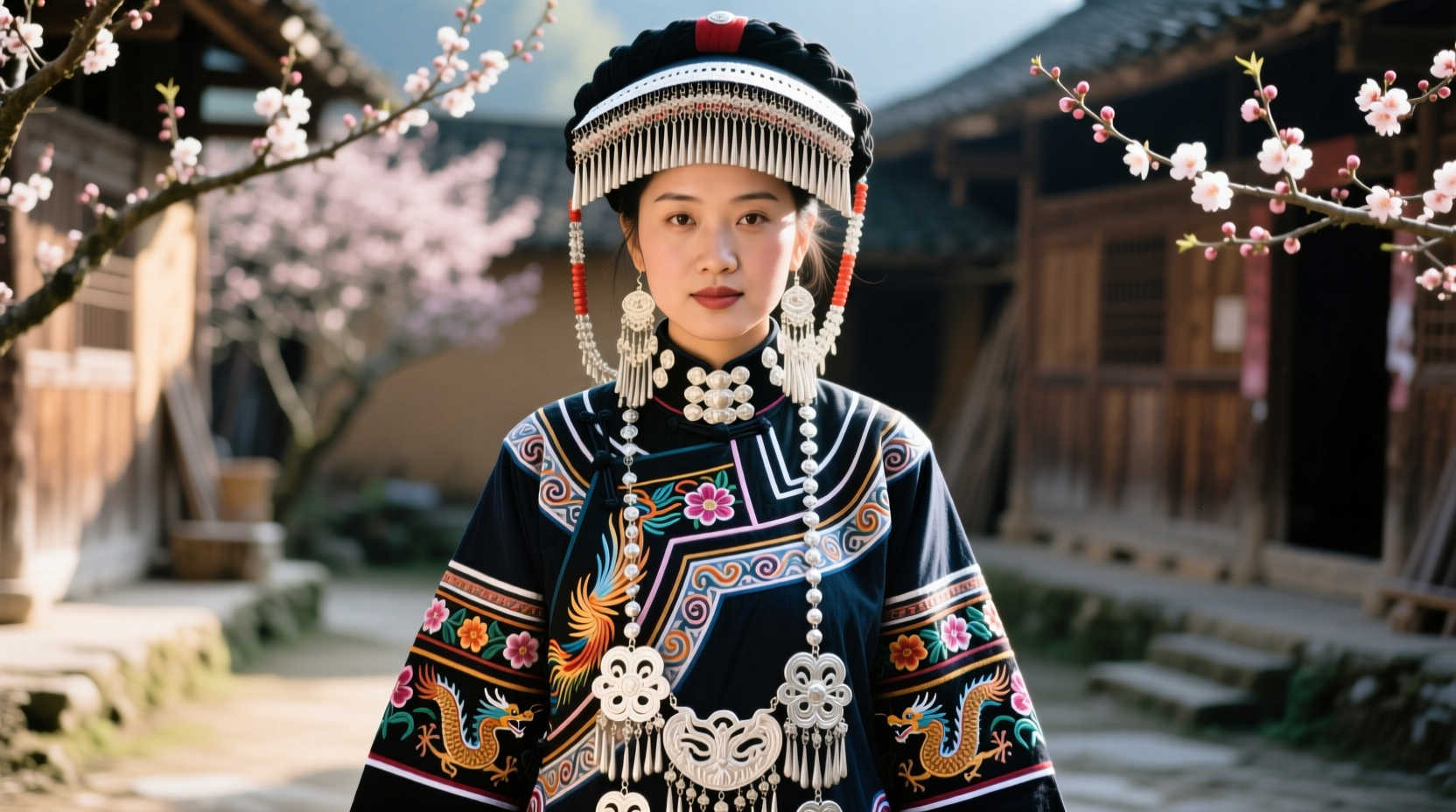
The Miao (Hmong) people of southwestern China are globally renowned for their mastery of indigo dyeing and batik (lajiao). A traditional Miao pleated skirt from the Danzhai or Rongjiang regions can require up to 20 meters of hand-woven cotton, meticulously folded and steamed to hold hundreds of micro-pleats. The dark, lustrous finish is achieved through repeated submersion in fermented indigo vats, followed by pounding with wooden mallets to polish the fabric. These garments are heavily adorned with silver jewelry—horned headdresses and collar torques—which serve as both spiritual protection and a display of familial wealth.
Uyghur Atlas Silk (Xinjiang Region)
In the arid northwest, the Uyghur people produce Atlas (艾德莱斯绸), a vibrant warp-ikat silk. Unlike the brocades of eastern China, Atlas is characterized by its blurred, bleeding geometric patterns, created by tightly binding and resist-dyeing the warp threads before weaving. The brilliant yellows, greens, and magentas historically utilized natural dyes derived from pomegranate rinds, safflower, and indigo. As documented by the Victoria and Albert Museum's Asian textile collections, Silk Road oasis towns like Hotan have been centers of this specific weaving technique for centuries, producing lightweight, breathable fabrics suited for the desert climate.
Tibetan Chuba and Brocade (Amdo and Kham)
The high-altitude Tibetan plateau necessitates the Chuba, a long-sleeved, wrap-around robe typically made from sheepskin, wool, or heavy brocade. In the Kham region, nomadic herders wear Chubas lined with raw sheep fleece, allowing the wearer to slip off one or both sleeves during the heat of the day and tie them around the waist. For festivals, aristocratic and monastic variants utilize yunjin (cloud brocade) imported from Nanjing, woven with real gold and silver threads, showcasing the deep historical trade routes connecting the plateau with the Yangtze river valleys.
Collector’s Guide: Sourcing, Pricing, and Authentication
For those looking to acquire authentic traditional clothing in China, the market is divided into three distinct tiers. Understanding these tiers prevents the accidental purchase of cheap theatrical costumes masquerading as cultural artifacts.
1. Mass-Market and Festival Wear ($25 – $80 USD)
Often sold on e-commerce platforms, these garments are typically made from polyester blends. While they mimic the silhouettes of Hanfu or Qipao, they lack historical accuracy. The mamianqun in this tier often feature machine-pressed pleats that fall out after washing, and the fabrics do not breathe. These are suitable for casual cosplay or theatrical performances but hold no cultural or collector value.
2. Artisan and Historical Recreation ($150 – $600 USD)
The modern 'Hanfu Movement' has birthed a cadre of dedicated studios that recreate Ming, Song, and Tang dynasty garments using historical texts and surviving museum artifacts. Expect to pay $200+ for a genuine mulberry silk Ruqun or a jacquard-woven Mamianqun. In the Qipao market, bespoke tailors in Shanghai and Hong Kong charge between $400 and $800 for a custom-fitted garment utilizing traditional pankou knotting and high-grade silk crepe.
3. Antique and Vintage Textiles ($800 – $5,000+ USD)
Sourcing Qing dynasty court robes (longpao) or early 20th-century Republican Qipao requires engaging with specialized auction houses or antique textile dealers. Authentication is critical; buyers must examine the lining (antiques often feature hand-woven cotton or hemp linings), the condition of the metallic threads (which tarnish and oxidize over decades), and the natural degradation of the silk proteins. Vintage Miao indigo jackets from the mid-20th century typically range from $300 to $1,200, depending on the density of the embroidery and the provenance of the silver clasps.
Cultural Protocols and Wearing Etiquette
Engaging with traditional clothing in China requires a foundation of cultural respect. The most critical protocol, as mentioned, is the direction of the collar. Always ensure that the left side of the garment crosses over the right side. Presenting a right-over-left lapel on a living person is considered deeply inauspicious and offensive, as it mimics the dressing of corpses for burial.
Furthermore, when wearing regional minority dress—such as a Miao indigo jacket or a Tibetan Chuba—it is vital to understand the context of the garment. Many of these pieces are not everyday wear but are reserved for specific agricultural festivals, weddings, or spiritual rites. Purchasing directly from artisan cooperatives in Guizhou or Xinjiang, rather than mass-market aggregators, ensures that the economic benefits of these living traditions return to the communities that have preserved them through centuries of political and environmental upheaval. By studying the precise construction and regional variants of these garments, we move beyond mere aesthetic appreciation and engage with the profound material history of the Chinese subcontinent.