Trachten Jacket Women: Modern vs Traditional Styling 2026
The Anatomy of the Authentic Trachtenjacke
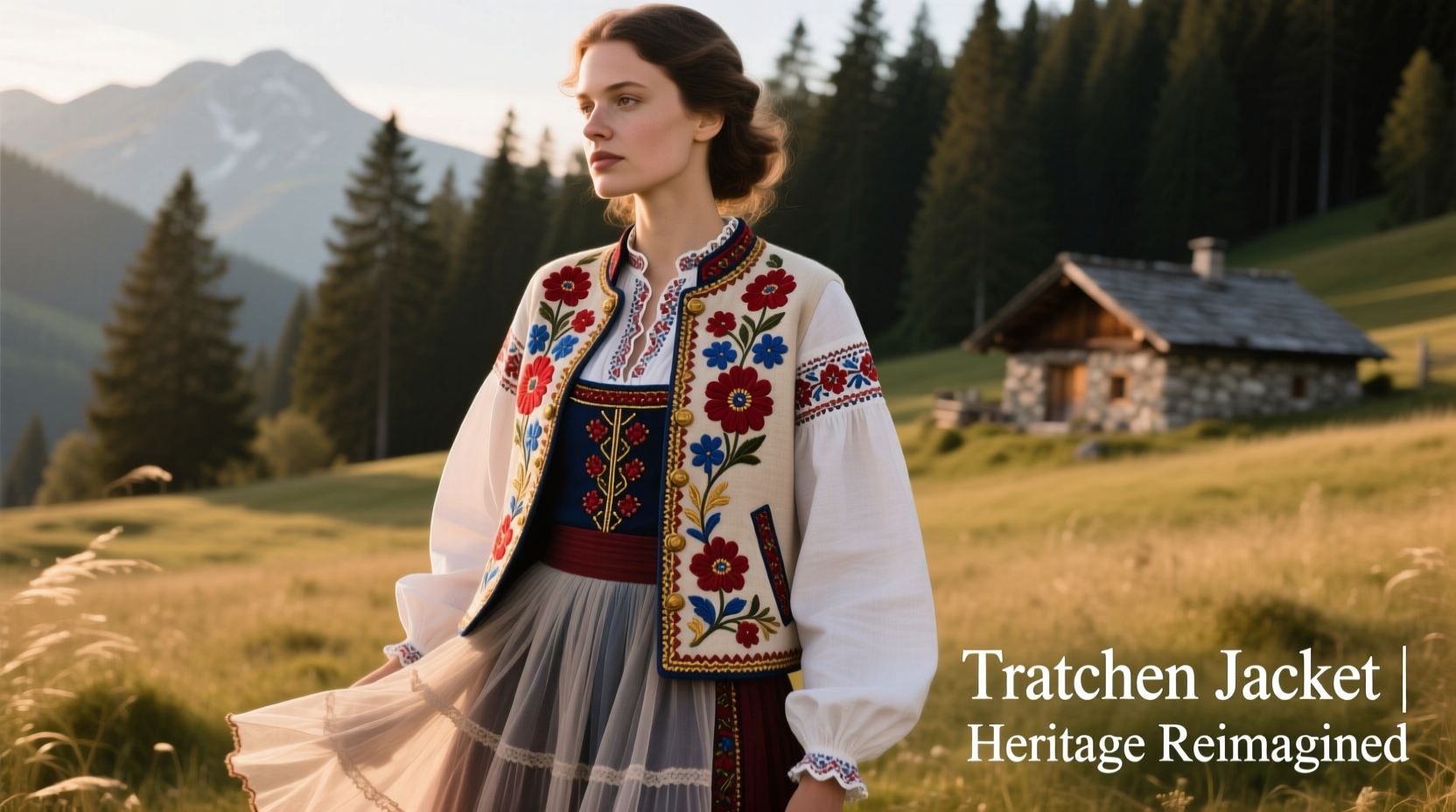
When researching the perfect trachten jacket women often encounter a fascinating crossroads between strict historical accuracy and contemporary alpine fashion. The traditional women's Trachten jacket—known regionally as a Janker, Spenzer, or Schalk depending on its length and formality—is a masterclass in functional alpine tailoring. Unlike mass-produced costume wear, an authentic Trachtenjacke is engineered to withstand the harsh climates of the Alps while maintaining a highly structured, elegant silhouette.
The foundation of any heritage jacket is Walkloden, a densely milled and boiled wool fabric. The process of fulling the wool shrinks the fibers, creating a naturally windproof, water-resistant, and incredibly durable textile. According to textile archives at the Tiroler Volkskunstmuseum, the use of Loden dates back centuries, originally serving as essential outerwear for alpine farmers before being adopted by the aristocracy for hunting and country pursuits. Traditional jackets are finished with Hirschhornknöpfe (genuine stag horn buttons) and often feature Samtbesatz (velvet piping) along the lapels and cuffs to denote regional origin and social standing.
Traditional Styling: Regional Rules and Heritage Rigor
In the realm of authentic Tracht (as opposed to casual Landhausmode), styling is governed by unwritten but deeply respected regional codes. The Trachten jacket is not merely a fashion accessory; it is a geographic and cultural identifier. The experts at the Bayerisches Nationalmuseum emphasize that the cut, color, and trim of a Janker can pinpoint a wearer's village of origin.
- The Miesbacher Tracht (Bavaria): The women's jacket here is typically a hip-length Spenzer made of dark forest green or heather grey Loden. It features a tailored waist designed to sit perfectly over the structured bodice of a Miesbacher Dirndl, fastened with silver or horn buttons.
- Die Salzburger Festspieltracht: Championed by the Salzburger Heimatwerk, this style is characterized by a longer, more formal Schalk cut. It often incorporates intricate silk embroidery, pastel velvet trims, and is worn exclusively with the corresponding floor-length silk or heavy cotton Dirndl skirt.
- Die Ausseer Tracht (Styria): Famous for its vibrant colors, the Ausseer Janker for women frequently features rose-pink or ice-blue Loden with contrasting silk lapels. It is traditionally worn with a printed silk scarf and a gold Haube (cap).
When wearing traditional Tracht, the jacket must always coordinate with the specific regional Dirndl. Mixing a Bavarian Janker with an Ausseer skirt is considered a significant faux pas in conservative Trachtenvereine (cultural preservation societies).
Modern Interpretations: The Landhausmode Movement
As we move through 2026, the modern styling of the Trachten jacket has evolved into the highly popular Landhausmode (country-house fashion) movement. This approach strips away the rigid regional rules, focusing instead on the rustic elegance, premium materials, and romantic tailoring of alpine heritage.
Contemporary designers are reimagining the trachten jacket women seek for everyday wear by introducing cropped silhouettes, softer shoulder constructions, and unlined summer-weight Loden. Modern styling encourages versatility. A beautifully tailored, heather-grey cropped Janker with subtle velvet piping can be effortlessly paired with:
- Dark Wash Denim: A high-waisted, straight-leg jean creates a striking contrast between rustic alpine heritage and modern casual wear.
- Pleated Midi Skirts: Pairing a structured Loden jacket with a flowing, non-traditional pleated skirt in a complementary earth tone bridges the gap between office-appropriate attire and weekend alpine aesthetics.
- Cashmere Turtlenecks: In the colder months, layering a collarless Trachten jacket over a fine-gauge cashmere turtleneck offers a sophisticated, minimalist European look.
Modern color palettes have also expanded. While classic forest green (Tannengrün) and heather grey (Meliert) remain staples, contemporary boutiques now offer Loden jackets in muted terracotta, deep burgundy, and soft taupe, catering to a global audience that appreciates artisan craftsmanship without committing to a full regional costume.
Material Matrix: Heritage Walkloden vs. Contemporary Blends
Understanding the fabric composition is critical when investing in a Trachten jacket. The table below outlines the differences between heritage materials and modern adaptations.
| Feature | Heritage Walkloden (100% Schurwolle) | Modern Wollmischgewebe (Wool Blends) |
|---|---|---|
| Composition | 100% Virgin Alpine Sheep Wool | 60-80% Wool, mixed with Polyamide or Viscose |
| Weather Resistance | Exceptional; naturally water and windproof | Moderate; loses some natural lanolin properties |
| Drape & Weight | Heavy, structured, holds a rigid silhouette | Lighter, softer drape, more fluid movement |
| Longevity | Generational; can last 50+ years with care | 5-10 years; blends may pill or lose shape |
| Best Use Case | Authentic Tracht, outdoor alpine wear, formal events | Landhausmode, transitional weather, casual styling |
Investment Guide: Pricing the Perfect Janker
A genuine Trachten jacket is an investment in slow fashion and European textile heritage. Prices vary wildly based on the origin of the wool, the artisan crafting the garment, and the complexity of the hand-stitched details.
Entry-Level & Commercial Brands (€150 – €280)
At this price point, you will typically find jackets made from wool blends or lighter-weight Loden. While they capture the aesthetic of the Trachtenjacke, they often utilize synthetic linings, plastic buttons molded to look like horn, and machine-made buttonholes. These are suitable for occasional Oktoberfest wear or casual Landhausmode styling.
Mid-Tier Artisan & Heritage Mills (€350 – €650)
This is the sweet spot for serious enthusiasts. Jackets in this range are produced by established alpine mills and regional cooperatives. You can expect 100% Walkloden milled in Austria or Bavaria, genuine stag horn or antique metal buttons, hand-stitched buttonholes, and natural linings such as cotton or cupro. Brands sourcing from historic mills like Steiner1888 or Loden Plankl typically fall into this category.
Bespoke & Master Tailoring (€800 – €1,500+)
For a true Salzburger Schalk or a bespoke Miesbacher Spenzer, master tailors take over 40 individual measurements. The jacket is fully canvassed, hand-embroidered with regional motifs (such as edelweiss or oak leaves), and lined with pure silk. These garments are commissioned for weddings, formal festivals, and lifelong cultural participation.
Caring for Your Loden Heritage
To maintain the structural integrity and natural weather resistance of a Walkloden jacket, avoid frequent dry cleaning, which strips the wool of its natural lanolin. Instead, brush the jacket regularly with a specialized Lodenbürste (Loden brush) to remove dust and restore the nap of the fabric. After wearing, air the jacket out on a wooden hanger in a well-ventilated, humid environment (like a bathroom after a shower) to naturally release wrinkles and odors. By respecting the material and the history it carries, your Trachten jacket will remain a timeless staple in your wardrobe for decades to come.