Taiwan Traditional Costume: Origins & Roots

Unraveling the Threads of Formosa
The sartorial history of Taiwan is a complex, multi-layered tapestry that defies a single monolithic definition. When researchers and textile historians investigate the Taiwan traditional costume, they are actually examining a dichotomy of profound cultural depth: the ancient, loom-woven garments of the Austronesian Indigenous peoples, and the silk, cotton, and indigo-dyed workwear of the Han Chinese settlers (the Hoklo and Hakka). Furthermore, because Taiwan served as a critical maritime nexus in the 17th century, its textile history features a fascinating, albeit brief, intersection with early European colonial trade networks.
As part of our broader global textile archive, examining Taiwan offers vital insights into how island geography, mountainous terrain, and maritime trade routes dictate garment construction, fiber selection, and cultural semiotics. This historical origins guide decodes the materials, motifs, and colonial intersections that define Taiwan’s ancestral dress.
The Austronesian Foundation: Ramie and the Backstrap Loom
Long before Han migration, Taiwan was home to diverse Austronesian tribes, each with distinct sartorial identities. The foundation of Indigenous Taiwanese textile history is the mastery of ramie fiber (Boehmeria nivea) and the use of the backstrap loom.
Atayal Weaving and the Semiotics of the Tbaku
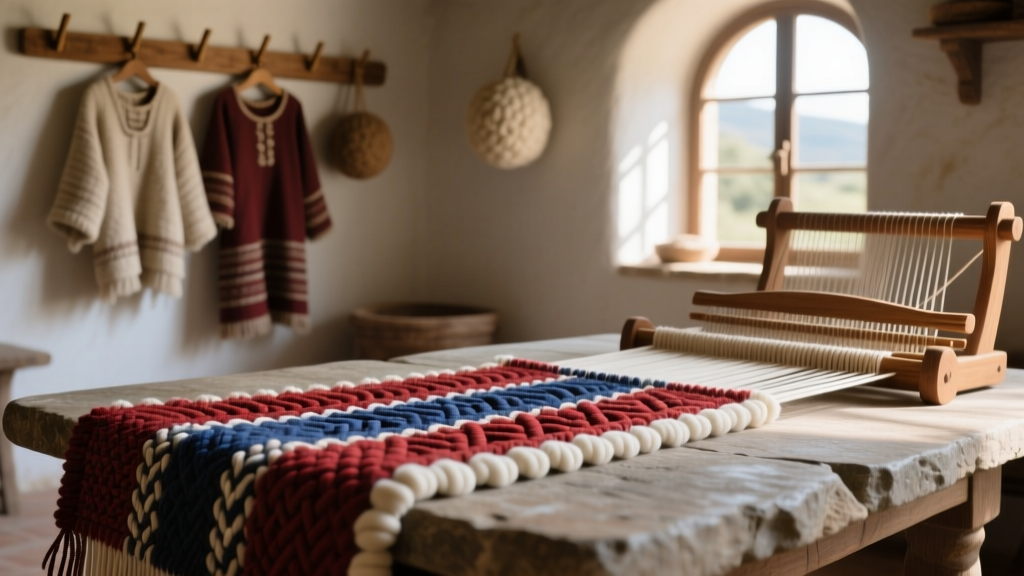
For the Atayal people, weaving is not merely a domestic craft; it is a profound spiritual and social marker. The traditional Atayal garment, often a sleeveless vest or wrap skirt known generally under the umbrella of woven tbaku (cloth), is created using a horizontal backstrap loom. The weaver secures one end of the loom to a fixed post and the other around her lower back, using her body weight to maintain warp tension.
Historically, the right to wear certain intricate geometric patterns—specifically the diamond and rhombus motifs representing the eyes of ancestral spirits—was strictly regulated. A woman could only don these complex, red-and-black dyed ramie garments if she had mastered the art of weaving and, traditionally, if the men of her family had proven themselves in headhunting, a practice eradicated in the early 20th century. The red dye, derived from the roots of the yam and madder plants, was believed to offer spiritual protection.
Paiwan Aristocracy and the Integration of Trade Beads
Descending to the southern mountain ranges, the Paiwan and Rukai tribes developed a highly stratified aristocratic society, reflected vividly in their traditional dress. Unlike the egalitarian Atayal, Paiwan nobility claimed exclusive rights to specific motifs, most notably the hundred-pace viper (vorovoroi) and the sun. Their garments were heavily embellished with glass beads, shells, and later, imported textiles. These ancient multi-colored glass beads, known as qata, were not manufactured locally but were acquired through centuries of maritime trade networks that predated European arrival, though European trade goods later supplemented these caches.
Han Chinese Settlements: Hoklo and Hakka Sartorial Practices
Beginning in the 17th century and accelerating during the Qing Dynasty (1683–1895), massive waves of Han Chinese migrants arrived from the Fujian and Guangdong provinces, bringing their own textile traditions which adapted to Taiwan’s subtropical climate.
Hoklo Workwear and the Sam-khóo
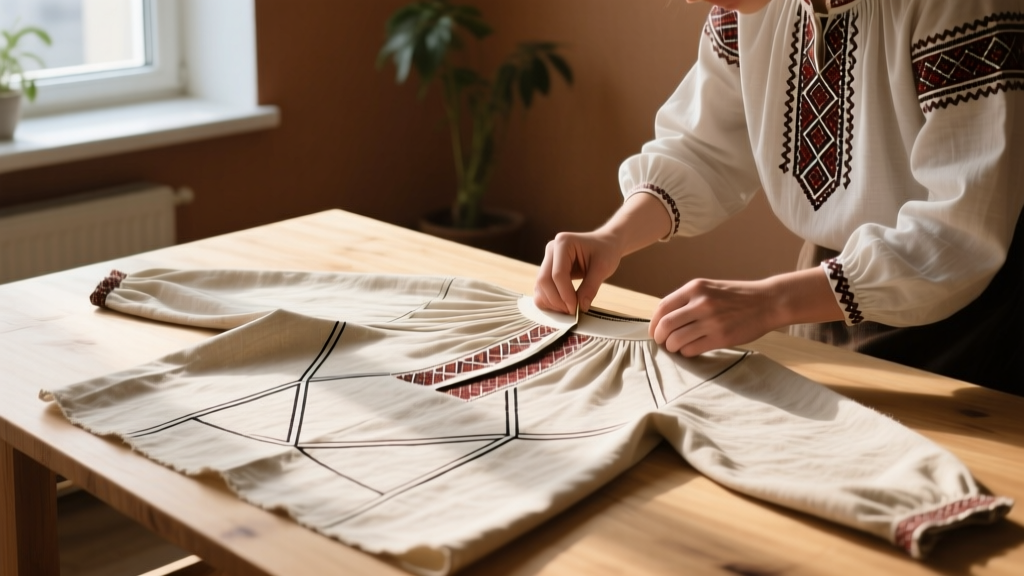
The Hoklo (or Minnan) people, who largely settled the coastal plains and engaged in agriculture and trade, adapted traditional Qing-era Hanfu into practical workwear. The quintessential Hoklo laborer’s garment was the sam-khóo (衫褲), a two-piece ensemble consisting of a short, mandarin-collared button-front jacket and wide-legged, three-quarter-length trousers. Made from breathable, locally woven cotton or ramie, the sam-khóo allowed for mobility in the humid rice paddies. For formal occasions and weddings, Hoklo women wore the kiô-thâu, an elaborate headdress, paired with finely embroidered silk jackets featuring auspicious motifs like peonies and phoenixes.
Hakka Indigo and Mountain Resilience
The Hakka migrants, often pushed into the rugged, mountainous foothills due to later arrival, developed a deeply resilient textile culture centered around indigo dyeing. The Hakka lan-shan (blue shirt) is iconic. Cultivating Japanese indigo (Polygonum tinctorium) in the highland valleys, Hakka women processed the leaves into dye paste, repeatedly dipping heavy cotton cloth to achieve a deep, colorfast navy blue. This indigo dye not only provided a striking aesthetic but also served a functional purpose: it acted as a natural insect repellent and deodorizer, crucial for farmers working in Taiwan’s dense, humid forests. The Hakka blue shirt was typically unadorned, reflecting the community’s cultural emphasis on frugality, hard work, and modesty.
The European Intersection: Dutch Formosa and Textile Exchange
While Taiwan is geographically East Asian, its inclusion in global textile studies requires acknowledging the European colonial footprint, specifically the Dutch East India Company (VOC) occupation of southern Taiwan (1624–1662), known historically as Dutch Formosa. The VOC established Fort Zeelandia (in modern-day Tainan) and transformed the island into a transshipment hub between Japan, China, and Batavia (Jakarta).
During this era, European merchants introduced new textile commodities to the island. Dutch trade records indicate the importation of European woolens, Coromandel coast chintzes, and Venetian glass beads, which were used to trade with Indigenous Siraya and Paiwan communities for deer hides and camphor. These early European trade beads were quickly assimilated into Indigenous aristocratic regalia, becoming heirloom items passed down through generations. Today, the material legacy of this brief but impactful European-Formosan intersection is largely preserved not in Taiwan, but in European institutions, such as the extensive 17th-century Asian maritime trade collections housed in the Netherlands.
Comparative Material and Construction Matrix
To understand the vast differences in construction and material culture across Taiwan's historical groups, refer to the following structural breakdown:
| Cultural Group | Primary Garment Type | Core Material | Key Motif / Accessory | Primary Loom / Technique |
|---|---|---|---|---|
| Atayal (Indigenous) | Sleeveless vest / Wrap skirt | Hand-spun Ramie | Diamond/Rhombus (Ancestral eyes) | Backstrap Loom |
| Paiwan (Indigenous) | Aristocratic long tunic | Cotton / Ramie blend | Hundred-pace viper / Glass beads | Backstrap Loom / Embroidery |
| Hoklo (Han Chinese) | Sam-khóo (Jacket & Trousers) | Woven Cotton / Silk | Cloud collars / Peony embroidery | Treadle Floor Loom |
| Hakka (Han Chinese) | Lan-shan (Blue Shirt) | Heavy Cotton | Indigo dye / Frugal cut | Treadle Floor Loom / Vat Dyeing |
Contemporary Sourcing, Pricing, and Cultural Protocols
For collectors, historians, and cultural enthusiasts looking to acquire or study authentic pieces, it is vital to distinguish between mass-produced tourist souvenirs and genuine artisan textiles. Contemporary Indigenous weavers are experiencing a cultural renaissance, reclaiming ancestral techniques.
- Authentic Atayal Ramie Vests: Handwoven pieces using naturally dyed, hand-processed ramie from certified tribal artisans typically range from NT$ 15,000 to NT$ 45,000 (approx. $475 to $1,425 USD). The high price reflects the months-long process of harvesting, stripping, boiling, and spinning the ramie fiber.
- Paiwan Beaded Heirlooms: Genuine antique glass bead necklaces (qata) rarely hit the open market, as they are tied to noble lineage. When museum-quality replicas or contemporary artisan beadwork are sold, expect prices starting at NT$ 8,000.
- Hakka Indigo Textiles: In regions like Meinong in Kaohsiung, artisan cooperatives still practice traditional vat dyeing. Hand-dyed indigo cotton yardage or bespoke lan-shan jackets cost between NT$ 3,500 and NT$ 12,000, depending on the complexity of the resist-dyeing (shibori) patterns.
Cultural Protocol Note: When purchasing Indigenous textiles, buyers should seek out cooperatives owned by the tribes themselves (such as the Atayal weaving workshops in Yilan or Miaoli). Avoid buying garments featuring the Paiwan hundred-pace viper motif unless you are purchasing from a recognized Paiwan artisan, as this motif holds strict aristocratic and spiritual significance.
Authoritative Archives and Further Study
The preservation of the Taiwan traditional costume relies heavily on meticulous archiving and climate-controlled conservation. Researchers and textile historians are encouraged to consult the following authoritative institutions, which hold the most significant physical and digital archives of Formosan dress:
The National Museum of Taiwan History in Tainan provides exhaustive digital archives detailing the evolution of Hoklo and Hakka workwear, including original Qing-dynasty trade manifests and early 20th-century photographic surveys of rural life. Their conservation lab offers groundbreaking research on the degradation of early synthetic dyes introduced during the Japanese colonial period (1895–1945).
For Indigenous Austronesian textiles, the Shung Ye Museum of Formosan Aborigines in Taipei remains the premier private institution. Their collection features exceptionally rare, pre-1900 Atayal facial-tattooing implements and ceremonial ramie garments that demonstrate the intricate warp-faced patterning techniques unique to the island.
Finally, to trace the European colonial textile exchange, scholars should review the Asian maritime trade catalogs of the Tropenmuseum (National Museum of World Cultures) in Leiden, Netherlands, which houses 17th-century VOC ledgers and early glass trade beads that fundamentally altered the material culture of southern Taiwan's Indigenous aristocracy.