Sami Gakti: Arctic Indigenous Dress Guide

Gákti: The Living Dress of the Sami People
The gákti is the traditional dress of the Sami — Europe's only recognized indigenous people, inhabiting Sápmi (the Arctic region spanning northern Norway, Sweden, Finland, and Russia's Kola Peninsula). Far from a costume, the gákti is a daily-worn identity marker that communicates the wearer's family, community, marital status, and even wealth through its cut, color, and decoration.
Core Components
- Main garment: A tunic or dress, typically in deep blue (the most common base color), with red, yellow, and green trim.
- Belt: Wide, woven band with pewter-thread embroidery or silver buttons. Men's belts are broader and more elaborate.
- Hat: Distinctive headwear varies by region — the four-winds hat (čiehgahpir) of northern Sami, or the rounded ládjogahpir of eastern Sami.
Regional Identity
Each Sami community has a distinct gákti style. Knowledgeable Sami can identify a person's home village from their dress:
- Kautokeino (Norway): Blue with wide red bands, elaborate pewter-thread embroidery on the collar and cuffs.
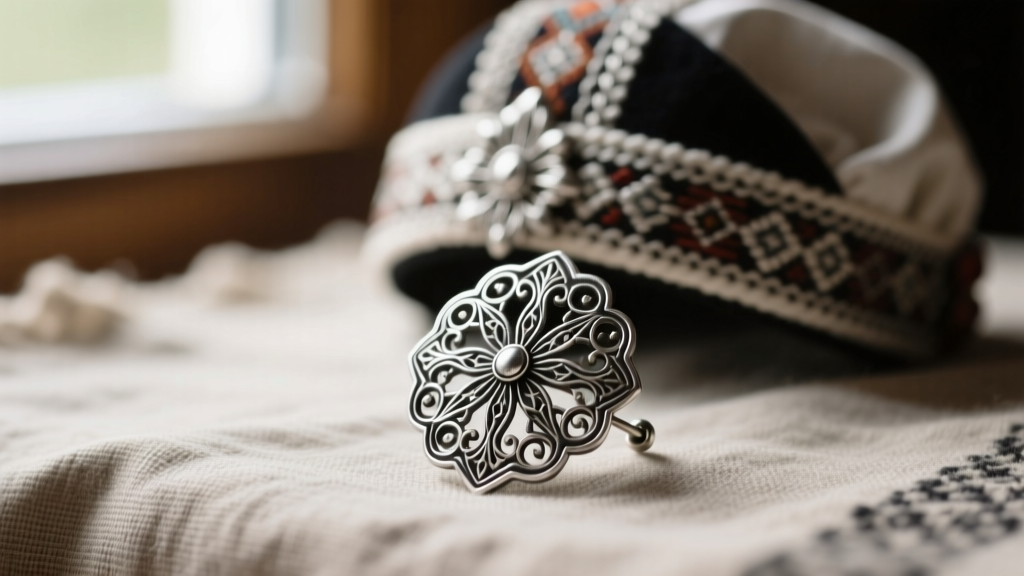
- Karasjok (Norway): Darker blue with narrower red trim, distinctive silver brooch at the collar.
- Enontekiö (Finland): Lighter blue with yellow and green accents, reflecting Finnish Sami aesthetics.
Marital and Social Signals
Round-shaped silver brooches (sólju) indicate married status, while square or heart-shaped ones signal availability. The number and quality of silver buttons on the belt and chest reflect family wealth — traditionally measured in reindeer count.
Modern Sami Fashion
Sami designers like Marja Helander and brands like Sámi Design are creating contemporary gákti-inspired clothing that honors traditional aesthetics while adapting to modern life. The annual Sami Fashion Week in Jokkmokk, Sweden, showcases innovations alongside traditional craftsmanship.