Oktoberfest Outfit Ideas 2026: Tracht Guide
Authentic Oktoberfest Outfit Ideas 2026: Regional Tracht Guide
As the world turns its eyes toward Munich for the 2026 Oktoberfest season, a significant cultural shift is reshaping how we approach festival attire. Discerning attendees are moving away from mass-produced, synthetic costumes and seeking authentic Tracht (traditional folk dress). If you are searching for genuine Oktoberfest outfit ideas, it is vital to understand that traditional European garments are not monolithic; they are deeply regional, historically layered, and governed by specific cultural protocols. This guide explores the rich regional variants of Alpine and Southern German dress, offering a masterclass in construction, etiquette, and authentic sourcing.
Decoding the Dirndl: Beyond the Munich Beer Tents
The term Dirndl originally referred to a young Alpine woman, and the dress itself was the everyday workwear of rural servants in the 18th and 19th centuries. Today, it has evolved into a sophisticated garment with distinct regional signatures. When curating your Oktoberfest outfit ideas, consider these three authentic regional variants rather than generic commercial designs.
The Miesbacher Tracht (Upper Bavaria)
Often considered the gold standard of Bavarian dress, the Miesbacher Tracht is characterized by its conservative elegance and rich materials. The bodice (Mieder) is typically crafted from dark silk or wool brocade, featuring a deep, rounded neckline that frames a modest, high-necked white linen blouse (Bluse). The skirt (Rock) is heavily pleated, falling strictly below the knee, and is traditionally made from fine merino wool in deep shades of forest green, navy, or burgundy. Unlike commercial festival wear, the Miesbacher apron (Schürze) is never made of cheap polyester; it is woven from pure silk or fine cotton, often featuring subtle jacquard patterns.
The Ausseer Dirndl (Salzkammergut, Austria)
Originating from the lake district of Austria, the Ausseer Dirndl is a masterclass in color-blocking and pastoral elegance. Historically popularized in the 1800s when aristocrats summered in the region, this variant is instantly recognizable by its pastel palette. The traditional combination features a rose-pink bodice, a vibrant green skirt, and a black or dark purple apron. The construction relies on lightweight cotton or linen, making it highly breathable. Notably, the Ausseer style strictly forbids the use of lace on the blouse or bodice, favoring clean lines and delicate, tone-on-tone embroidery.
The Franconian Bamberger Tracht
For those traveling from Northern Bavaria or seeking a departure from the Alpine aesthetic, the Franconian variants offer a striking alternative. The Bamberger Tracht features a highly structured, heavily boned bodice that laces at the front, often adorned with intricate silver or gold metallic thread embroidery (Goldstickerei). The skirts are wider and supported by petticoats to create a bell-like silhouette, reflecting the agricultural wealth and distinct cultural identity of the Franconian region.
Lederhosen and Bundhosen: A Regional Leather Comparison
For men, authentic Oktoberfest outfit ideas center on leather breeches. However, true Lederhosen are not merely short leather shorts; they are masterpieces of the Säckler (leatherworker) craft. The most prized leather is Hirschleder (roe deer) or Rehleder (fallow deer), tanned using the traditional Sämischgerbung method. This ancient oil-tanning process uses fish oils and animal fats, resulting in a leather that is incredibly soft, breathable, and washable, developing a beautiful patina over decades of wear.
Below is a comparison of the primary regional variants you will encounter among traditionalists:
| Regional Variant | Length & Cut | Embroidery Style (Stickerei) | Suspenders (Hosenträger) |
|---|---|---|---|
| Miesbacher | Short (above the knee) | Rich, dense floral motifs (oak leaves, edelweiss) in white or green silk thread. | Cross-back style with a heavily embroidered central bridge. |
| Allgäuer | Short to mid-thigh | Simpler, geometric or hunting motifs, often in brown or dark green thread. | Standard parallel straps, less ornate hardware. |
| Tiroler | Often Bundhosen (below knee) | Alpine flora, sometimes incorporating the Tyrolean eagle or regional crests. | Distinctive wide waistband, often worn with a separate leather belt. |
| Franconian | Long trousers or Bundhosen | Minimalist embroidery, focus on high-quality dark brown or black goat leather. | Often omitted in favor of a robust leather belt with a brass buckle. |
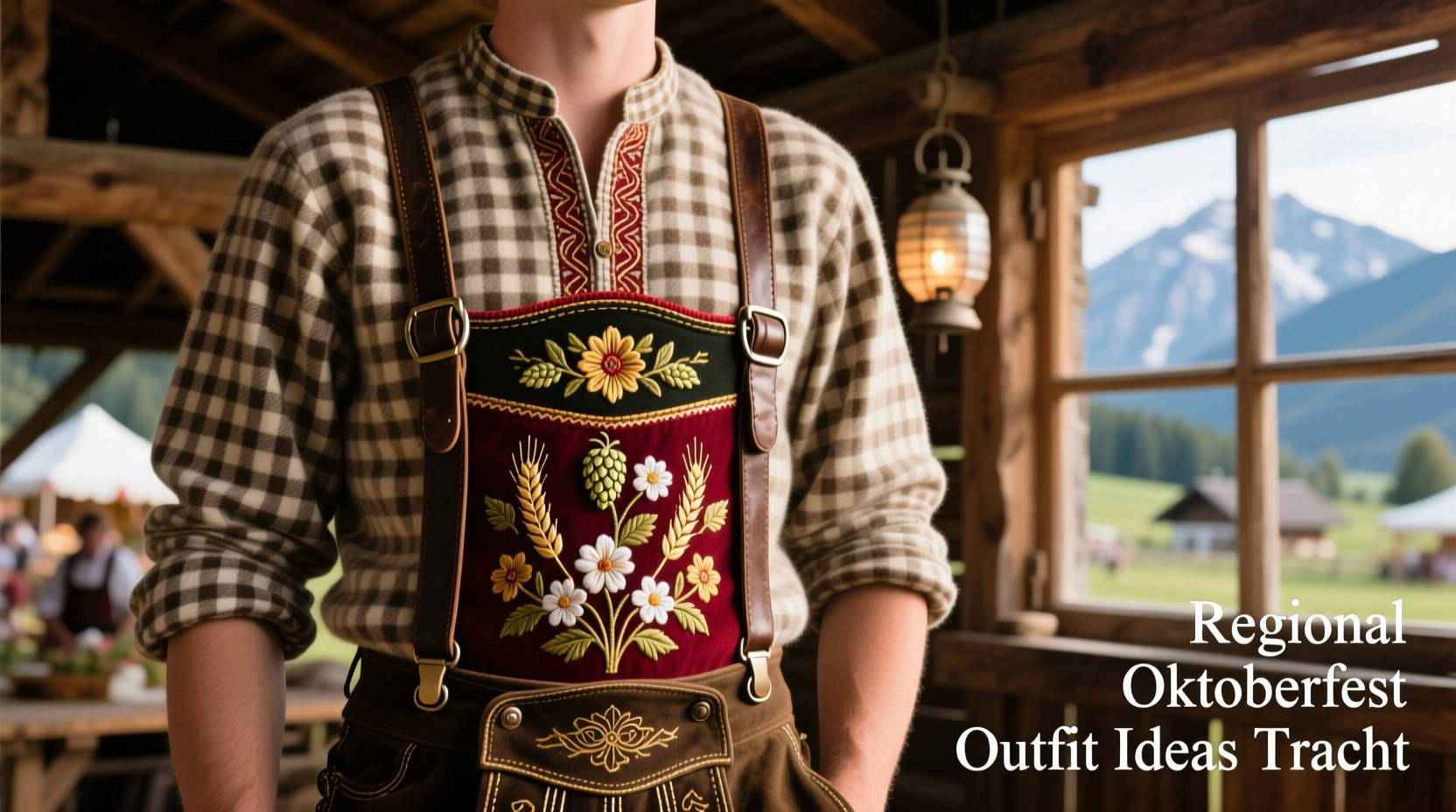
The front flap of the Lederhosen, known as the Latzi, is a defining feature. In authentic pairs, the Latzi is embroidered with a specific regional motif that acts as a geographic identifier. According to the Bezirk Oberbayern Trachtenkulturzentrum, the preservation of these specific embroidery patterns is vital to maintaining the intangible cultural heritage of the Alpine regions.
Footwear and Headwear: Completing the Silhouette
No traditional outfit is complete without the correct footwear and accessories. The mass-market tendency to pair Dirndls with modern high heels or Lederhosen with sneakers is heavily frowned upon by traditionalists.
Haferlschuhe vs. Trachtenschnürschuhe
Men should opt for the Haferlschuh, a traditional Bavarian shoe characterized by its distinctive side-lacing and robust, hobnailed sole. Originally designed for navigating steep, rocky Alpine terrain, the Haferlschuh provides excellent support for long days on the festival grounds. For women, the Trachtenschnürschuh (a low-heeled, lace-up leather shoe) or a classic leather pump with a sensible, sturdy heel and a rounded toe is historically accurate and far more practical for navigating crowded beer tents.
The Tirolerhut and the Gamsbart
Headwear is an essential component of male Tracht. The Tirolerhut (Tyrolean hat) is a felt hat with a tapered crown and a brim that is often turned up at the sides. The ultimate status symbol on this hat is the Gamsbart—a tuft of hair from the chamois antelope. A high-quality, large Gamsbart can contain up to 150 individual hairs, carefully sorted, bound, and set into a horn or silver base. Authentic Gamsbarts are expensive, often costing between €150 and €400, but they are heirloom pieces passed down through generations.
The Apron Code: Tying the Schleife Correctly
When styling a Dirndl, the placement of the apron bow (Schleife) is not merely an aesthetic choice; it is a strict cultural code indicating the wearer's relationship status. Misplacing the bow can lead to awkward misunderstandings in the beer tents. The Bayerisches Nationalmuseum notes that while these rules have evolved, the traditional etiquette remains widely observed in authentic circles:
- Bow tied on the left side: The wearer is single and open to being approached.
- Bow tied on the right side: The wearer is married, engaged, or in a committed relationship.
- Bow tied in the center front: Historically indicated virginity or youth, though in modern contexts, it is sometimes used by younger women or those who prefer not to disclose their status.
- Bow tied in the center back: The wearer is widowed, or, practically speaking, the wearer is a working waitress (as a front bow would interfere with carrying heavy beer steins).
Sourcing Authentic Garments: Artisans vs. Mass Market
Investing in authentic Tracht is an exercise in supporting European artisanal heritage. The price disparity between commercial fast-fashion and genuine folk dress is vast, reflecting differences in material sourcing, labor, and longevity.
Price Guide and Investment Tiers
- Mass-Market / Commercial (€80 - €180): Typically made from polyester blends, machine-embroidered in overseas factories, and featuring plastic hardware. These lack breathability and historical accuracy.
- Mid-Tier Trachtenmode (€250 - €600): Often produced by established Munich or Salzburg brands using real cotton, linen, and wool. Embroidery may be a mix of machine and hand-finishing. Excellent for regular festival attendees.
- Master Artisan / Custom Tracht (€800 - €2,500+): Commissioned from a Schneidermeister (master tailor). Features hand-dyed silk, antique silver or horn buttons, hand-stitched pleating, and bespoke fitting. A hand-embroidered Lederhosen from a master Säckler using genuine Hirschleder will easily command €800 to €1,500.
For those seeking to verify the historical accuracy of their garments or research specific regional patterns before purchasing, the archives of the Tiroler Volkskunstmuseum in Innsbruck offer unparalleled visual documentation of Alpine textile history spanning the last four centuries.
Final Thoughts on Cultural Respect
As you finalize your Oktoberfest outfit ideas for 2026, remember that wearing Tracht is a privilege that comes with the responsibility of cultural respect. By choosing garments that reflect genuine regional variants, supporting traditional artisans, and adhering to the etiquette of the apron and accessories, you elevate your festival experience from a mere costume party to a meaningful participation in a living, breathing European heritage.