Lederhosen Outfit Oktoberfest: 2026 Sizing & Buyer Guide
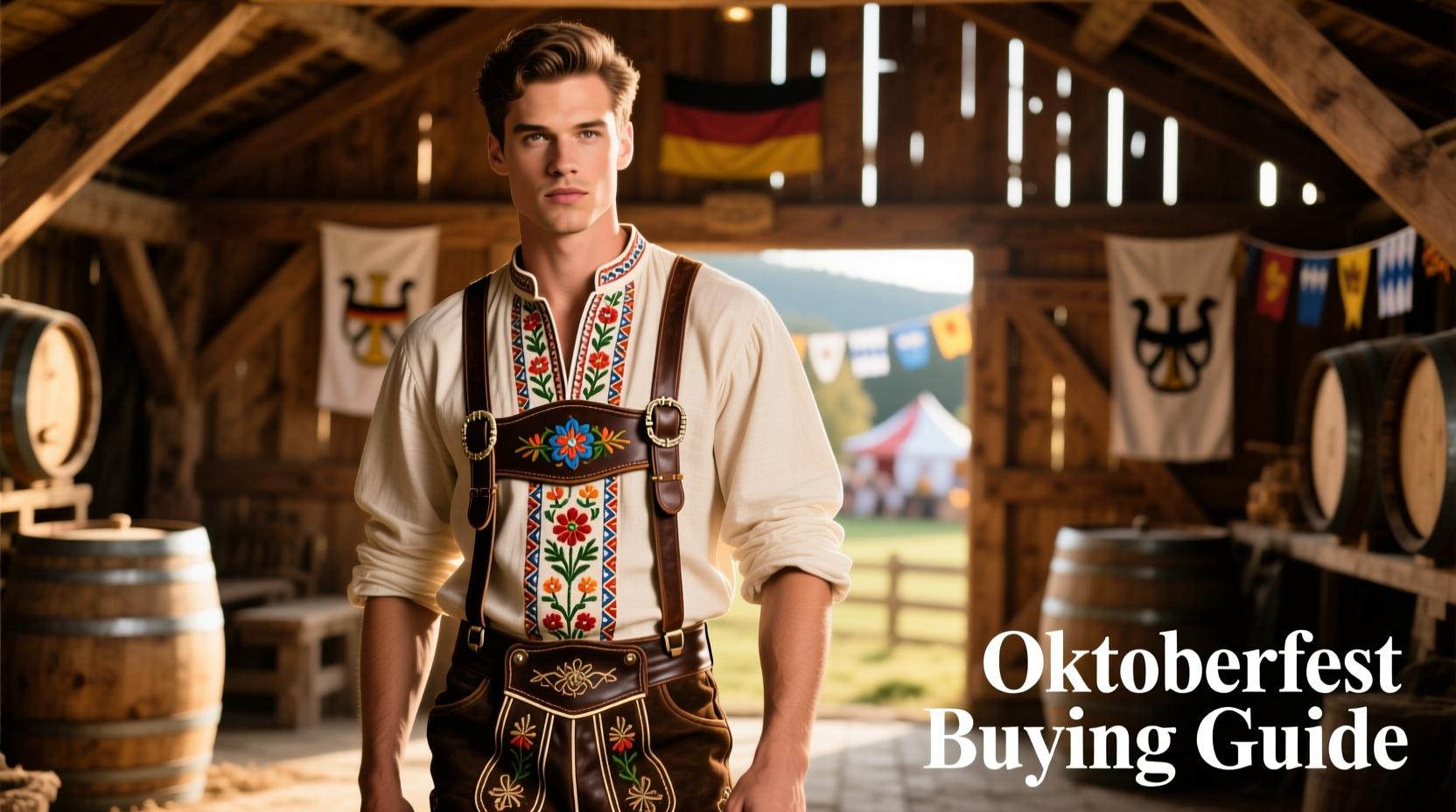
When preparing for the world’s largest Volksfest, assembling an authentic lederhosen outfit Oktoberfest attendees respect requires moving far beyond the realm of disposable party costumes. In Bavaria and the broader Alpine region, traditional dress is known as Tracht—a living, breathing cultural heritage that denotes regional pride, craftsmanship, and historical continuity. According to the Bayerischer Trachtenverband (Bavarian Tracht Association), wearing proper Tracht is an act of cultural participation, not a caricature.
This comprehensive 2026 buying and sizing guide will help you navigate the nuances of authentic Bavarian menswear, from understanding leather tanning processes to mastering the complex sizing metrics of traditional garments.
Anatomy of an Authentic Lederhosen Outfit
A complete Lederhosen (plural for leather trousers) ensemble is a coordinated system of garments, each with a specific historical and functional purpose. To build a culturally accurate outfit, you must source the following components:
The Trousers: Understanding the Lederhose
Authentic Bavarian leather trousers feature distinct structural elements. The most recognizable is the Latze (the front drop flap), which buttons to the waistband. Look for the Messertasche (knife pocket) on the right thigh, originally designed to hold a hunting knife. The embroidery, or Stickerei, is not merely decorative; historically, the motifs (like edelweiss, oak leaves, or alpine roses) indicated the wearer's specific village or region.
The Accompaniments: Shirts, Socks, and Shoes
- Trachtenhemd (Shirt): Avoid modern t-shirts. The traditional choice is a Karo-Hemd (checkered shirt, typically white and blue or white and red) or a rustic Leinenhemd (linen shirt) in natural ecru or white. The collar should be sturdy, often featuring horn or bone buttons.
- Trachtenstutzen (Socks): Knee-high, thick wool socks are mandatory. They are typically ribbed and feature a folded cuff. In some alpine regions, men wear Loferl (calf warmers) with short ankle socks, though knee-highs are the standard for Munich Oktoberfest.
- Haferlschuhe (Shoes): These traditional Alpine shoes feature a distinct side-lacing system (Seitenschnürung) and a sturdy, cleated sole. While front-lacing variants exist, side-lacing is considered the most traditional for festive Tracht.
Leather Grades, Tanning, and Regional Cuts
The soul of the garment lies in its hide and how it is treated. Cheap, mass-produced outfits use chrome-tanned cowhide, which is stiff, lacks breathability, and carries a harsh chemical odor. Authentic Tracht relies on traditional tanning methods and specific animal hides.
The gold standard is Sämischgerbung (oil tanning), a centuries-old process using fish oils (like cod liver oil) to cure the leather. This makes the hide incredibly supple, breathable, and uniquely washable. As documented by the Bayerisches Nationalmuseum in their extensive textile archives, oil-tanned leather was essential for Alpine workers who needed durable, weather-resistant clothing that could be cleaned in streams.
| Leather Type | German Term | Characteristics & Durability | Price Range (2026) |
|---|---|---|---|
| Deerskin | Hirschleder | The pinnacle of Tracht. Incredibly soft, lightweight, and molds perfectly to the body. Usually oil-tanned. | €800 - €1,500+ |
| Goatskin | Ziegenleder | Durable, slightly more textured than deerskin, highly resistant to tearing. Excellent for daily festive wear. | €500 - €900 |
| Cowhide | Rindsleder | Thick, heavy, and stiff. Requires a long break-in period. Often used for heavy work Tracht or budget options. | €250 - €600 |
| Pigskin | Schweinsleder | Rare in modern high-end Tracht; historically used for heavy labor. Distinct pore pattern. | €300 - €500 |
Regional Silhouette Variations
The cut of the trouser leg dictates its regional origin. The Miesbacher Schnitt features a wider, straighter leg that falls over the shoe, favored in Upper Bavaria. The Werdenfelser Schnitt is narrower and more tapered, ending just above the ankle bone to showcase the socks. For Oktoberfest in Munich, the Miesbacher cut is the most culturally appropriate and widely respected.
The Sizing Conundrum: How to Measure for Tracht
Sizing for a Lederhose is fundamentally different from buying modern denim or chinos. Leather does not possess elastane; it does not stretch in the way woven cotton does. However, high-quality, oil-tanned leather will mold to the wearer's body heat and movement, expanding up to half a size over the first few wears.
Crucial Measurements for the Perfect Fit
When ordering from a traditional maker or buying from a heritage retailer like Lodenfrey in Munich, you must provide three specific measurements:
- Bundweite (Waistband): Measure exactly where the trousers will sit. Traditional Lederhosen are worn higher than modern jeans, sitting at the natural waist or just below the navel, not on the hips. The fit should be snug enough that you can slip one flat hand inside the waistband, but no more.
- Oberschenkel (Thigh): Measure the widest part of the thigh. Because the Latze (front flap) restricts some hip flexion, the thigh must have enough room to allow you to sit comfortably at a beer tent bench without the leather cutting off circulation.
- Länge (Length): Authentic Lederhosen end just below the knee cap. They should never cover the knee joint itself, as this restricts movement and ruins the visual proportion with the Trachtenstutzen (socks).
The Suspender Rule: Authentic trousers are held up by Hosenträger (suspenders) that button to the inside of the waistband and cross in an 'X' at the back. They are adjustable via leather loops and brass buckles. Never buy trousers with metal clips; they are a hallmark of cheap tourist costumes and will damage the leather.
Oktoberfest Etiquette: Navigating the Festzelt
Wearing Tracht at the Theresienwiese (Oktoberfest grounds) is a privilege that comes with unspoken rules of etiquette. First and foremost, respect the garments. Do not intentionally stain your Hirschleder with beer or dirt under the guise of 'breaking it in.' Authentic leather can be gently cleaned with a damp cloth and specialized leather soap, but it is not meant to be ruined.
Secondly, accessorize with restraint. The Charivari (a decorative silver chain worn across the front flap, originally displaying hunting trophies like animal teeth or silver coins) is a beautiful addition, but it should be subtle and made of real silver or horn, not plastic. Similarly, the Trachtenhut (wool felt hat) should feature a genuine Gamsbart (chamois beard) or a simple feather. Avoid hats with flashing lights, oversized foam beer steins, or novelty pins.
Sourcing Authentic Bavarian Tracht
To ensure your investment supports genuine artisans and respects the cultural origins of the garment, avoid generic costume websites. Instead, look for established Bavarian manufacturers and heritage retailers. Brands such as Meindl, Dirndl & Bua, and Angermaier maintain strict quality controls and source their leather from European tanneries.
When shopping online, scrutinize the product descriptions. If the listing does not specify the type of animal hide or the tanning method, it is likely a mass-produced, chrome-tanned import. A genuine lederhosen outfit Oktoberfest ensemble is an investment in European sartorial history. By prioritizing authentic materials, proper sizing, and cultural respect, you ensure that your presence at the festival honors the centuries-old traditions of the Alpine people.