Lederhosen Footwear Buying Guide 2026: Haferlschuhe & Sizing
Beyond the Costume: The Cultural Weight of Alpine Footwear
When assembling authentic Bavarian and Alpine Tracht, the leather breeches naturally command the most attention. However, any seasoned member of a Trachtenverein (traditional dress association) will tell you that an outfit is fundamentally grounded by its footwear. The intersection of lederhosen and alpine shoes is not merely a stylistic choice; it is a historical marriage of form, function, and regional identity. As we navigate the 2026 market for traditional garments, separating mass-produced Oktoberfest costumes from genuine, culturally respectful Tracht requires a deep understanding of alpine shoemaking. This buying guide explores the anatomy, sizing mechanics, and hosiery protocols of authentic lederhosen footwear.
The Haferlschuh: Engineering the Alpine Ascent
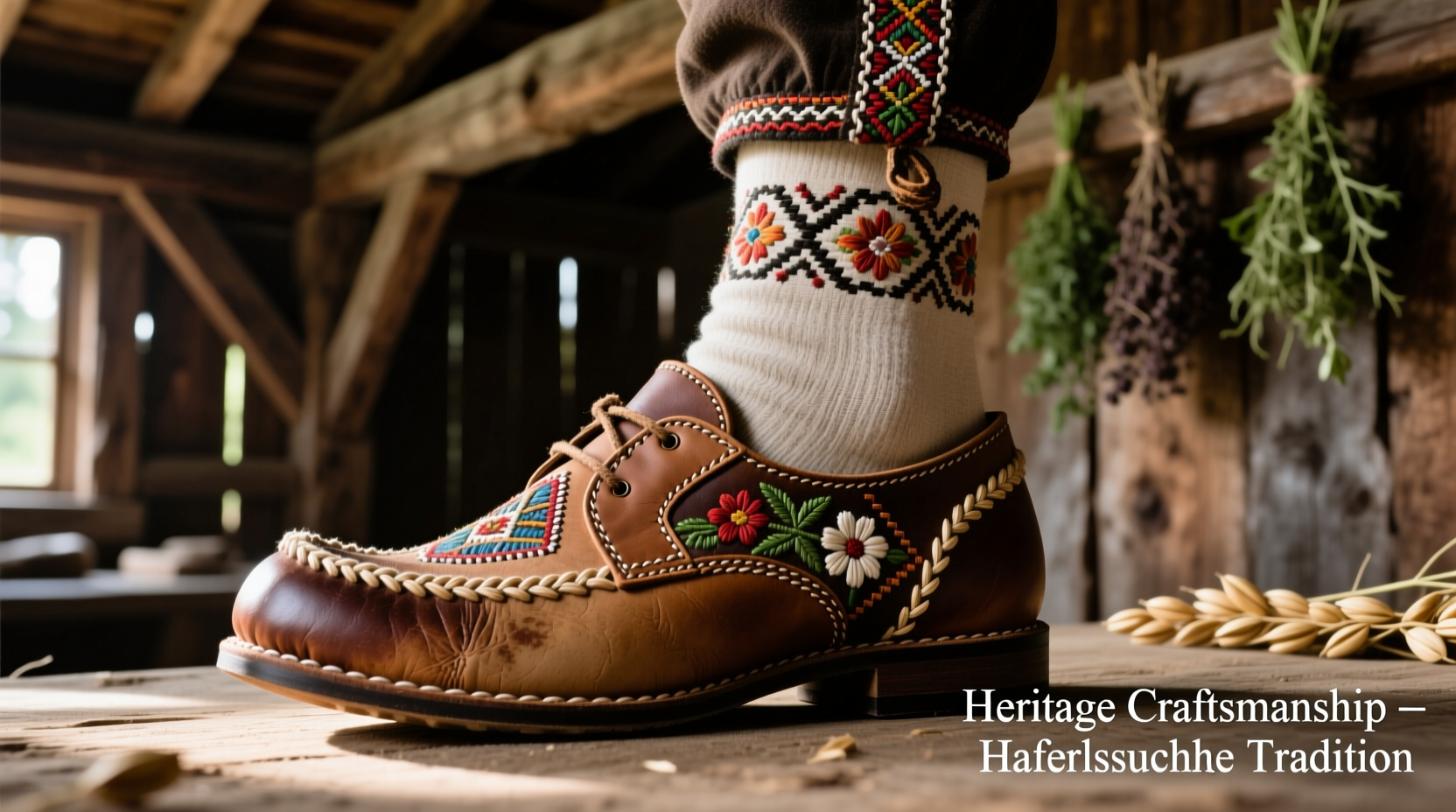
The quintessential shoe worn with lederhosen is the Haferlschuh (literally 'oat shoe', referring to its rounded, hoof-like toe box). Unlike the pointed dress shoes of the European courts, the Haferlschuh was born from the harsh realities of the Bavarian and Tyrolean Alps. According to historical archives preserved by the Trachten Informationszentrum in Benediktbeuern, the modern iteration of this shoe was pioneered around 1850 by Franz Schratt, an alpine guide from Oberstdorf.
Anatomy of an Authentic Haferlschuh
To evaluate the quality of lederhosen footwear, you must inspect its construction. A true alpine shoe features several non-negotiable elements:
- Seitenschnürung (Side Lacing): Unlike standard boots, the laces of a traditional Haferlschuh run along the lateral side of the foot. This historical innovation prevented laces from catching on alpine brush and rocks, while allowing maximum ankle flexion during steep ascents.
- Rahmengenäht (Goodyear Welted): Authentic pairs are welted, meaning the upper, insole, and outsole are stitched together with a strip of leather. This allows the shoe to be resoled by a Schuster (cobbler) and ensures water resistance.
- Double Soles and Hobnails: Traditional models feature a thick double-leather sole. Historically, these were driven with Trachtennägel (alpine hobnails) for traction on icy scree. Modern iterations often substitute these with high-traction Vibram alpine treads while maintaining the double-sole profile.
- Sämischgerbung (Chamois Tanning): The finest uppers are crafted from Hirschleder (deer leather) tanned using cod oil. This ancient process makes the leather incredibly supple, breathable, and uniquely washable.
Sizing Mechanics: Navigating the Alpine Last
Sizing lederhosen footwear is notoriously tricky for international buyers. Alpine shoes are built on specific wooden forms called 'lasts', which differ significantly from modern athletic or casual dress shoes. The Bayerisches Nationalmuseum notes that historical peasant footwear was often bespoke or locally cobbled, meaning standardized sizing is a relatively modern imposition on traditional designs.
Understanding European Widths (Weiten)
The most common mistake buyers make is ignoring the width profile. Alpine lasts tend to run narrow in the heel but require ample room in the toe box to accommodate thick wool socks and foot swelling during long days of wear. German and Austrian shoemakers utilize a lettered width system:
- Weite F (Medium): The standard width, suitable for average to slightly narrow feet.
- Weite G (Wide): The most common comfort fit for modern buyers, offering extra volume across the instep.
- Weite H (Extra Wide): Designed for broader feet, preventing the leather from stretching out of its intended structural shape.
Alpine Footwear Sizing Conversion Chart
| EU Size | US Men's | UK Size | Recommended Alpine Width | Fit Notes & Break-In |
|---|---|---|---|---|
| 40 | 7.5 | 6.5 | F or G | Expect a stiff heel cup; requires 20+ hours of wear to mold. |
| 42 | 9 | 8 | G (Standard) | True to size for most; size up half if wearing heavy Loferl. |
| 44 | 10.5 | 9.5 | G or H | Hirschleder will stretch up to 4mm across the toe box. |
| 46 | 12 | 11 | H (Wide) | Do not size down; alpine swelling requires maximum volume. |
Pro-Tip: If you are purchasing Rindsleder (cowhide), expect a significantly longer and more painful break-in period compared to the buttery softness of authentic Hirschleder.
Hosiery Protocols: Loferl vs. Strümpfe
You cannot discuss lederhosen footwear without addressing the hosiery that bridges the gap between the breeches and the shoe. Wearing standard cotton ankle socks with a Haferlschuh is a major cultural faux pas that instantly marks the wearer as a tourist. There are two historically correct options, dictated by season and regional dialect.
The Loferl (Calf Warmers)
The Loferl is a two-piece hosiery set native to the alpine regions of Bavaria and Austria. It consists of:
- Der Stutzen: A short, ankle-height sock that protects the foot and absorbs sweat.
- Der Wadenwärmer: A separate calf sleeve that sits just below the knee, held up by elastic or a woven band.
The Loferl was designed for summer months and strenuous alpine hiking. It keeps the calves warm and protected from brush while allowing the ankle to breathe and flex freely inside the Haferlschuh. When wearing Loferl, a small gap of bare skin between the short sock and the calf sleeve is not only acceptable but historically accurate.
Knee-High Strümpfe
For colder months, formal events, or specific regional variations of Tracht (such as the formal Miesbacher Tracht), men wear knee-high wool socks known as Strümpfe or Kniestrümpfe. These are typically ribbed, made from a heavy wool blend (often incorporating alpaca or merino for modern comfort), and feature a subtle folded cuff just below the knee. They are usually charcoal grey, forest green, or natural undyed wool.
Market Tiers: Investing in Authentic Craftsmanship
The market for lederhosen footwear in 2026 is heavily stratified. Understanding these tiers ensures you invest in a garment that respects the tradition and provides lasting utility.
Tier 1: Mass-Market & Souvenir (€60 - €120)
Typically manufactured in South Asia using glued soles, synthetic linings, and heavily corrected, stiff cowhide. The side-lacing is often purely decorative, with a hidden zipper or standard front lacing masquerading as traditional. These are not recommended for serious Tracht enthusiasts or alpine walking.
Tier 2: Heritage Brands (€220 - €450)
Brands like Meindl, Stockerpoint, and regional Bavarian manufacturers offer excellent entry points into authentic footwear. These shoes feature genuine Goodyear welting, real leather double soles, and high-quality Rindsleder or blended deer leathers. They are built on proper alpine lasts and offer the correct aesthetic and functional profile for Oktoberfest, weddings, and Trachtenverein gatherings.
Tier 3: Artisan Bespoke & Master Cobblers (€600 - €1,200+)
For the ultimate expression of alpine heritage, buyers commission shoes from master Schuster in towns like Garmisch-Partenkirchen or Innsbruck. These artisans use exclusively Sämischgegerbtes Hirschleder (chamois-tanned deer leather), hand-stitch the welts, and carve wooden lasts customized to the buyer's foot morphology. These are heirloom pieces meant to be resoled and passed down through generations.
Care and Preservation of Alpine Leathers
Authentic lederhosen footwear requires specific maintenance to preserve the leather's integrity. Never use standard commercial shoe polishes or silicone-based waterproofing sprays on Hirschleder, as these will clog the pores and ruin the chamois-tanned finish.
'The beauty of Sämischgerbung is its living quality. The leather breathes, absorbs the oils of your skin, and molds to your stride. Treat it with natural fats, not chemical sealants.' — Master Cobbler, Oberstdorf.
For routine care, brush off alpine dust with a horsehair brush. If the shoes become soaked, stuff them with untreated newspaper and let them dry at room temperature—never near a radiator. Once dry, massage a high-quality Hirschfett (deer tallow) or pure lanolin into the leather to restore its natural water resistance and supple texture. Store them with cedar shoe trees to maintain the structural integrity of the rounded toe box.
Final Thoughts on Cultural Respect
Wearing traditional European folk dress is an exercise in cultural appreciation. By investing in properly constructed Haferlschuhe, understanding the functional brilliance of the side-lacing system, and pairing them with correct woolen hosiery, you honor the alpine artisans and the deep history of the Bavarian and Tyrolean mountains. Whether you are attending a formal Trachtenhochzeit (traditional wedding) or simply appreciating the craftsmanship of European heritage wear, your footwear is the foundation of your respect for the culture.