Hong Kong National Dress vs European Folk Traditions

The Search for a Hong Kong National Dress
When cultural historians and textile enthusiasts search for a definitive hong kong national dress, they quickly encounter a sartorial paradox. Unlike the highly codified folk costumes of Europe, Hong Kong—a Special Administrative Region with a complex history of Cantonese roots and British colonial rule—does not possess a single, government-regulated "national dress." Instead, its sartorial identity is a fluid tapestry woven from indigenous Tanka fisherman garments, mid-century Shanghai tailoring, and British colonial formalwear.
To understand Hong Kong’s cultural dress, we must contrast it with the European framework of national costumes. By examining how European nations codified their folk dress, we can better appreciate the unique, uncodified evolution of Hong Kong’s iconic garments, such as the Cheongsam (Qipao) and the Tangzhuang, alongside the lasting remnants of British tropical tailoring.
Codification in Europe: The Blueprint of National Costumes
In Europe, the concept of a "national dress" was largely born out of 19th-century Romantic nationalism. Governments and cultural institutions actively preserved, standardized, and sometimes invented regional costumes to forge a unified national identity.
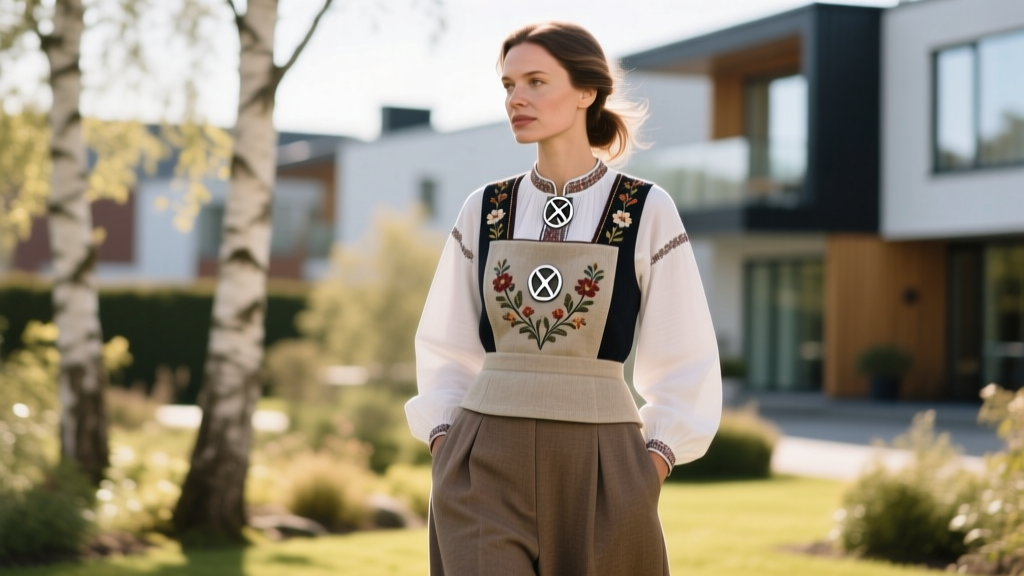
Take the Norwegian Bunad, for example. According to the Norwegian Institute for Bunad and Folk Costume, the Bunad is strictly regulated. Each regional variant (such as the Hardanger or Telemark Bunad) dictates exact embroidery patterns, fabric weaves, and even the specific oxidized silver sølje jewelry that must be worn. Similarly, the Scottish Kilt is governed by the Scottish Register of Tartans, ensuring that clan setts (thread patterns) are historically accurate and legally protected.
A Tale of Two Sartorial Systems
While Europe relied on institutional codification to preserve rural folk traditions, Hong Kong’s cultural dress evolved through urbanization, migration, and global trade. The table below contrasts the structural realities of European folk dress with Hong Kong’s cultural garments.
| Feature | European Folk Dress (e.g., Bunad, Kilt) | Hong Kong Cultural Dress (e.g., Cheongsam) |
|---|---|---|
| Origin | Rural agrarian life; 18th/19th-century romantic revival | Urban 1920s Shanghai; popularized in 1950s Hong Kong |
| Regulation | Strict (National councils, Tartan registries) | Fluid (Dictated by bespoke tailors and fashion trends) |
| Primary Materials | Worsted wool, linen, broadcloth, silver | Silk brocade, jacquard, imported European lace |
| Bespoke Price Range | $3,000 – $6,000+ USD | $400 – $1,500+ USD |
The British Colonial Wardrobe in Hong Kong
Any deep dive into Hong Kong’s sartorial history must address the profound impact of British colonialism. From 1841 to 1997, European dress codes were strictly enforced in government, law, and exclusive social clubs like The Hong Kong Club. This created a parallel "traditional" wardrobe that was distinctly European but adapted for a subtropical climate.
British administrators and military officers popularized Hong Kong Drill, a lightweight, stiff cotton fabric used for military uniforms and colonial suits. The traditional European morning coat and top hat were quickly abandoned in favor of white linen suits, pith helmets, and later, the short-sleeved safari jacket. For formal evening events, the European mess dress (military black tie) and tropical dinner jackets in ivory cotton became the de facto "formal national dress" of the colonial elite, creating a stark visual divide between the European rulers and the local Cantonese population.
The Cheongsam: A Tailored Counter-Identity
As a counter-narrative to British colonial dress, the Cheongsam emerged as the closest equivalent to a Hong Kong national dress. However, it is not a "folk" costume in the European sense. Following the influx of master tailors fleeing Shanghai in the late 1940s, Hong Kong became the global epicenter of Cheongsam craftsmanship.
According to the Hong Kong Heritage Museum, these tailors merged traditional Cantonese sewing techniques with Western 3D pattern-cutting. The garment evolved from a loose, modest Manchu robe into a form-fitting symbol of modern Asian femininity.
Anatomy of the Hong Kong Cheongsam
Unlike the standardized European Bunad, the Cheongsam is defined by its bespoke construction. Master tailors on Shanghai Street in Mong Kok still utilize techniques that require over 40 hours of hand-stitching:
- Pankou (Frog Fasteners): Hand-knotted silk knots that serve as both functional closures and intricate decorative motifs along the collar.
- Xiangbian (Piping): Silk bias tape applied to the edges of the garment. High-end Hong Kong tailors use a technique called gunbian, where the piping is rolled to create a raised, 3D contour that flatters the silhouette.
- Kaiqiang (Side Slits): Originally designed for mobility, the side slits in mid-century Hong Kong were raised higher, influenced by Western fashion and the city's humid climate.
- Geometric Silk Brocades: While European folk dress relies on woven tartans or regional embroidery, Hong Kong tailors favored imported Japanese and European silks, as well as locally woven Cantonese silk brocades featuring auspicious motifs like peonies and plum blossoms.
The Tangzhuang and Modern Civic Identity
While the Cheongsam dominates women's formal wear, the Tangzhuang (Tang Suit) often serves as the male counterpart during civic and cultural events, particularly Lunar New Year. Despite its name, the modern Tangzhuang is not from the Tang Dynasty; it is a hybrid garment developed in the late 20th century, blending the Manchu magua (riding jacket) with Western suit tailoring, complete with pankou fasteners and a Mandarin collar.
When Hong Kong hosted international summits in the early 2000s, leaders were frequently photographed in color-coordinated Tangzhuang jackets, attempting to establish a unified visual identity akin to the APEC summit traditions. Yet, unlike the Scottish Kilt, which is worn with deep ancestral pride and strict clan affiliation, the Tangzhuang remains largely a festive garment rather than a deeply personal ancestral marker.
Collecting and Wearing: A Practical Guide
For cultural garment collectors and enthusiasts looking to acquire authentic pieces, navigating the markets requires an understanding of both European and Asian tailoring traditions.
Acquiring Authentic European Folk Dress
If you are seeking a genuine Norwegian Bunad or Scottish Kilt, avoid mass-produced tourist shops.
- Scottish Kilts: Purchase from a member of the Scottish Kiltmakers Association. Expect to pay between £600 and £1,200 for an 8-yard worsted wool kilt, hand-stitched with fell stitching that allows the pleats to swing correctly. Verify the tartan sett via the Victoria and Albert Museum's textile archives or the official Scottish Register.
- Norwegian Bunad: Must be ordered from certified regional husflid (craft) cooperatives. Prices range from 35,000 to 60,000 NOK ($3,300 - $5,600 USD), reflecting hundreds of hours of regional wool embroidery and hand-forged silver.
Commissioning a Hong Kong Cheongsam
To experience the living tradition of Hong Kong tailoring, visit the historic shops along Shanghai Street in Mong Kok or the boutique ateliers in Central.
- Fabric Selection: Bring your own vintage silk or select from the tailor’s archive of jacquard weaves. Avoid cheap polyester satins, which lack the structural integrity required for the gunbian piping.
- The Fitting Process: A true bespoke Cheongsam requires at least three fittings. The tailor will measure over 20 distinct points on the body to ensure the stiff Mandarin collar sits perfectly without choking the wearer, and the kaiqiang slits do not pull when walking.
- Price Expectations: A master-crafted, fully hand-stitched Cheongsam in Hong Kong will cost between HKD $4,000 and $15,000+ ($500 - $1,900 USD), depending on the complexity of the pankou knots and the rarity of the silk.
Conclusion: Identity Woven in Threads
The search for a hong kong national dress ultimately reveals a profound truth about cultural identity. While Europe’s folk costumes were frozen in time by national councils to preserve a romanticized rural past, Hong Kong’s sartorial markers were forged in the fires of urbanization, migration, and colonial resistance. The Cheongsam and the remnants of British tropical tailoring do not need government codification to be authentic; their legitimacy is stitched into every bespoke seam, reflecting a city that has always worn its complex history on its sleeve.