What Shoes Do You Wear With a Dirndl? A Historical Guide
The Evolution of Alpine Footwear: Beyond the Modern Caricature
When cultural historians and modern enthusiasts ask, 'what shoes do you wear with a dirndl,' the answer requires looking past the commercialized caricatures of Munich’s Oktoberfest to the rugged, practical realities of 18th and 19th-century Alpine life. The Dirndl (a diminutive of Dirn, meaning young woman or maid in Bavarian dialect) originated as the utilitarian workwear of rural servants, dairy maids, and peasant women in Austria and southern Germany. Consequently, the footwear paired with these garments was dictated by the harsh topography of the Alps, the demands of agricultural labor, and the availability of local materials.
According to archives at the Bayerisches Nationalmuseum (Bavarian National Museum), the concept of a 'fashionable' dirndl shoe did not exist until the late 19th century. It was only when the urban bourgeoisie and aristocracy—inspired by Emperor Franz Joseph’s love for the Salzkammergut region—began adopting rural dress for leisure that footwear transitioned from purely functional clogs and heavy work boots to the elegant, buckle-adorned shoes we recognize today.
The Historical Trinity of Dirndl Footwear
To authentically answer what shoes do you wear with a dirndl from a historical perspective, one must understand the three primary categories of Alpine footwear that evolved alongside the dress.
1. The Haferlschuh: The Ultimate Alpine Work Shoe
While often associated today with men’s Lederhosen, the Haferlschuh (oat shoe) was historically worn by both men and women in alpine farming communities. The name is debated; some etymologists suggest it refers to the shoe's shape resembling an oat pod, while others claim it was designed to protect the wearer's feet from sharp oat stubble in harvested fields. For women working in the stables and fields, a low-cut, sturdy leather Haferlschuh with a side-lace (Seitenschnürung) or front-lace closure was standard. These shoes featured thick, double-stitched soles (doppelt genäht) designed to grip wet alpine meadows and cobblestone paths.
2. Der Trachtenschnaller: The Elegant Bavarian Classic
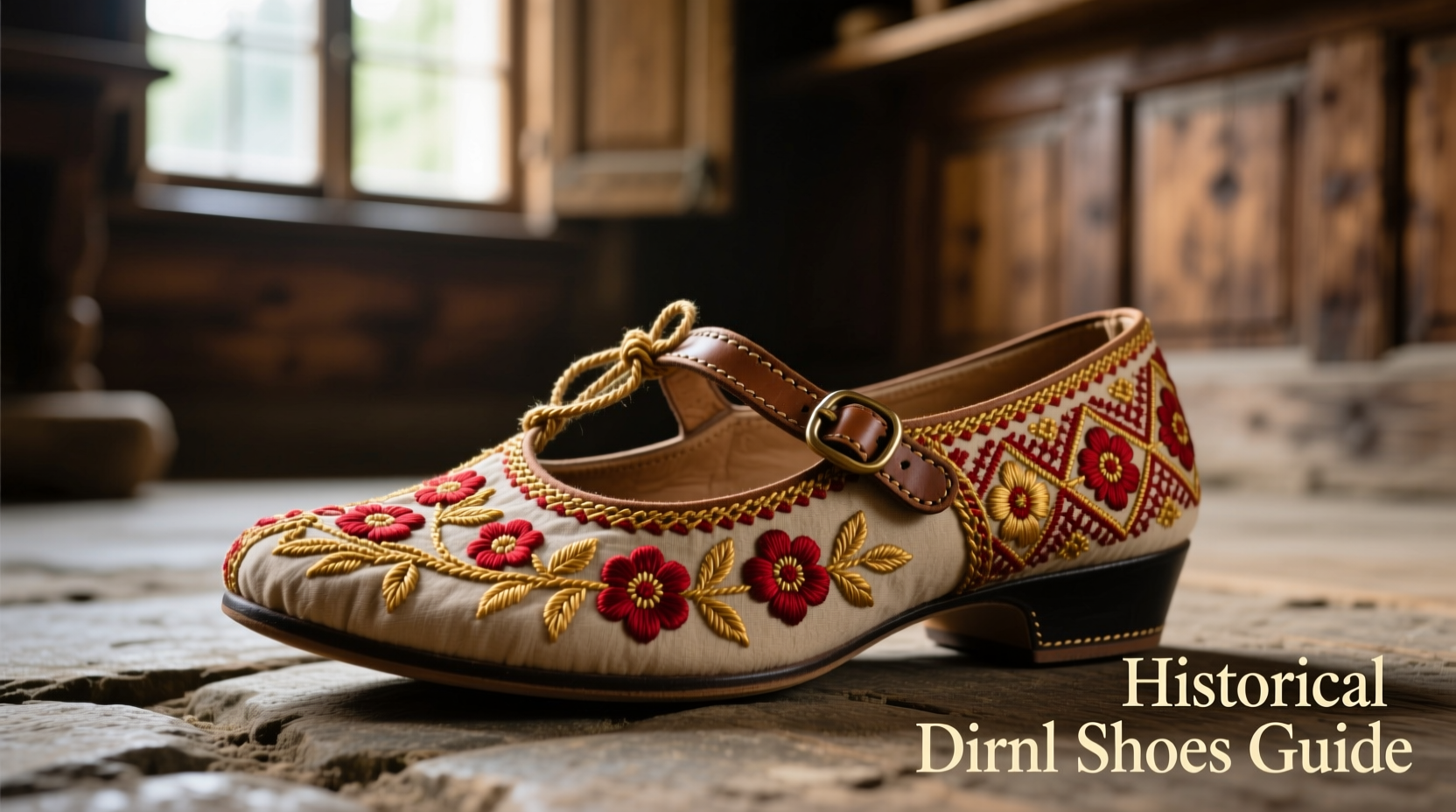
As the Trachtenvereine (traditional costume societies) formalized regional dress codes in the 1880s, the Trachtenschnaller emerged as the definitive women's dirndl shoe. Characterized by a low, blocky heel, a rounded toe, and a prominent metal buckle (Spange) across the vamp, this shoe bridges the gap between peasant practicality and bourgeois elegance. Historically, the buckles were crafted by regional silversmiths or brass-workers, often featuring intricate filigree, edelweiss motifs, or the Bavarian diamond pattern. The Tiroler Volkskunstmuseum houses numerous 19th-century examples of these buckles, showcasing the incredible regional metalwork that elevated simple leather shoes into heirloom garments.
3. Holzschuhe and Peasant Boots (Clogs and Stiefel)
For the Sennerin (alpine dairy maid) working in the high mountain pastures during the summer, leather shoes were a luxury that would rot in the damp conditions. Instead, wooden clogs (Holzschuhe) or heavy, unlined leather ankle boots were the standard pairing for the coarse linen and wool skirts of the era. Wooden clogs, carved from a single piece of alder or birch, provided insulation against the freezing ground and were easily washed clean of mud and manure. Today, while wooden clogs are rarely worn at festive events, they remain a vital part of the living history of Alpine agricultural dress.
Material and Construction: The Anatomy of Authentic Trachten Shoes
Authentic dirndl shoes are masterpieces of traditional cobbling. Unlike modern fast-fashion alternatives made from synthetic polyurethane, historical and high-quality contemporary Dirndlschuhe rely on specific, natural materials:
- Upper Leather: Traditionally made from vegetable-tanned cowhide (Rindsleder) or supple deer hide (Hirschleder). For festive occasions, velvet or heavily embroidered silk uppers were utilized by wealthy patricians in the 19th century.
- The Sole: Authentic shoes feature a stitched leather sole, sometimes reinforced with wooden pegs or hobnails (Nagelschuhe) for traction on icy mountain trails.
- Thread: Waxed linen thread is used for the welt, ensuring the shoe can be resoled multiple times over a lifetime.
- Lining: Unlined or lined with natural calfskin to allow the foot to breathe during long days of dancing at village festivals.
Regional Variations: Austria vs. Bavaria Footwear Protocols
The answer to what shoes do you wear with a dirndl changes depending on the specific valley or region you are representing. The Austrian Museum of Folk Life and Folk Art emphasizes that Tracht is not a monolith, but a hyper-local language.
In Upper Bavaria (Munich, Miesbach), the Trachtenschnaller with a silver buckle and a slightly higher heel is the undisputed standard for festive dirndls. Conversely, in the Tyrol and Salzburg regions of Austria, women’s footwear often leans toward a more robust, front-lacing bootie or a simpler, unadorned leather slip-on, reflecting the harsher, more isolated mountain environments. In the Salzkammergut (the Lake District), festive dirndls are frequently paired with delicate, low-heeled shoes made of black velvet, sometimes featuring a small, decorative rosette instead of a heavy metal buckle.
Footwear Pairing Matrix: Matching Shoes to Dirndl Styles
To navigate the complex etiquette of Alpine dress, use this historical and contemporary pairing matrix:
| Dirndl Category | Historical Shoe Pairing | Hosiery & Accessories | Modern Context & Etiquette |
|---|---|---|---|
| Alltagsdirndl (Everyday/Work) | Simple lace-up leather shoes, wooden clogs | Thick, ribbed wool calf socks | Appropriate for casual folk festivals, rural markets, and historical reenactments. |
| Festtagsdirndl (Festive) | Trachtenschnaller (Buckle shoes) in smooth black leather | Fine cotton or silk-blend knee-highs, often with subtle clocking | The standard for Oktoberfest, weddings, and formal church holidays. |
| Hochzeitsdirndl (Wedding) | Velvet or silk uppers, silver filigree buckles | Sheer silk stockings or delicate lace-trimmed socks | Reserved for brides and immediate family; highly formal and regionally specific. |
| Wintertracht (Winter Dress) | Fur-lined ankle boots, heavy Haferlschuhe | Thick loden wool leg warmers (Wadenwärmer) | Essential for Christmas markets and winter processions (Krampusläufe). |
Modern Etiquette: What to Avoid When Wearing Traditional Tracht
Understanding what shoes do you wear with a dirndl also requires knowing what not to wear. A common mistake among international visitors is pairing a traditional, hand-embroidered dirndl with modern stilettos, open-toed sandals, or athletic sneakers. From a cultural perspective, this breaks the historical silhouette and disrespects the grounded, practical origins of the garment. The dirndl is inherently tied to the earth and the alpine landscape; therefore, footwear must feature a closed toe, a low or block heel, and natural materials. If you must wear modern footwear for medical or comfort reasons, opt for high-quality, minimalist leather loafers or flat, closed-toe leather boots that mimic the profile of a 19th-century work shoe.
Sourcing Authentic Dirndl Shoes: Price Ranges and Artisans
Investing in authentic Trachtenschnaller or Haferlschuhe is an investment in heritage craftsmanship. Mass-produced costume shoes sold in tourist traps around Munich’s Marienplatz typically cost between €30 and €60, utilizing glued synthetic soles and plastic buckles that will not survive a single season of folk dancing.
For authentic, hand-cobbed dirndl shoes, expect the following price ranges:
- Entry-Level Authentic (€120 - €180): Brands like Haflinger or basic lines from Meindl offer genuine leather uppers and stitched soles, manufactured in specialized European workshops.
- Heritage Artisan (€200 - €350): Custom-fitted shoes from traditional Bavarian and Tyrolean cobblers (such as the historic workshops in Berchtesgaden or Mittenwald). These feature hand-carved wooden lasts, vegetable-tanned leathers, and solid silver or brass buckles sourced from local smiths.
- Antique & Vintage (€100 - €500+): Sourcing original 1920s or 1930s Trachtenschnaller from estate sales or specialized vintage dealers in Salzburg. These require careful restoration but offer unparalleled historical provenance.
Preserving the Legacy of Alpine Cobbling
Ultimately, the question of what shoes do you wear with a dirndl is an invitation to engage with the living history of the Alpine regions. By choosing footwear that honors the materials, construction techniques, and regional nuances of the past, wearers do more than just complete an outfit—they participate in the preservation of a profound cultural legacy. Whether you are lacing up a sturdy Haferlschuh for a mountain hike or fastening a silver Spange on a velvet pump for a village wedding, the right shoe grounds you in centuries of European folk tradition.