German Traditional Outfits: Rules & Occasions

When exploring the rich tapestry of European folk dress, few garments carry as much global recognition—and as much cultural misunderstanding—as German traditional outfits. From the bustling beer tents of Munich to the quiet alpine villages of Upper Bavaria, garments like the Dirndl and Lederhosen are deeply embedded in regional identity. However, treating these garments merely as party costumes strips them of their historical weight and living cultural significance.
To wear German traditional outfits with respect and authenticity, one must understand the crucial distinction between Tracht (living, regional traditional dress) and Kostüm (a mass-produced costume). This comprehensive guide details the strict etiquette, construction nuances, and occasion-specific rules required to navigate the world of German Tracht with cultural fluency.
Tracht vs. Kostüm: The Foundation of Respect
In Germany, Austria, and parts of Switzerland, the word Tracht refers to traditional garments that evolve slowly, reflect specific regional histories, and are often handmade by specialized artisans. Conversely, a Kostüm is a cheap, synthetic caricature sold in tourist shops. According to the Bayerisches Nationalmuseum in Munich, authentic Tracht serves as a marker of regional pride, social status, and marital standing, whereas a Kostüm is purely theatrical.
Wearing a polyester, neon-colored mini-dress with plastic buttons to a traditional Volksfest is considered highly inappropriate by locals. True etiquette begins with investing in garments made from natural fibers like linen, cotton, wool, and genuine leather, adhering to historical silhouettes rather than modern, hyper-sexualized festival trends.
The Dirndl: Anatomy, Etiquette, and the Schleife Code
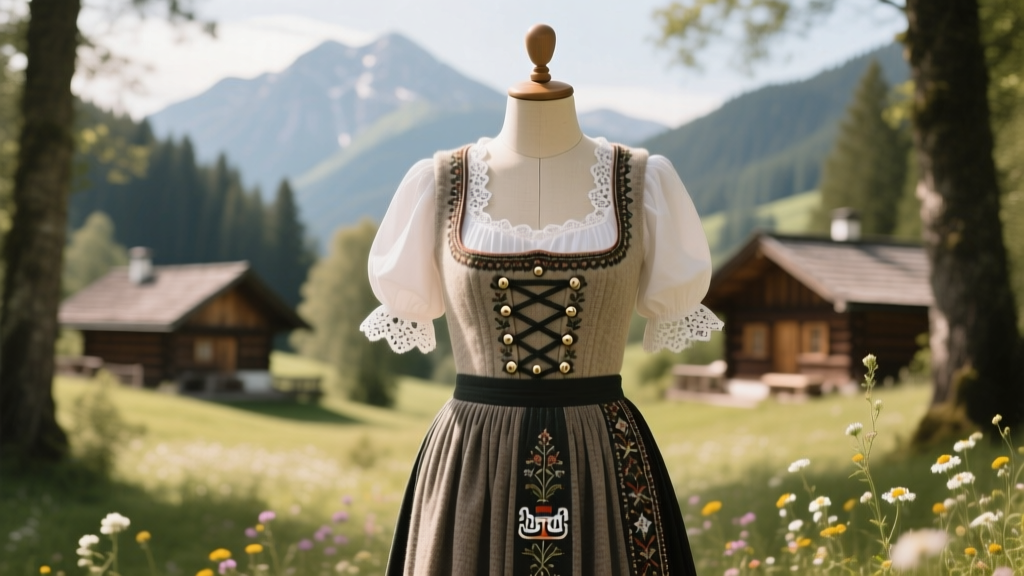
The Dirndl is not a single dress, but a four-piece ensemble consisting of the Mieder (bodice), Rock (skirt), Bluse (blouse), and Schürze (apron). Each component has strict wearing protocols.
Decoding the Schleife (Apron Bow)
The most famous piece of Dirndl etiquette is the Schleife, or apron bow, which traditionally signals the wearer's relationship status. Tying the bow incorrectly can lead to awkward social interactions at festivals.
- Left Side: The wearer is single, unmarried, and potentially open to courtship.
- Right Side: The wearer is married, engaged, or in a committed relationship.
- Back (Center-Back):strong> The wearer is widowed, or, in the context of hospitality, working as a waitress or staff member.
- Front (Center-Front): A persistent modern myth claims a center-tied bow signifies virginity. Historically, this is inaccurate; the center bow is largely a 21st-century marketing invention by Oktoberfest vendors. Traditionalists and rural wearers stick strictly to the left-right-back triad.
Skirt Lengths and Fabric Integrity
Authentic Dirndl skirts are never 'mini'. The traditional length is knielang (knee-length) or Wadenlang (mid-calf). The hem of the skirt and the hem of the apron should align perfectly. For high-end festive wear, the apron is often made of raw silk or fine linen, while everyday Alltagstracht utilizes sturdy cotton. Prices for authentic, tailor-made Dirndls range from €350 to over €1,200, reflecting the cost of natural fabrics and horn or silver buttons.
Herrentracht: Lederhosen, Loferl, and Haferlschuhe
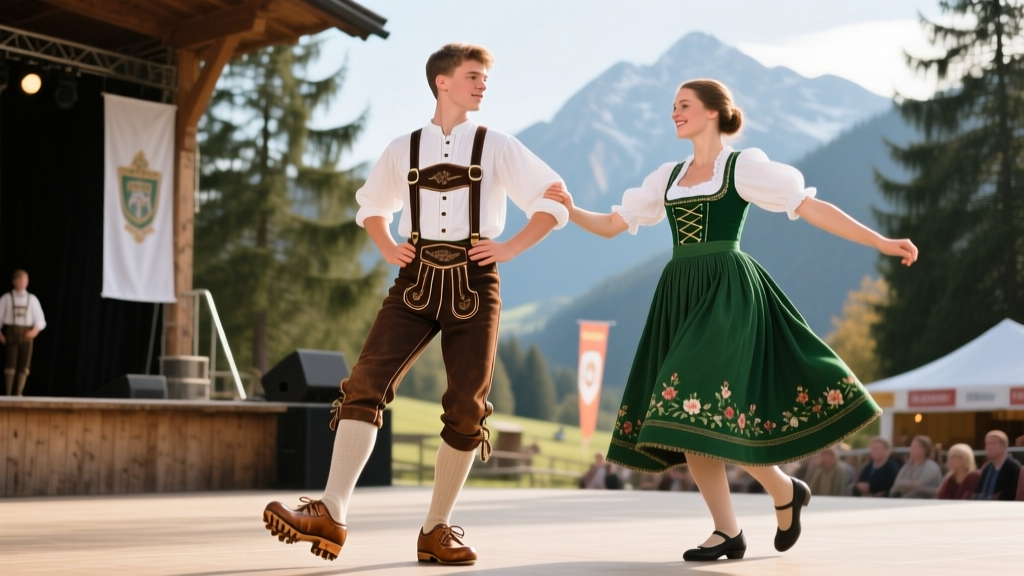
Men's traditional wear, or Herrentracht, is equally governed by rules of material and occasion. The iconic Lederhosen (leather breeches) were originally the durable workwear of Alpine hunters and foresters in the 18th century before being romanticized by Bavarian nobility.
Hirschleder vs. Mass-Market Leather
True connoisseurs seek out Hirschleder (deer leather) or Gamsleder (chamois leather). These leathers are brain-tanned or chrome-tanned to be incredibly soft, breathable, and durable. Mass-market versions use stiff cowhide or pigskin. Authentic Hirschleder Lederhosen, featuring hand-stitched Stickerei (embroidery) depicting regional flora like edelweiss and oak leaves, typically cost between €500 and €1,500.
Essential Accessories: Footwear and Legwear
Wearing sneakers with Lederhosen is a cardinal sin of Tracht etiquette. The only correct footwear is the Haferlschuh, a traditional alpine shoe characterized by a side-lacing system and a sturdy, nailed sole. These are paired with Wadenstrümpfe (thick, slouching calf socks) made of wool or cotton. In colder weather or for specific regional variants, men wear Loferl—a two-part calf warmer consisting of a sock and a separate calf band.
Regional Variations and Authentic Occasions
German traditional outfits are not a monolith; they vary drastically by region. The Deutsches Historisches Museum archives highlight how geography dictated fabric and silhouette. Below is a guide to regional styles and their appropriate occasions.
| Region | Garment Name | Key Characteristics | Primary Occasions |
|---|---|---|---|
| Upper Bavaria | Miesbacher Tracht | Grey or green loden jackets, intricately embroidered Lederhosen, silk Dirndls with silver chain lacing (Kettenverschluss). | Oktoberfest, Maibaumaufstellen (Maypole festivals), Trachtenhochzeit (weddings). |
| Black Forest | Schwarzwälder Bollenhut | Wide-brimmed straw hat with red pom-poms (unmarried) or black pom-poms (married), heavily layered skirts. | Church holidays, local harvest festivals, cultural parades. |
| Swabia | Alt-Schwäbische Tracht | More conservative, darker color palettes, gold-embroidered caps (Barette), modest necklines. | Schützenfest (marksmen festivals), Cannstatter Wasen. |
| Spreewald | Sorbian Tracht | Massive, intricate lace hoods, brightly colored layered skirts, heavy beadwork and velvet aprons. | Easter egg decorating (Waleien), church services, Zapust (winter festival). |
Occasion Guide: Matching the Outfit to the Event
Understanding when to wear German traditional outfits is just as important as knowing how to wear them. The Bayerischer Trachtenverband (Bavarian Tracht Association) categorizes wear into several distinct tiers:
- Alltagstracht (Everyday Tracht): Made of durable cotton or linen, simpler embroidery. Worn for casual village gatherings, visiting a beer garden, or working in traditional hospitality.
- Festtagstracht (Festive Tracht): Features silk, velvet, and elaborate silver or gold embroidery. Reserved for major events like Oktoberfest, weddings, and religious processions.
- Kirchentracht (Church Tracht): The most conservative and formal tier. Skirts are floor-length, colors are subdued (often black or dark navy), and head coverings are mandatory for women in Catholic regions.
Crucial Faux Pas to Avoid
To ensure you honor the living traditions behind these garments, avoid the following common mistakes:
1. Never wear a Dirndl without an apron. A Dirndl without a Schürze is simply a sleeveless summer dress. The apron is what elevates it to traditional status.
2. Avoid plastic zippers and synthetic fabrics. Authentic Mieder (bodices) close with hooks, eyes, or button-and-loop closures. Visible plastic zippers immediately mark the garment as a cheap costume.
3. Do not mix regional styles. Wearing a Black Forest Bollenhut with a Bavarian Miesbacher Dirndl is equivalent to wearing a Scottish kilt with a Spanish sombrero. Stick to one regional lineage.
4. Men must not wear ankle socks. Bare ankles or athletic ankle socks completely ruin the silhouette of the Lederhosen. Always opt for traditional calf-high socks.
Conclusion: Embracing Living History
German traditional outfits are not relics of the past; they are vibrant, living expressions of regional identity. By respecting the etiquette of the Schleife, investing in natural materials like Hirschleder and linen, and understanding the profound regional differences across the country, you transition from a tourist playing dress-up to a respectful participant in a centuries-old cultural dialogue. Whether you are attending a Schützenfest in Swabia or raising a glass at the Cannstatter Wasen, wearing Tracht correctly is the ultimate sign of respect for German heritage.