German Traditional Menswear Etiquette

When discussing german traditional clothing for men, international audiences often default to the caricatured, mass-produced costumes seen at tourist-heavy Oktoberfest tents. However, authentic German and Alpine menswear—collectively known as Tracht—is a sophisticated, living sartorial tradition rooted in regional identity, historical craftsmanship, and strict social etiquette. Wearing these garments correctly is not about playing dress-up; it is an expression of cultural pride, respect for artisanal heritage, and an understanding of rural and alpine social codes.
The Crucial Distinction: Tracht vs. Trachtenmode
To navigate the world of German menswear, one must first understand the linguistic and cultural divide between Tracht and Trachtenmode.
- Tracht (Traditional Costume): Historically accurate, regionally specific, and often handmade by specialized artisans. It follows strict guidelines regarding fabric, cut, and embroidery motifs dictated by local heritage associations (Trachtenvereine).
- Trachtenmode (Fashion Tracht): Commercialized, mass-produced clothing inspired by traditional cuts but utilizing modern, cheaper materials (like polyester blends) and trendy colors. While acceptable for casual tourists at a beer festival, it is heavily frowned upon at formal cultural events, weddings, and Schützenfeste (marksmen festivals).
"True Tracht is not a costume you put on to become someone else; it is a garment that connects you to the history and soil of your specific region." — Guiding principle of the Bayerischer Trachtenverband.
Anatomy of Authentic Menswear
The foundation of a man's traditional wardrobe depends heavily on the season, the formality of the event, and the specific German or Alpine region he is representing.
Lederhosen (Leather Breeches)
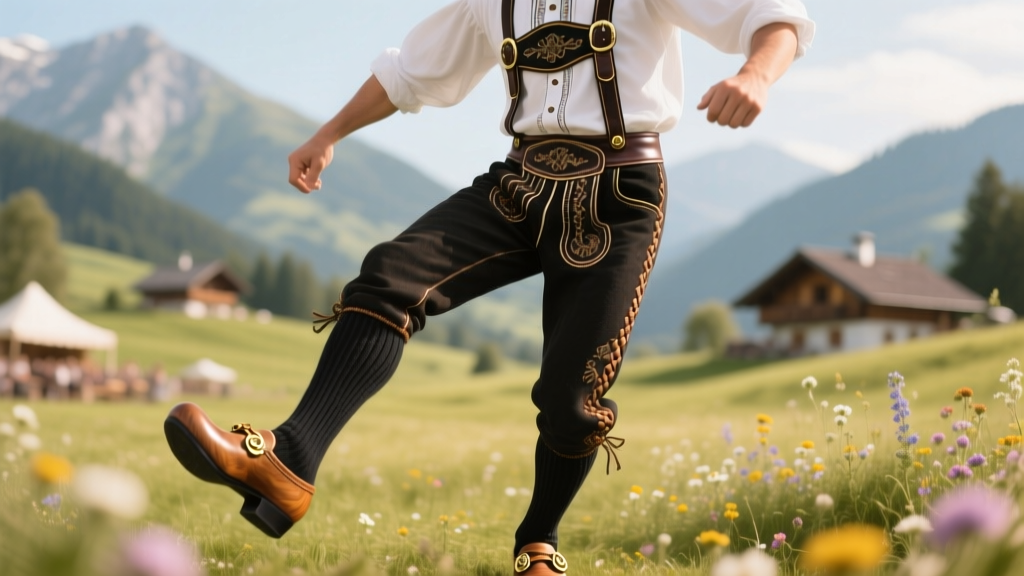
The Lederhose (plural: Lederhosen) is the most iconic piece of Bavarian and Alpine menswear. Authentic pairs are crafted from Hirschleder (deerskin) or Ziegenleder (goatskin). Deerskin is prized for its buttery softness, breathability, and ability to develop a rich patina over decades of wear.
Key construction details include the Latzz (the buttoned drop-front flap), the Messertasche (a specialized side pocket originally designed for a hunting knife), and intricate Stickerei (embroidery). The embroidery motifs—such as oak leaves, alpine roses, or edelweiss—are not merely decorative; they historically denoted the wearer's home village or valley. Authentic, artisan-crafted Hirschleder breeches typically range from €600 to €1,500, representing an investment meant to last a lifetime.
Bundhosen and Kniebundhosen
For colder weather or more formal rural occasions, men opt for Bundhosen (long trousers) or Kniebundhosen (knee-breeches). These are typically made from heavy loden wool, corduroy, or thick linen. They feature a similar drop-front construction to the leather variants but offer greater warmth and a slightly more conservative silhouette suitable for church services or winter weddings.
The Trachtenanzug (Loden Suit)
When the occasion demands formal elegance, the Trachtenanzug is the garment of choice. Popularized in the 19th century when nobility like Archduke Johann of Austria romanticized alpine peasant wear, the Loden suit is tailored from tightly woven, water-resistant sheep's wool. These suits feature distinct lapels, horn buttons, and subtle embroidery on the collar. A high-quality Loden suit from heritage tailors like Steinbock or Lodenfrey generally costs between €800 and €2,000.
Occasion Matrix: Matching Garment to Event
Wearing the correct garment for the specific occasion is the cornerstone of Tracht etiquette. Use the matrix below to ensure cultural appropriateness.
| Occasion | Recommended Garment | Footwear & Accessories | Etiquette Notes |
|---|---|---|---|
| Oktoberfest / Volksfest | Short or Knee-length Lederhosen | Haferlschuhe, Loferl (calf warmers) | Embroidery can be bold; checkered shirts are standard. Keep it neat, not sloppy. |
| Traditional Wedding (Gast) | Trachtenanzug (Loden Suit) or dark Kniebundhosen | Oxford-style Trachtenschuhe, silk tie | Avoid short Lederhosen unless specifically requested by the couple. Dark, muted tones. |
| Schützenfest (Marksmen) | Regional Vereinstracht (Club Uniform) | Polished Haferlschuhe, Tirolerhut | Strict adherence to local club colors and specific hat badges is mandatory. |
| Alpine Hiking / Outdoor | Vintage or well-worn Lederhosen, Loden jacket | Hiking-appropriate Haferlschuhe | Tracht is highly functional. Wearing authentic gear on the mountain is deeply respected. |
| Church / Religious Holidays | Bundhosen (Long trousers) or Trachtenanzug | Dress shoes, minimal jewelry | Hats must be removed upon entering the church. Avoid loud patterns. |
Regional Nuances Beyond Bavaria
While Bavarian Tracht dominates the global imagination, Germany's regional diversity offers vastly different menswear traditions. According to archives preserved by the Bayerisches Nationalmuseum, regional isolation historically created hyper-local sartorial dialects.
The Black Forest (Schwarzwald)
Men's Tracht in the Black Forest is distinctly somber and elegant, reflecting the region's dense forests and historical glassmaking and clockmaking trades. The traditional outfit features a black velvet vest (Samtweste), a white linen shirt with a standing collar, and black knee-breeches. The iconic wide-brimmed hat with red pom-poms (Bollenhut) is strictly reserved for unmarried women; men instead wear the Schäppel or simple black felt hats adorned with specific regional cords.
Swabia and Franconia
Swabian menswear (Schwäbische Tracht) favors practical, durable fabrics like heavy linen and wool in earth tones—navy, dark green, and charcoal. Unlike the ornate embroidery of the Alps, Swabian garments rely on the quality of the weave and the cut. Franconian Tracht often incorporates a distinct blue waistcoat and specific silver button placements that denote the wearer's exact village.
The Rules of Accessories: Shirts, Hats, and Footwear
An authentic outfit is built from the ground up. Neglecting accessories is the fastest way to signal that one is wearing a costume rather than Tracht.
Footwear and Hosiery
The only correct footwear for Lederhosen is the Haferlschuh, a heavy, brogue-style alpine shoe characterized by its side-lacing system and nailed leather sole, originally designed for gripping rocky alpine terrain. Expect to pay €120 to €250 for authentic pairs from makers like Meindl.
Hosiery rules are absolute: never wear ankle socks. Men must wear either Kniestrümpfe (thick, ribbed knee-high wool socks) or Loferl (a two-piece set consisting of a short sock and a separate calf-warmer).
Hats and the Gamsbart
The Tirolerhut (Tyrolean hat) is crafted from brushed loden felt. Its most prized accessory is the Gamsbart (chamois beard), a tuft of hair from the chamois antelope, tied at the base with silver wire and mounted on the hatband. Historically, the size and quality of the Gamsbart indicated the wearer's hunting prowess and social standing. Today, a genuine, large Gamsbart can cost upwards of €300. Etiquette rule: The hat must be removed when entering a home, a church, or when the national anthem is played.
The Charivari
Worn draped across the front of the Lederhosen waistband, the Charivari is a heavy silver chain adorned with coins, animal teeth, or hunting trophies. Originally serving as a talisman for hunters and a display of wealth, it is now a cherished heirloom piece. It should only be worn with short or knee-length Lederhosen, never with long trousers.
Sourcing Authentic Pieces and Cultural Preservation
For those looking to invest in authentic german traditional clothing for men, bypassing tourist shops is essential. Seek out certified Trachten tailors and heritage brands. Organizations like the Bayerischer Trachtenverband (Bavarian Tracht Association) work tirelessly to preserve historical patterns and support local artisans who utilize traditional tanning and weaving methods. When purchasing, ask the retailer about the origin of the leather and whether the embroidery is done by hand (Handstickerei) or machine. Hand-embroidered pieces feature a distinct raised texture and slight, beautiful imperfections that machine work lacks.
Five Unforgivable Faux Pas to Avoid
To wear Tracht with dignity, avoid these common mistakes that immediately mark the wearer as an outsider:
- Wearing Polyester: Synthetic fabrics do not breathe, look cheap under light, and disrespect the artisanal wool and leather trades. Stick to linen, cotton, wool, and genuine leather.
- The Ankle Sock Sin: Exposing bare calf between a Haferlschuh and a Lederhose is a major breach of etiquette. Always wear proper Loferl or knee-highs.
- Over-Accessorizing: Tracht is inherently detailed. Wearing a Charivari, a massive hat feather, an embroidered suspenders, and a loud silk shirt simultaneously looks chaotic. Balance your accessories.
- Wearing the Hat Indoors: The Tirolerhut is an outdoor garment. Keeping it on at a dining table or inside a Bierzelt (beer tent) is considered highly rude.
- Treating it as a Joke: Tracht is the formal and cultural dress of millions of people in the DACH region (Germany, Austria, Switzerland). Wear it with the same posture and respect you would afford a well-tailored business suit.
By understanding the deep history, regional variations, and strict etiquette surrounding these garments, men can participate in German cultural events not as tourists in costume, but as respectful guests honoring a centuries-old textile heritage.