German Outfits Men: The 2026 Oktoberfest & Festival Guide
Beyond the Beer Tent: Understanding Men's Tracht
When navigating the vibrant grounds of Munich's Theresienwiese for Oktoberfest, or attending regional celebrations like the Cannstatter Volksfest in Stuttgart, the distinction between a genuine cultural garment and a mass-produced costume becomes immediately apparent. For men, traditional German clothing—collectively known as Tracht—is not merely festival wear; it is a deeply rooted expression of regional identity, artisanal heritage, and historical continuity. As we look toward the 2026 festival season, understanding the nuances of men's Tracht is essential for anyone seeking to participate in these events with cultural respect and sartorial authenticity.
The global search for 'German outfits men' often yields a confusing mix of historical reenactment gear, cheap polyester costumes, and genuine heritage garments. This guide cuts through the noise, providing a comprehensive framework for understanding, purchasing, and wearing authentic men's Tracht for European folk festivals.
The Anatomy of Authentic Lederhosen
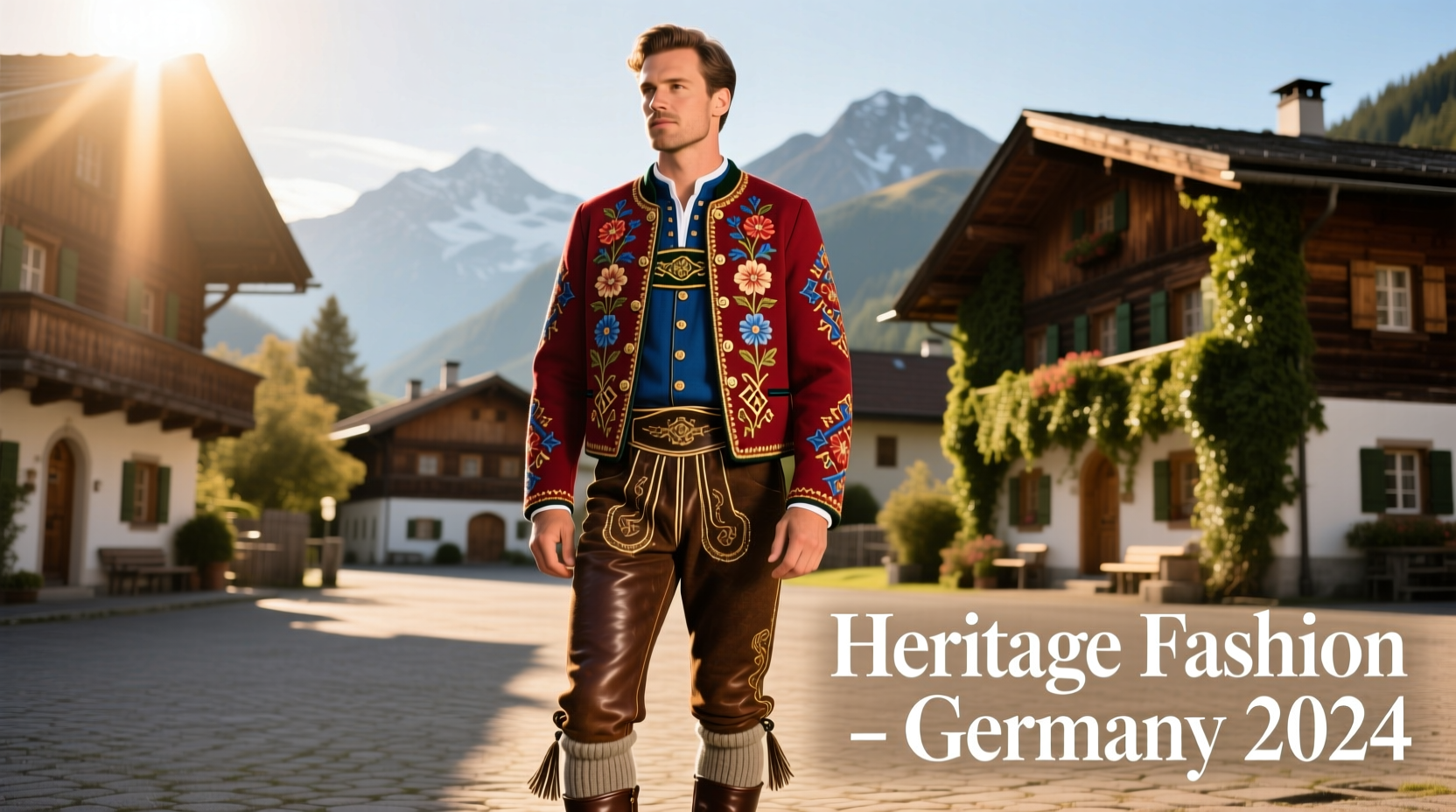
The cornerstone of men's Alpine and Bavarian festival wear is the Lederhose (plural: Lederhosen). However, authentic Lederhosen are defined by their construction and material, not just their silhouette. Genuine pairs are crafted using Sämischgerbung, a traditional fat-liquoring tanning process that utilizes cod liver oil or animal fats. This method yields a remarkably soft, breathable, and durable leather that develops a unique patina over years of wear.
Key anatomical features of authentic Lederhosen include:
- The Latz (Drop-Front): A functional flap secured by horn or bone buttons, historically designed for ease of movement and rural labor.
- Hosenträger (Suspenders): Often cross-backed and heavily embroidered, these are adjustable and feature intricate metal buckles.
- Stickerei (Embroidery): Hand-stitched motifs that denote specific regions. The Miesbacher style often features oak leaves and edelweiss, while Werdenfelser designs might incorporate alpine roses and geometric vines.
- Messersteck (Knife Pocket): A small, reinforced pocket on the right thigh originally intended for a hunting or utility knife.
Regional Variations: Not All German Outfits Are Bavarian
While the Bavarian Alpine Tracht dominates international perceptions of German festivals, Germany's federal history has produced diverse regional garments. At events like the Schützenfest (marksmen's festivals) in Northern and Western Germany, or the wine festivals of the Palatinate, you will encounter different sartorial codes.
In regions like the Black Forest (Schwarzwald), traditional men's festival wear historically leaned toward the Kittel, a dark, heavy linen or wool smock worn over trousers, often accompanied by a broad-brimmed hat with red pom-poms (the Bollenhut is strictly for women, but men have their own distinct headwear). In Franconia and Swabia, festival attire often features tailored wool waistcoats (Trachtenweste) in muted earth tones, paired with heavy linen trousers rather than leather. Recognizing these regional distinctions elevates your understanding of German folk dress from a monolithic stereotype to a rich, localized tapestry.
The 2026 Festival Wardrobe: Head-to-Toe Assembly
Assembling a complete, culturally accurate festival outfit requires attention to every layer. According to guidelines preserved by the Bavarian National Museum, a complete men's Tracht ensemble consists of specific, non-negotiable elements:
- Trachtenhemd (Shirt): A high-quality linen or cotton shirt. While checkered (Karohemd) is popular, plain white or cream linen with subtle contrast piping (Paspel) is considered more traditional and formal.
- Lederhose: Either Kurze (short, ending above the knee) or Kniebundhosen (knickerbockers that tie below the knee). Long leather trousers (Lange Lederhosen) are typically reserved for winter or formal hunting events.
- Trachtenstrümpfe & Loferl: If wearing short Lederhosen, you must wear Loferl (two-piece calf warmers consisting of an ankle sock and a calf band). Never wear standard ankle socks with short Lederhosen.
- Haferlschuhe (Footwear): Traditional Alpine shoes characterized by a distinctive side-lacing system and a robust, studded sole. They are historically designed for navigating steep, rocky terrain.
- Trachtenhut (Hat): A brushed wool or felt hat, often adorned with a Gamsbart (a tuft of chamois hair) or an eagle feather.
Navigating the Market: Authentic Tracht vs. Tourist Costumes
The market for German outfits men wear to festivals is heavily saturated with imported, synthetic approximations. Understanding the price-to-quality ratio is vital for making an investment in a garment that respects the culture and lasts a lifetime.
| Quality Tier | Material & Construction | Embroidery & Hardware | Price Range (EUR) | Lifespan |
|---|---|---|---|---|
| Tourist Costume | Synthetic suede, polyester blends, glued seams. | Machine-printed patterns, plastic buttons. | €50 - €120 | 1-2 Festivals |
| Entry-Level Heritage | Genuine pigskin or split cowhide, chrome-tanned. | Machine-embroidered, standard horn buttons. | €250 - €450 | 5-10 Years |
| Master Artisan (Tracht) | Brain-tanned Hirschleder (deer) or Gams (chamois). | Hand-stitched silk thread, carved bone/antler hardware. | €900 - €2,500+ | Lifetime / Heirloom |
For those attending major events like Oktoberfest, investing in the 'Entry-Level Heritage' tier from established Munich houses is the minimum standard for cultural respect and personal comfort in crowded beer tents.
Cultural Etiquette and Wearing Protocols
Wearing Tracht comes with a specific set of unwritten rules, particularly regarding accessories and comportment. The Charivari—a decorative silver chain worn across the drop-front of the Lederhosen, adorned with antique coins, animal teeth, and silver talismans—was historically a status symbol for hunters and landowners. Today, it is a prized accessory, but it should be worn with understated elegance rather than as a flashy novelty.
The Gamsbart and Hat Rules
The Gamsbart (the brush on the hat) is sized by the number of hairs it contains, ranging from a modest 300 hairs to a massive, status-signaling 1,500+ hairs. Etiquette dictates that the hat must be removed when entering a church, a private home, or when the national anthem is played. However, in the bustling environment of a traditional beer tent like the Schottenhamel, keeping the hat on while seated is generally tolerated, though removing it when greeting elders or local dignitaries shows profound respect.
'True Tracht is not a costume you put on to play a part; it is a garment you inhabit to honor the generations of artisans and alpine workers who shaped our regional identity.' — Guideline excerpt from the Bayerischer Trachtenverband (Bavarian Tracht Association).
Sourcing Your Garments: Heritage Makers and Tailors
To acquire authentic German outfits, men should bypass generic festival pop-up shops and seek out established Trachtenhäuser (heritage clothiers). Institutions like Lodenfrey in Munich, which has been outfitting locals and international dignitaries since 1948, offer comprehensive collections ranging from ready-to-wear heritage pieces to bespoke tailoring. Another premier destination is Angermaier, renowned for bridging traditional alpine craftsmanship with contemporary fits suitable for the modern festival-goer.
For the ultimate bespoke experience, visiting a local Säckler (master leatherworker) in the Alpine foothills allows for custom measurements, selection of specific deer hides, and the commissioning of personalized embroidery motifs. While the lead time for bespoke Lederhosen can span several months, the result is a deeply personal, culturally significant garment that perfectly aligns with the spirit of Europe's most celebrated folk festivals. As you prepare for the 2026 festival circuit, prioritize craftsmanship, respect the regional codes, and wear your Tracht with the pride it commands.