Wearing Traditional Dress in Europe: Etiquette and Occasions
The Living Wardrobe: Navigating Traditional Dress in Europe
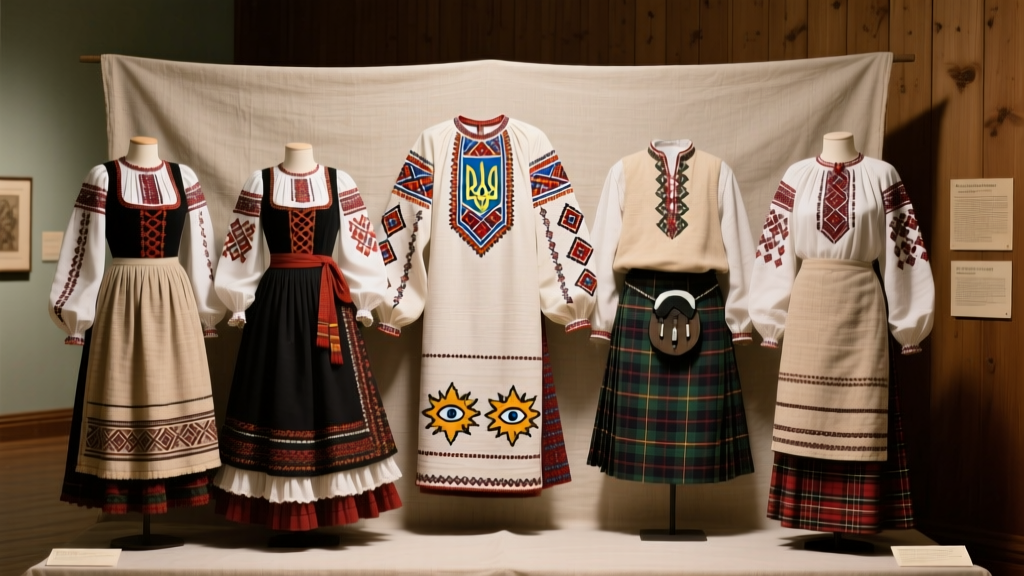
When travelers, expatriates, and cultural enthusiasts explore traditional dress in Europe, they are engaging with much more than historical reenactment. Unlike theatrical costumes, European folk dress—whether referred to as Tracht, bunad, or Highland dress—represents a living, breathing heritage. These garments are deeply tied to regional identity, marital status, and social protocol. Wearing them requires a nuanced understanding of cultural appreciation versus appropriation, as well as a strict adherence to centuries-old etiquette.
This comprehensive guide decodes the unwritten rules of wearing Europe’s most iconic traditional garments, providing actionable advice on occasions, material authenticity, and regional protocols.
The Norwegian Bunad: Strict Rules for National Pride
The Norwegian bunad is arguably the most strictly regulated traditional dress in Europe. It is not merely a festive outfit; it is a profound expression of ancestral geography and familial roots. According to the Norsk institutt for bunad og folkedrakt (Norwegian Institute for Bunad and Folk Costumes), there are over 400 distinct regional variations, each governed by local councils that dictate everything from thread color to silver jewelry placement.
Occasions and Silver Protocols
The bunad is reserved for life’s most significant milestones: weddings, confirmations, folk dances, and, most notably, Constitution Day (Syttende Mai on May 17th). Wearing a bunad to a casual pub crawl or as a Halloween costume is considered highly disrespectful.
A critical component of the bunad is the sølje (traditional silver jewelry). The silver is not merely decorative; it historically served as a portable display of a family’s wealth. The number of brooches, cufflinks, and crown pins must correspond exactly to the specific regional bunad. For example, the Hardangerbunad requires intricate filigree silver, while the Setesdalsbunad features heavy, oxidized silver buttons and clasps. Mixing silver from different regions is a major faux pas.
Regional Specificity and Sourcing
You cannot simply choose a bunad because you prefer its color palette. Etiquette dictates that you wear the bunad of your ancestral home, your birthplace, or the region where you have deep, long-term ties. Furthermore, authentic bunads are custom-tailored and hand-embroidered. An authentic, fully assembled bunad typically costs between 25,000 and 50,000 NOK ($2,300 to $4,700 USD) and can take over a year to complete. Mass-produced 'party bunads' sold in tourist shops are easily recognized by locals and should be avoided by those wishing to show genuine cultural respect.
Alpine Tracht: Decoding the Dirndl and Lederhosen
In Bavaria, Austria, and South Tyrol, traditional dress is known as Tracht. The Bayerisches Nationalmuseum in Munich houses extensive archives demonstrating how Tracht evolved from rural workwear to a symbol of Alpine identity. Today, a sharp distinction exists between authentic Tracht (handmade, region-specific) and Trachtenmode (commercialized fashion).
The Bow Code and Oktoberfest Realities
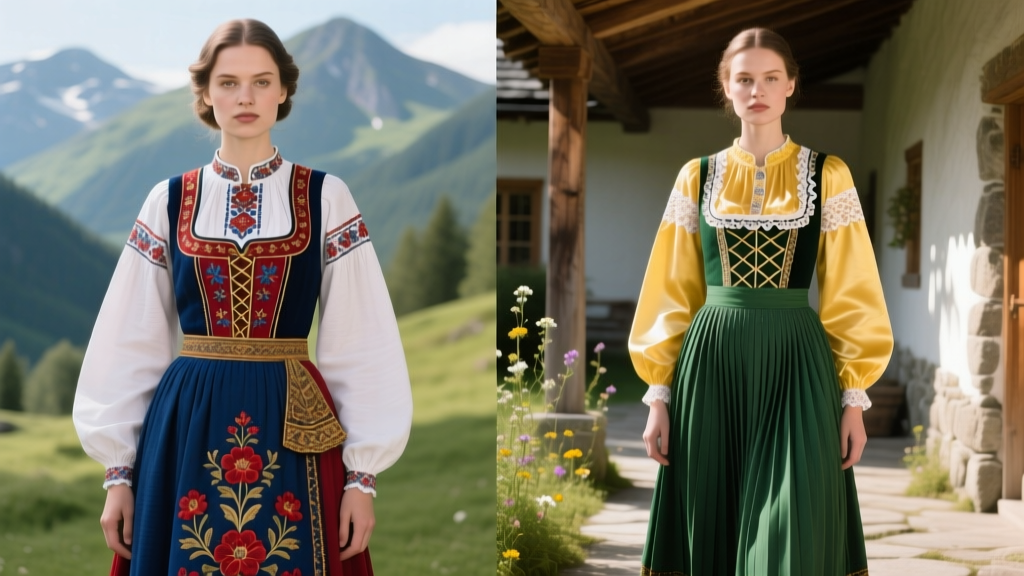
The most famous piece of Alpine etiquette revolves around the Dirndl apron bow (Schleife). The placement of the bow communicates the wearer’s relationship status, a code still actively observed at events like Oktoberfest and local Schützenfeste (marksmen's festivals):
- Left side: Single and open to meeting someone.
- Right side: In a relationship, married, or 'taken'.
- Center (front): Traditionally indicates virginity, though today it is often worn by young girls or those who prefer not to disclose their status.
- Back (center): Widowed, or practically, worn by waitresses and staff so the bow does not interfere with carrying trays.
Material Matters: Wool, Linen, and Hirschleder
Authentic Alpine etiquette demands respect for materials. A genuine Lederhosen is crafted from Hirschleder (smoked deerskin) or Sämischnaht (traditionally tanned leather), which molds to the wearer's body over time and is never washed, only brushed. Pairing authentic leather breeches with cheap, synthetic button-down shirts violates Tracht etiquette. Men should wear rustic linen or wool shirts, paired with Haferlschuhe (traditional Alpine side-laced shoes) and woolen calf warmers (Loferl). For women, a high-quality Dirndl made of cotton, linen, or raw silk, featuring a hand-pleated skirt and a tailored bodice, costs between €250 and €800.
The Scottish Kilt: Highland Dress Beyond the Stereotype
Scottish Highland dress is a highly codified system of menswear (with specific adaptations for womenswear) governed by centuries of clan history and military tradition. The Scottish Tartans Authority maintains the official register of tartans, noting that while anyone can wear a 'universal' tartan like Royal Stewart or Black Watch, wearing a specific clan tartan implies a direct familial link or allegiance to that clan's chief.
Day Wear vs. Evening Wear
Etiquette in Highland dress is heavily dictated by the time of day and the formality of the occasion. The garments are categorized into distinct levels of formality:
- White Tie (Full Highland Dress): Reserved for the most formal evening events. Features the Prince Charlie coatee, a lace jabot, an 8-yard worsted wool kilt, and a full fur sporran.
- Black Tie (Evening Wear): The Argyll jacket or a doublet, worn with a wing-collar shirt and bow tie. The sporran is typically semi-dress (leather with some fur accents).
- Day Wear (Semi-Formal): A tweed jacket (such as the Crail or Braemar), a standard collar shirt with a tie, and a 5-yard wool kilt. The sporran is a simple leather day sporran.
A critical rule of kilt etiquette is the hemline: the kilt must fall to the middle of the knee. Any shorter is considered improper, and any longer restricts movement. Furthermore, the kilt must be worn with ghillie brogues (shoes with long laces that wrap around the calf) and hose (woolen socks) folded down just below the knee, secured with a kilt pin on the outer apron.
Eastern European Folk Costumes: Embroidery as Identity
In Eastern and Southeastern Europe—such as the népviselet of Hungary, the kroj of Croatia, and the stroj of Slovakia—traditional dress operates as a visual language. The embroidery patterns, colors, and headwear do not just indicate the wearer's village; they explicitly state their age, marital status, and religious denomination.
For example, in many Slavic traditions, unmarried women wear their hair braided and adorned with floral wreaths or open ribbons, while married women must strictly cover their hair with a bonnet or scarf (čepec or šatka). When attending folk festivals or regional weddings, expatriates and visitors are usually welcomed to participate, but they are advised to wear 'universal' regional variations rather than attempting to replicate the highly specific, coded garments of local elders, which could be seen as claiming a village lineage one does not possess.
Quick Reference Guide: European Folk Dress Etiquette Matrix
| Garment | Primary Occasions | Key Etiquette Rule | Approx. Authentic Price |
|---|---|---|---|
| Norwegian Bunad | Constitution Day, Weddings, Confirmations | Must match ancestral region; silver must be historically accurate. | $2,300 - $4,700 USD |
| Bavarian Dirndl | Oktoberfest, Volksfeste, Alpine Weddings | Apron bow placement dictates relationship status; avoid synthetics. | €250 - €800 EUR |
| Alpine Lederhosen | Beer festivals, Hunting events, Folk dances | Must be real Hirschleder; never wash, only brush; pair with Haferlschuhe. | €400 - €1,200 EUR |
| Scottish Kilt | Ceilidhs, Weddings, Highland Games | Hem must hit mid-knee; jacket formality must match time of day. | £350 - £800 GBP |
| Hungarian Népviselet | Harvest festivals, National holidays, Folk dancing | Headwear strictly denotes marital status; embroidery denotes village. | Varies widely by artisan |
Cultural Appreciation vs. Appropriation: A Traveler's Guide
Engaging with traditional dress in Europe is a beautiful way to honor local heritage, provided it is done with intentionality. The line between appreciation and appropriation is drawn at context and respect. Purchasing a mass-produced, sexualized 'dirndl costume' from an online party store and wearing it to a Munich beer hall reduces a complex cultural artifact to a caricature. Conversely, investing in a properly fitted, locally made Dirndl from a Trachten boutique, wearing it with the correct undergarments, blouse, and shoes, and observing the bow etiquette demonstrates profound respect for Bavarian culture.
When in doubt, consult local artisan cooperatives, attend workshops hosted by regional heritage boards, and always prioritize quality materials over cheap imitations. By treating these garments with the reverence of a living museum, travelers can participate in Europe’s rich sartorial traditions responsibly and authentically.