European Trachten & Asian Traditional Dress

The Philosophy of Cultural Garments: Europe vs. Asia
When navigating the global landscape of heritage clothing, understanding the unspoken rules of wearing etiquette is just as critical as appreciating the textiles themselves. At The Garment Atlas, we frequently receive inquiries about how to respectfully wear and source regional garments. While our core expertise lies in European folk dress, the principles of sartorial respect are universal. This guide bridges the gap between the highly localized, regional protocols of European Trachten and the deeply symbolic, occasion-driven rules governing the traditional dress of Asia.
Whether you are attending a Bavarian Volksfest, a Shinto shrine ceremony in Kyoto, or a Diwali celebration in Mumbai, misinterpreting the visual language of these garments can lead to unintended cultural faux pas. Below, we decode the construction, etiquette, and sourcing frameworks for these magnificent living traditions.
Decoding the Traditional Dress of Asia
The traditional dress of Asia is rarely monolithic; it is defined by strict hierarchies of formality, seasonal awareness, and marital status. Unlike Western fashion, where trends dictate wearability, Asian heritage garments are bound by centuries of codified rules.
Japan: The Art of Kitsuke and the Kimono
The Japanese kimono is perhaps the most structurally complex garment in the world, requiring a dedicated practice known as kitsuke (the art of wearing). The most critical rule of kimono etiquette is the wrap direction: the left side must always wrap over the right (migi-mae). Wrapping right-over-left is strictly reserved for shini-shozoku (burial garments for the deceased). Doing otherwise is considered deeply offensive and inauspicious.
Formality is dictated by the fabric, motif, and the obi (sash). For unmarried women attending formal events like tea ceremonies or coming-of-age days, the furisode (long-sleeved kimono) is required, featuring vibrant, all-over seasonal motifs. Married women transition to the tomesode, which features shorter sleeves and motifs restricted to the lower half of the garment. According to the Metropolitan Museum of Art's Heilbrunn Timeline of Art History, the evolution of these motifs was historically tied to sumptuary laws and the Edo period's merchant class, who encoded wealth into subtle, expensive inner linings.
- Footwear Protocol: Never wear a kimono without tabi (split-toe socks) and zori (straw or vinyl sandals). Bare feet or Western hosiery are unacceptable.
- Investment Range: An authentic, hand-painted silk hōmongi (visiting kimono) typically ranges from ¥300,000 to ¥1,000,000 ($2,000–$6,800 USD), excluding the cost of the obi and professional dressing services.
India: The Sari and Sacred Modesty
The sari is a masterclass in unstitched drapery, with over 80 recorded regional draping styles across the Indian subcontinent. The most globally recognized is the Nivi drape, originating from Andhra Pradesh. However, wearing a sari requires an understanding of modesty, particularly in religious or rural settings.
The pallu (the loose, decorative end of the sari) is not merely an aesthetic flourish; it serves as a functional modesty barrier. When entering a Hindu temple, a Gurudwara, or when in the presence of elder in-laws in conservative households, the pallu must be draped over the head or pinned securely across the chest to obscure the silhouette. Furthermore, the pleats must face left, and the fabric should never touch the ground, as touching the earth with the hem of a sacred garment is considered disrespectful to the weaver's labor and the divine.
- Textile Specifics: For weddings, a handloom Banarasi silk sari with real zari (gold or silver thread) is the gold standard. Authentic zari will not tarnish and feels heavy and slightly coarse to the touch.
- Investment Range: Genuine Banarasi silk saris range from ₹15,000 to ₹150,000 ($180–$1,800 USD), depending on the complexity of the brocade and the purity of the zari.
European Folk Dress: Rules of Engagement
While the traditional dress of Asia often signals formality and seasonality, European folk dress is intensely regional. In Europe, what you wear tells the observer exactly which valley, village, or parish your family hails from, as well as your current romantic availability.
The DACH Region: Dirndl Codes and Lederhosen
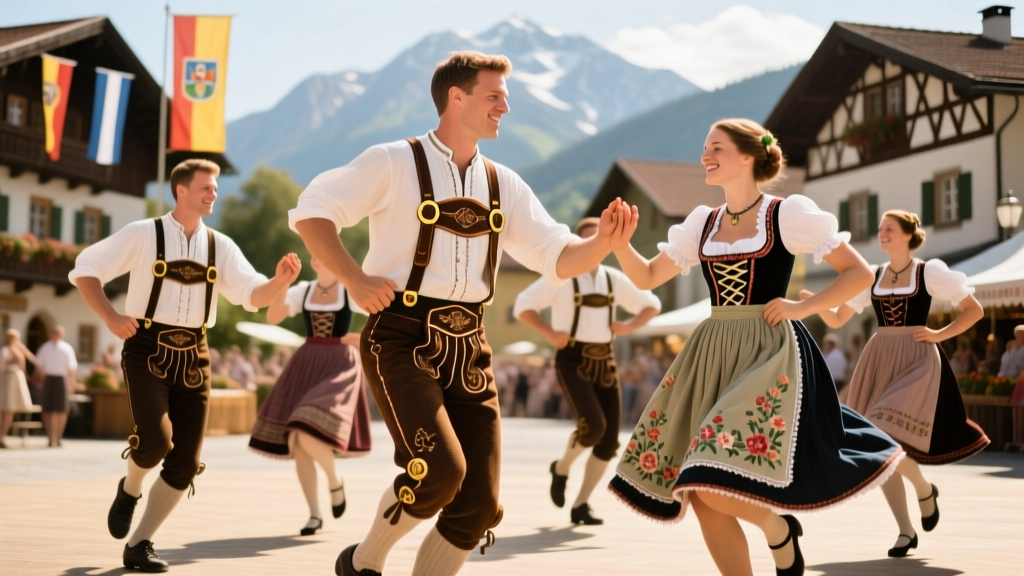
The Dirndl and Lederhosen, originating from the Alpine regions of Germany, Austria, and Switzerland (the DACH region), are heavily codified. The most famous etiquette rule pertains to the Dirndl's Schürze (apron) bow. This is not a stylistic choice; it is a public declaration of relationship status:
- Left Side: Single and open to courtship.
- Right Side: Married, engaged, or in a committed relationship.
- Center Front: Traditionally denotes virginity (though this is rarely enforced or used in modern contexts).
- Center Back: Indicates the wearer is a widow, or, practically, that she is a working waitress at a beer tent.
- Occasion: Bunads are worn for Constitution Day (May 17th), weddings, baptisms, and formal galas. They are never worn for casual, messy, or outdoor labor events.
- Investment Range: A complete, custom-tailored bunad with hand-forged silver typically costs between 30,000 NOK and 70,000 NOK ($2,800–$6,500 USD).
Tying the bow on the wrong side at Oktoberfest or a rural Volksfest will result in unwanted advances or confused locals. Furthermore, authentic Tracht requires a high-necked blouse and a specific Mieder (bodice) that hooks or laces at the front. Plastic zippers and polyester blends are widely rejected by Trachtenvereine (traditional costume associations).
For men, authentic Lederhosen are made from deer or chamois leather, which is supple and darkens with age and wear. The Hosenträger (suspenders) feature a cross-piece adorned with regional embroidery, such as the Edelweiss or alpine hunters. The Bayerisches Nationalmuseum in Munich maintains extensive archives showing how these embroidery patterns were historically used to identify a man's specific alpine village.
Scandinavia: The Strict Heritage of the Bunad
In Norway, the bunad is not merely a costume; it is a sacred piece of family and regional heritage. Unlike the dirndl, which can be bought off the rack in various colors, a bunad must correspond to the wearer's ancestral region or their current place of residence. Mixing elements from different regions (e.g., wearing a Telemark bunad with Hardanger silver) is considered a severe breach of etiquette.
The silver jewelry (bunadsølv) is equally regulated. The weight, number of brooches, and cufflinks must match the specific valley's historical records. According to the Norsk Folkemuseum (Norwegian Museum of Cultural History), the bunad movement of the early 20th century was heavily tied to national romanticism, and today, the Bunad and Folk Costume Council strictly advises on historical accuracy.
Comparative Etiquette & Occasion Matrix
To synthesize the protocols of both hemispheres, refer to this quick-reference matrix when planning your wardrobe for cultural events.
| Garment | Region | Primary Occasions | Key Etiquette Rule | Approx. Investment (USD) |
|---|---|---|---|---|
| Kimono (Furisode) | Japan | Coming-of-Age, Tea Ceremonies | Left over right wrap; seasonal motifs must match the exact month. | $2,500 - $8,000+ |
| Sari (Banarasi) | India | Weddings, Diwali, Temple Visits | Pallu must cover the head in sacred spaces; pleats face left. | $300 - $2,000 |
| Dirndl | Bavaria / Austria | Oktoberfest, Volksfeste, Rural Weddings | Apron bow placement strictly dictates relationship status. | $350 - $900 |
| Bunad | Norway | May 17th, Baptisms, Formal Galas | Must match ancestral region; silver weight is historically codified. | $3,000 - $7,000 |
Cultural Appreciation vs. Appropriation: A Buyer's Framework
When engaging with the traditional dress of Asia or European folk costumes as a non-native, the line between appreciation and appropriation is drawn at context and sourcing. Wearing a sari to an Indian friend's wedding is universally welcomed as a sign of respect, provided it is draped correctly and modesty protocols are followed. Conversely, wearing a cheap, mass-produced 'geisha costume' to a Halloween party reduces a sacred cultural artifact to a caricature.
'True appreciation requires an investment in the living artisans who keep these traditions alive. When you bypass fast-fashion imitations and commission directly from regional weavers or certified Trachten tailors, you are participating in cultural preservation, not consumption.'
Where to Source Authentic Pieces
For the traditional dress of Asia, avoid tourist traps. In Japan, seek out certified kimono kitsuke shops in Kyoto or Tokyo's Nihonbashi district for rentals and purchases. In India, purchase directly from government-empaneled handloom cooperatives like Nalli or state emporiums in Delhi to ensure weavers receive fair compensation and the silk is genuine.
For European folk dress, authentic Dirndls can be sourced from heritage brands like Angermaier or Lodenfrey in Munich. For a Norwegian bunad, you must book an appointment with a certified bunad-tilvirker (bunad tailor) in Norway, as the garments are made-to-measure and require months of hand-embroidery.
By honoring the construction, history, and wearing etiquette of these garments, we ensure that the world's most magnificent textile traditions continue to thrive with dignity in the modern era.