Eastern European Traditional Clothing: Symbols & Heritage
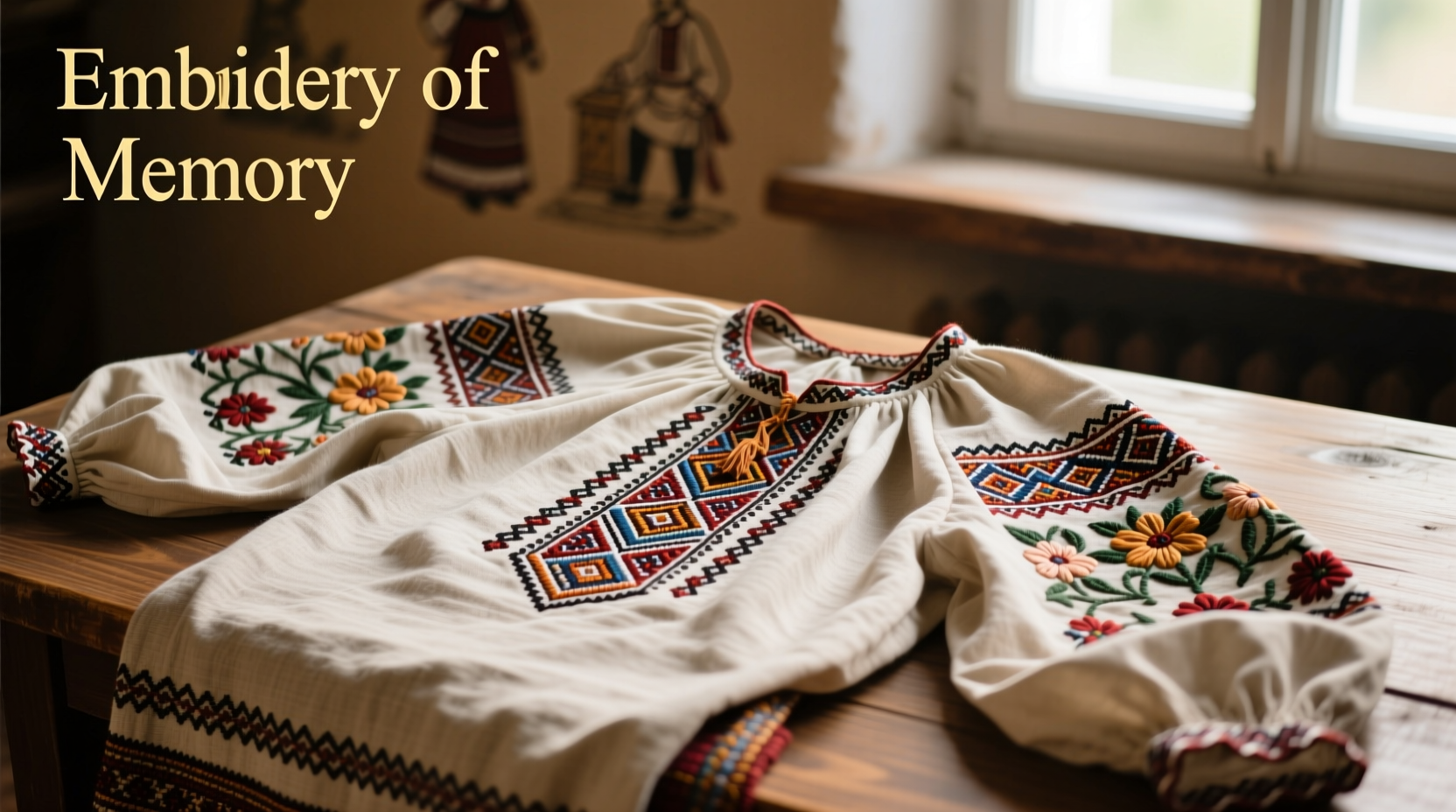
To view eastern european traditional clothing merely as festive attire or historical costume is to misread a complex, wearable manuscript. Across the Carpathian Mountains, the Slavic plains, and the Balkan peninsulas, folk dress has historically functioned as a visual language. Before widespread literacy, a garment’s cut, color, and embroidery communicated the wearer’s village of origin, marital status, social standing, and spiritual protections.
Today, this sartorial heritage is experiencing a profound renaissance. Far from being relegated to museum glass, these garments are being reclaimed by contemporary artisans and diaspora communities. This deep dive explores the structural anatomy, symbolic codes, and living legacy of Eastern European folk dress, offering a framework for understanding and ethically engaging with these traditions.
The Canvas of Identity: Agrarian Textiles
The foundation of Eastern European folk dress is intrinsically tied to the agrarian cycle. Before the introduction of commercial cotton and synthetic dyes in the late 19th century, the textile ecosystem was entirely localized.
- Linen and Hemp (Len and Konopie): The primary base fabrics for undergarments, shirts, and summer trousers. Hemp was favored for its durability in workwear, while finely beaten and bleached flax (linen) was reserved for ceremonial garments. The labor-intensive process of retting, scutching, and hand-weaving on a krosna (loom) meant that fabric was highly valued and rarely wasted, resulting in geometric, zero-waste pattern cutting.
- Wool and Sheepskin: Essential for the harsh continental winters. The kożuch (a traditional Polish and Ukrainian sheepskin coat) was tanned, stitched, and often heavily appliquéd with leather and wool yarn. The cut of the sheepskin coat often indicated the wearer's wealth, as richer families could afford coats with elaborate floral leather inlays.
Embroidery as a Protective Language
In Eastern European folk belief, the boundaries of the body—necklines, cuffs, hems, and shoulder seams—were considered vulnerable portals where malevolent spirits could enter. Embroidery was not merely decorative; it was a spiritual armor.
The Geometry of Protection
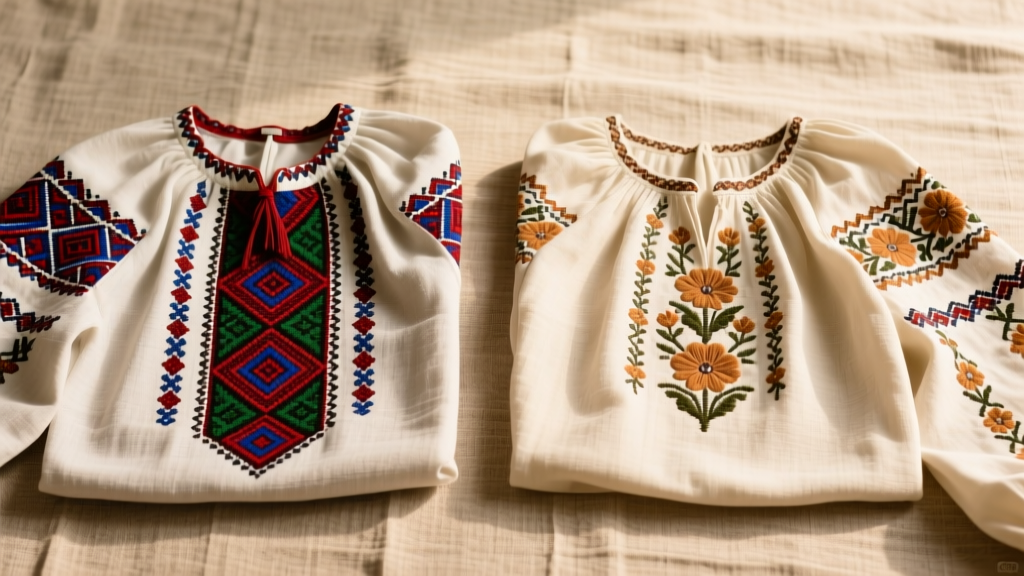
Archaic embroidery techniques, such as the Ukrainian nyz (darning stitch) or zavolikannia (running stitch), relied heavily on strict geometric grids. Rhombuses (often with 'hooks' or protrusions) symbolized sown fields and fertility. Eight-pointed stars represented the sun and cosmic order. These motifs predate Christianization, rooting back to ancient Slavic and Thracian pagan cosmologies.
Color Codes in Thread
While modern consumers often associate folk dress with a rainbow of synthetic threads, historical palettes were strictly limited by natural dye availability and regional codes:
Red and Black: In Ukrainian and Belarusian traditions, red (derived from madder root or cochineal) symbolized life, blood, and joy, while black (often from oak galls or alder bark) represented the earth, sorrow, or the ancestors. A shirt embroidered entirely in black was traditionally associated with mourning or widowhood.
Regional Case Studies: A Comparative Guide
The diversity of Eastern European traditional clothing is staggering, with distinct variations occurring not just country by country, but valley by valley. Below is a structural comparison of four highly distinct regional styles.
| Region / Culture | Core Garment | Key Motif & Technique | Cultural Function & Context |
|---|---|---|---|
| Hutsulshchyna (Ukraine) | Kkeptar (sleeveless sheepskin vest) & Vyshyvanka | Geometric cross-stitch, brass beadwork, cowrie shells | Mountain pastoralism; wealth displayed through the density of brass and shell embellishments on leather. |
| Podhale (Poland) | Parzenica trousers & woolen Cucha | Parzenica (heart-shaped geometric motif), worsted wool embroidery | Highland identity; the parzenica motif evolved from simple tailor's chalk marks to complex, protected regional symbols. |
| Maramureș (Romania) | Ie (blouse) & Cătănță (apron) | Altiță (shoulder epaulet), râuri (vertical sleeve rivers) | Village endogamy; specific black-and-orange or black-and-red palettes identified the wearer's exact valley. |
| Matyóföld (Hungary) | Puffed-sleeve blouse & heavy petticoats | Matyó floral embroidery (roses, tulips, peonies) | 19th-century agricultural wealth; highly saturated, dense floral patterns that completely obscure the base fabric. |
Rites of Passage: Clothing the Life Cycle
Eastern European traditional clothing was deeply integrated into the liminal spaces of human life: birth, marriage, and death.
The Wedding Crown and the Matron’s Cap
In Slavic and Baltic traditions, a woman’s hair and headwear were the primary indicators of her marital status. Unmarried girls wore their hair in a single braid or loose, often adorned with a vinok (wreath) or wianek of fresh or silk flowers. The wedding ceremony culminated in the oczepiny (unbraiding) ritual, where the bride’s hair was unbound, braided into two plaits, and covered with a linen cap or namitka (wimple). From that moment on, appearing in public with uncovered hair was considered a severe social and spiritual transgression.
Mourning and the Inversion of Color
Mourning protocols dictated strict alterations to daily dress. In parts of rural Poland and Romania, mourners would turn their garments inside out or replace vibrant embroidery threads with plain white or black yarn. In some archaic Carpathian communities, white was historically the color of mourning, representing the purity of the soul returning to the ancestors, a practice that lingered long after Western Europe adopted black.
Preserving the Thread: Ethical Sourcing and Modern Markets
As global interest in 'cottagecore' and folk aesthetics grows, the market has been flooded with mass-produced, culturally disconnected imitations. Engaging with Eastern European traditional clothing today requires a commitment to ethical sourcing and cultural respect.
Price Guide and Authenticity Markers
Authentic, hand-crafted folk garments require hundreds of hours of labor. When sourcing these pieces, expect the following market realities:
- Contemporary Hand-Stitched Vyshyvanka (Ukraine): $180 – $450+. Look for artisans using traditional linen and natural dyes. Cooperatives like Folk Ukraine or direct artisan networks ensure fair compensation.
- Vintage Romanian Ie (1920s–1960s): €120 – €350. Authentic vintage pieces will show slight irregularities in hand-spun thread and natural fading. Avoid 'festival' blouses sold for $30, which are typically machine-embroidered in overseas factories and strip the altiță of its structural meaning.
- Hungarian Matyó Embroidered Pieces: $150 – €400. True Matyó embroidery is incredibly dense. The Museum of Ethnography in Budapest holds extensive archives of these motifs, which can be used to verify the authenticity of vintage purchases.
Supporting Living Heritage
The survival of these techniques relies on master-apprentice transmission. When purchasing Eastern European traditional clothing, prioritize buying directly from regional artisan guilds, cultural foundations, or verified diaspora makers. Institutions like The Ukrainian Museum in New York and the UNESCO Intangible Cultural Heritage registry provide vital frameworks for understanding the blouse not as a fashion trend, but as an element of protected cultural identity.
By understanding the profound semiotics woven into every hem and cuff, we move beyond mere aesthetic appreciation. We begin to read the garments as our ancestors did: as maps of the earth, shields for the spirit, and enduring testaments to community survival.