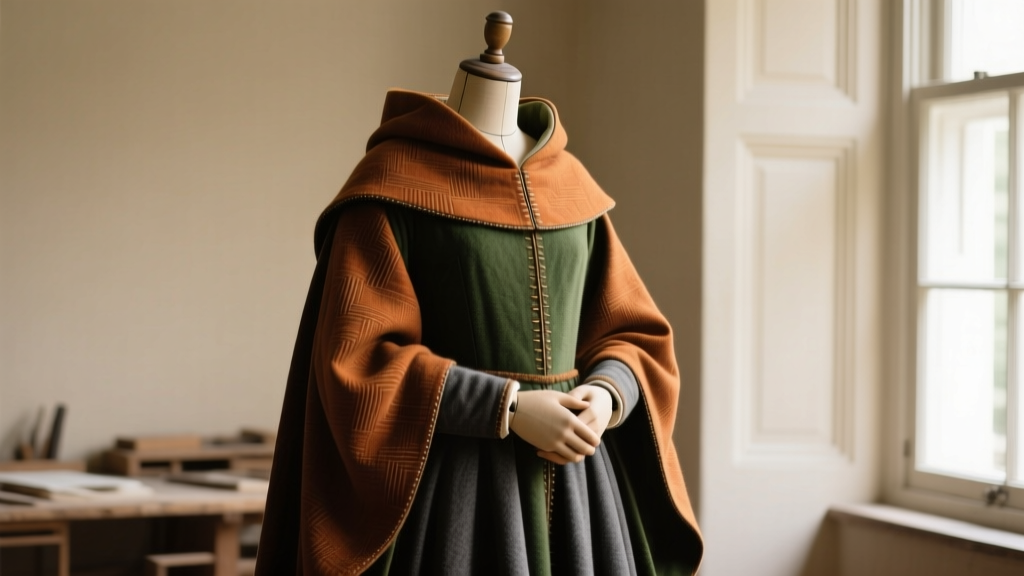
Chinese National Costume for Women in Europe

While The Garment Atlas is globally recognized for its exhaustive documentation of European folk dress—from the intricate embroidery of the Norwegian Bunad to the structured bodices of the Bavarian Dirndl—the contemporary European festival landscape is profoundly multicultural. As Lunar New Year parades, Silk Road exhibitions, and Asia-Europe cultural exchanges become staple events in capitals like London, Paris, and Berlin, understanding the chinese national costume female is essential for diaspora communities, textile historians, and respectful festival attendees.
This comprehensive festival guide bridges the gap between traditional Asian sartorial heritage and the practical realities of attending European winter parades, offering deep insights into garment construction, ethical sourcing in European capitals, and vital cultural protocols.
Decoding the Chinese National Costume Female for Festival Wear
The term 'national costume' in China does not refer to a single monolithic garment, but rather a rich tapestry of regional and dynastic traditions. For female attendees at European cultural festivals, two primary sartorial categories dominate the landscape: the historical Hanfu and the modern Qipao.
The Hanfu Revival and the Mamianqun
Hanfu (汉服) refers to the historical dress of the Han people, spanning from the Shang Dynasty (c. 1600 BCE) to the late Ming Dynasty (1644 CE). In recent years, a massive cultural revival has brought these garments to the streets of London's Chinatown and Paris's Quartier Asiatique during spring festivals.
The most prominent garment seen at European diaspora events is the Mamianqun (马面裙), or 'horse-face skirt.' Constructed from two overlapping flat panels at the front and back with heavily pleated sides, the Mamianqun allows for remarkable mobility—ideal for navigating crowded European parade routes. The waistband is typically made of cotton or linen to grip the torso, while the skirt body utilizes luxurious Song brocade or Zhuanghua satin. When paired with an Ao (a lined, long-sleeved jacket with a standing collar), it forms the Aoqun ensemble, providing necessary warmth for February festivals in Northern Europe.
The Qipao: Shanghai Tailoring Meets European Runways
Often recognized in the West as the cheongsam, the Qipao (旗袍) evolved from the loose-fitting robes of Manchu women during the Qing Dynasty into the form-fitting, bias-cut silhouette popularized in 1920s Shanghai. For formal European gala events or indoor cultural exhibitions, the Qipao remains a premier choice.
Authentic Qipao construction is a masterclass in tailoring. It features a Mandarin collar (standing collar), Pankou (intricate knotted frog buttons), and strategic side slits. High-end European tailors specializing in Asian textiles often utilize Xiangyunsha (Canton gauze)—a rare silk dyed with river mud and薯莨 (薯莨 juice) that yields a distinct crackled, leathery texture and a rustling sound when walking, highly prized by collectors attending high-society cultural galas in Milan and Paris.
Metropolitan Sourcing: Where to Buy in European Capitals
Sourcing an authentic chinese national costume female in Europe requires navigating beyond mass-produced costume shops. True artisans and diaspora tailors offer garments that respect historical construction and utilize genuine textiles. Below is a curated sourcing guide for major European cultural hubs.
| City & District | Garment Specialty | Price Range (EUR) | Best For |
|---|---|---|---|
| London (Gerrard St / Chinatown) | Bespoke Qipao, Silk Brocade | €350 - €1,200+ | Custom tailoring, formal indoor galas |
| Paris (Avenue d'Ivry / 13th Arr.) | Ming Dynasty Hanfu, Mamianqun | €150 - €600 | Historical accuracy, festival parades |
| Berlin (Dong Xuan Center) | Accessible Hanfu, Ruqun sets | €60 - €250 | First-time buyers, student cultural societies |
| Amsterdam (Zeestraat Boutiques) | Xiangyunsha Silk, Winter Capes | €400 - €1,500 | Textile collectors, extreme cold adaptation |
For those seeking museum-grade reproductions, institutions like the Victoria and Albert Museum (V&A) in London frequently collaborate with heritage weavers in Suzhou to offer ethically sourced, historically accurate textile accessories in their cultural shops, supporting the preservation of intangible cultural heritage.
Climate & Protocol: Navigating February Parades in the Cold
The Lunar New Year typically falls between late January and mid-February, a period characterized by biting winds and damp cold across Western and Northern Europe. Wearing traditional silk or linen garments in 4°C (39°F) London or -2°C (28°F) Berlin weather requires strategic, culturally appropriate layering.
The Pifeng (Cape) and Doufu (Thermal Layering)
Rather than ruining the silhouette of a Hanfu with a modern puffer jacket, historical layering techniques offer an elegant solution. The Pifeng (披风) is a traditional sleeveless or wide-sleeved cloak that drapes over the shoulders, often lined with rabbit fur or heavy wool in winter variations. Paired with a Mamianqun, wearers can easily conceal modern merino wool thermal leggings beneath the voluminous pleats of the skirt without disrupting the garment's external drape.
Cultural Etiquette: The Rule of the Lapel
When wearing the chinese national costume female at any European diaspora event, the most critical rule of etiquette involves the collar crossing. Hanfu must always be worn Youren (右衽)—meaning the left side of the collar crosses over the right side, securing the garment on the right side of the body.
Cultural Warning: The reverse, Zuoren (左衽), where the right lapel crosses over the left, is strictly reserved for dressing the deceased in traditional Han burial rites. Wearing Zuoren to a joyous Lunar New Year parade in Paris or London is considered highly inauspicious and deeply offensive to cultural practitioners.
European Institutional Preservation and Academic Study
Europe plays a vital role in the preservation and academic study of Chinese historical dress. The SOAS University of London and the Musée Guimet in Paris house extensive archives of Qing dynasty court robes and Republican-era Qipaos. These institutions provide vital reference points for modern artisans attempting to recreate historical Kesi (silk tapestry) weaving techniques that were nearly lost during the 20th century.
Furthermore, the Asia-Europe Foundation (ASEF) frequently sponsors cultural exchange programs that bring master tailors from Hangzhou and Suzhou to European fashion institutes, ensuring that the structural integrity of the chinese national costume female is taught with the same academic rigor as European corsetry or draping.
Final Thoughts for the Festival Attendee
Attending a European Lunar New Year festival or a Silk Road cultural exhibition offers a unique opportunity to engage with living history. Whether you are draped in the structured elegance of a Shanghai-tailored Qipao or the sweeping, pleated majesty of a Ming-style Mamianqun, understanding the construction, sourcing, and profound cultural weight of these garments elevates the experience from mere costuming to genuine cultural participation. By respecting the protocols of the lapel, supporting authentic diaspora tailors in Europe, and adapting historical layering for the European winter, you honor the rich legacy of Asian textiles on the global stage.