A Beginner Guide to Chinese Men's Traditional Clothing

When exploring the vast tapestry of global heritage garments, chinese men's traditional clothing stands out for its profound philosophical underpinnings, intricate textile arts, and dramatic historical evolutions. Unlike Western tailoring, which historically emphasized the three-dimensional structure of the human body, traditional Chinese garment construction prioritizes the two-dimensional flow of fabric, creating a silhouette that harmonizes with the wearer's movements and the natural world.
For beginners, navigating this sartorial landscape can be daunting. The term 'traditional' spans thousands of years, from the ancient, flowing robes of the Han dynasty to the structured, high-collared jackets of the Qing era and modern diplomatic adaptations. This comprehensive guide decodes the primary garment types, outlines essential wearing protocols, and provides a practical framework for sourcing authentic pieces.
Decoding the Silhouette: Beyond the Stereotypes
Pop culture and cinematic wuxia epics often blur the lines between historical accuracy and theatrical fantasy. Authentic Chinese menswear is deeply tied to dynastic shifts, social hierarchy, and Confucian ideals of propriety (Li). To understand these garments, one must divide them into three distinct categories: the ancient Hanfu, the Qing-era Changshan, and the contemporary formal Tangzhuang.
The Hanfu Revival: Reclaiming Pre-Qing Heritage
Hanfu (汉服) translates literally to 'Han clothing' and refers to the traditional dress of the Han Chinese people, spanning from the mythical Yellow Emperor (c. 2700 BCE) to the end of the Ming Dynasty (1644 CE). Over the past two decades, a massive grassroots 'Hanfu Movement' has emerged among Chinese youth, reclaiming these garments as everyday cultural expression rather than mere museum relics.
Anatomy of the Hanfu
The traditional Hanfu silhouette is defined by several non-negotiable structural elements:
- Shenyi (深衣): A one-piece robe that connects the upper and lower garments, symbolizing the unity of heaven and earth.
- Yichang (衣裳): A two-piece ensemble consisting of an upper garment (Yi) and a lower wrap-skirt (Chang).
- Bixi (蔽膝): A ritual apron or sash worn over the lower robe, historically denoting rank and formality.
- Sleeves: Typically wide and expansive, often featuring a 'returning sleeve' design where the excess fabric folds back elegantly over the forearm.
The Golden Rule of the Collar: Jiaoling Youren
The most critical element of Hanfu—and a common pitfall for beginners—is the collar alignment. The standard is Jiaoling Youren (交领右衽), meaning the left lapel crosses over the right, forming a 'y' shape at the neckline. In traditional Chinese philosophy, the left represents Yang (life, sun, masculinity) and the right represents Yin (death, moon, femininity). Therefore, crossing the left over the right is the only acceptable way for the living to dress. Reversing this (right over left) is strictly reserved for funerary garments. Wearing it incorrectly is considered deeply disrespectful and culturally taboo.
Qing Dynasty and the Birth of the Changshan
In 1644, the Manchu-led Qing Dynasty conquered China, enforcing the Tifalin edict, which mandated that Han Chinese men adopt the Manchu queue hairstyle and clothing style under penalty of death. This violently interrupted the continuity of Hanfu, birthing a new sartorial era.
The Changshan (长衫), or 'long shirt,' became the standard daily and formal wear for men. Unlike the wide-sleeved, sash-tied Hanfu, the Changshan features a Mandarin collar, a straight, narrow silhouette, and side slits for mobility (originally designed for horseback riding). It fastens with Pankou (盘扣)—intricate, hand-woven frog buttons made from knotted silk or cotton cord. The Changshan remained the intellectual and scholarly uniform through the late Qing and early Republic eras, famously worn by literary figures like Lu Xun.
The Tangzhuang: Modern Formality and Diplomacy
Despite its name, the Tangzhuang (唐装) or 'Tang suit' has no direct connection to the ancient Tang Dynasty. It is a modern hybrid garment that evolved from the Manchu Magua (a short riding jacket). The Tangzhuang gained global prominence during the 2001 APEC summit in Shanghai, when world leaders were photographed wearing matching silk brocade jackets.
Today, the Tangzhuang serves as the standard 'traditional' formal wear for Chinese men at weddings, Lunar New Year celebrations, and diplomatic events. It incorporates Western tailoring techniques, such as set-in sleeves and structured shoulder pads, merging them with traditional Mandarin collars, frog closures, and auspicious brocade patterns like the dragon, peony, or longevity knot.
Material Culture: Fabrics, Weaves, and Pricing
The choice of fabric in Chinese menswear is heavily dictated by seasonality, social occasion, and regional climate. Below is a structured guide to traditional textiles and their current market expectations.
| Fabric Type | Characteristics & Best Use | Season | Estimated Price Range (USD) |
|---|---|---|---|
| Raw Linen (Xia Bu) | Breathable, textured, historically worn by scholars and commoners. Excellent drape. | Summer | $60 - $120 |
| Mulberry Silk | Lustrous, lightweight, and historically restricted to nobility. Requires delicate care. | Spring / Autumn | $150 - $350 |
| Xiangyunsha | Gambiered Guangdong Gauze. Dyed with yam juice and river mud. Water-resistant, rustles when moving. | Summer / Humid | $300 - $800+ |
| Silk Brocade (Zhuanghua) | Heavy, richly patterned woven silk. Used for Tangzhuang and winter ceremonial robes. | Winter / Formal | $120 - $400 |
| Cotton Sateen | Modern, durable, accessible. Often used for entry-level Hanfu and daily Changshan. | All Seasons | $35 - $80 |
Sourcing Authentic Garments: A Buyer's Framework
For international buyers and beginners, distinguishing between a theatrical costume and an authentic cultural garment is vital. According to textile archives at institutions like the Metropolitan Museum of Art, historical garments rely on flat-pattern cutting, where the fabric is woven to the specific width required, minimizing waste and preserving the integrity of the woven motifs.
Where to Buy
- Specialized Hanfu Artisans: Brands like Hanshang Hualian or Shiyu focus on historical accuracy, utilizing museum-grade patterns and natural fibers. Expect to wait 30-60 days for made-to-order pieces.
- Tangzhuang Tailors: For formal jackets, bespoke tailors in Shanghai's French Concession or Beijing's Qianmen street offer custom fittings. Many provide international shipping, with prices starting around $150 for wool-blend brocades.
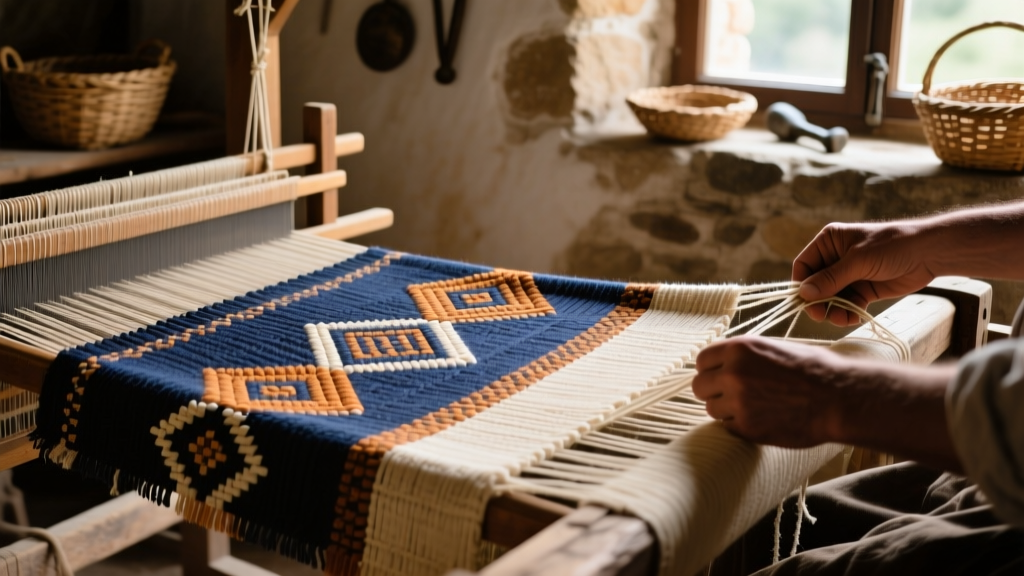
- Cultural Cooperatives: Organizations dedicated to preserving intangible cultural heritage, such as those documented by the China National Silk Museum, often sell authentic, hand-loomed textiles directly from weaving cooperatives in Suzhou and Hangzhou.
Red Flags to Avoid
- Synthetic Fabrics: Avoid high-gloss polyester marketed as 'silk.' It lacks the breathability and dignified drape of natural fibers.
- Zipper Closures: Authentic Hanfu and high-quality Changshan rely on ties and Pankou buttons. Visible plastic zippers indicate a costume-grade garment.
- Anachronistic Patterns: Be wary of garments mixing Qing dynasty frog buttons with ancient Han dynasty lapels. Historical accuracy matters to the modern Hanfu community.
Etiquette, Accessories, and Final Styling
Wearing Chinese traditional clothing extends beyond the garments themselves; it encompasses grooming, posture, and accessories. The Victoria and Albert Museum notes in its Asian textile collections that historical menswear was never considered 'complete' without the appropriate headwear and footwear.
- Hair and Headwear: In ancient China, cutting one's hair was considered a violation of filial piety. Adult men wore their hair in a topknot, secured with a Guan (crown/cap) or a simple jade hairpin. Today, while modern haircuts are acceptable, wearing a traditional Futou (scholar's cap) or a simple leather crown elevates the formality of a Hanfu ensemble.
- Footwear: Avoid modern athletic shoes. Pair Hanfu with traditional cloth boots (Yunxie) featuring upturned toes, or simple woven straw sandals for summer. For the Changshan and Tangzhuang, black leather dress shoes or traditional cloth slip-ons are appropriate.
- Posture and Movement: The generous cut of traditional robes requires a measured, deliberate gait. Wide sleeves should be managed gracefully; when greeting someone with a traditional Zuoyi (bow with hands clasped), the sleeves naturally drape over the forearms, creating a striking, respectful silhouette.
Embracing Chinese men's traditional clothing is an exercise in wearing history. Whether you are donning a linen Hanfu for a summer tea ceremony or a structured silk Tangzhuang for a winter wedding, understanding the profound cultural codes woven into every seam transforms the act of dressing into a meaningful dialogue with the past.