National Clothing of China vs. European Folk Dress Compared
The Silk and Wool Divide: Material Origins and Trade
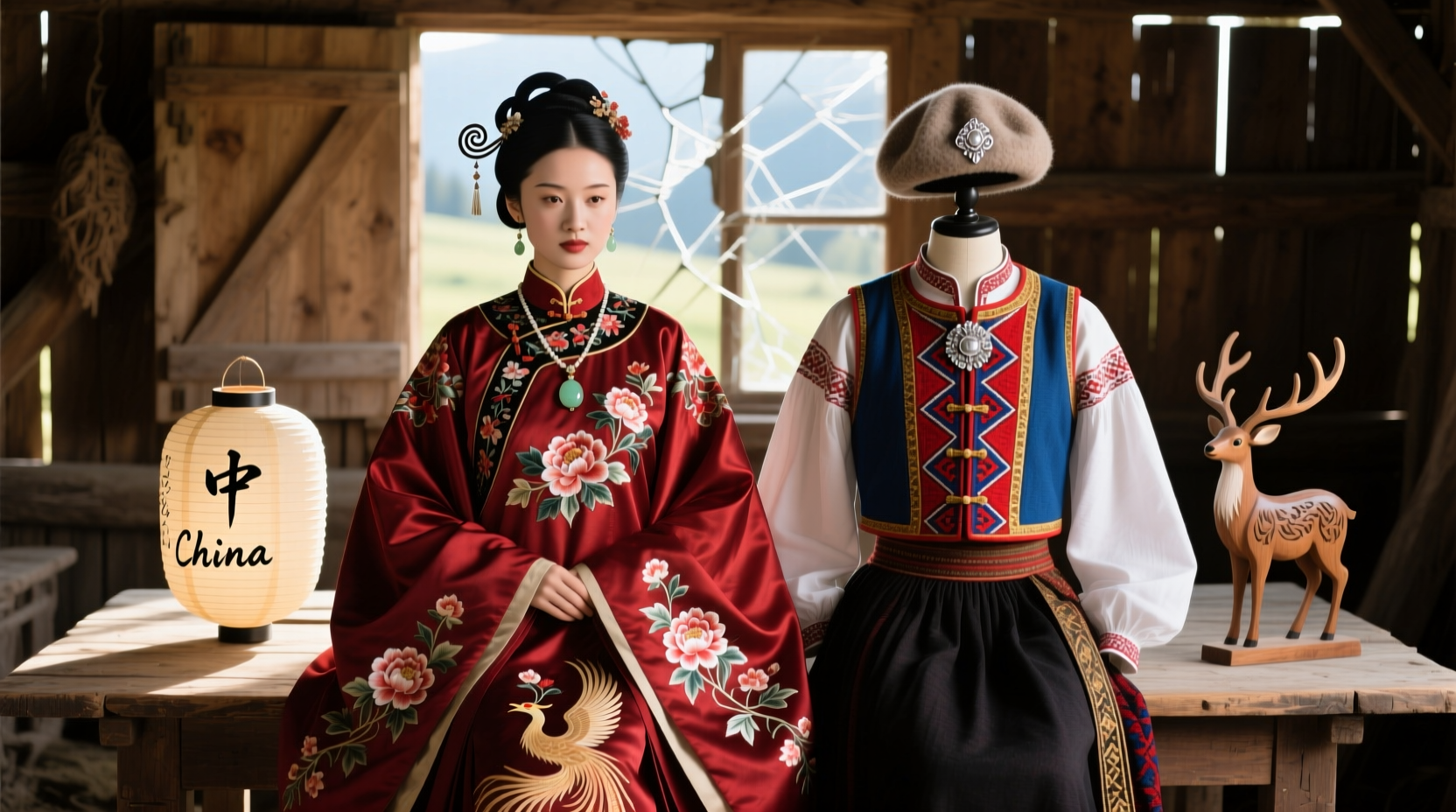
When examining the national clothing of China alongside traditional European folk dress, the most immediate divergence lies in their foundational materials. Chinese sartorial history is inextricably linked to sericulture. For millennia, the cultivation of the mulberry silkworm (Bombyx mori) in provinces like Zhejiang and Jiangsu dictated the drape, sheen, and structure of garments ranging from the flowing Hanfu to the tailored Qipao. According to The Metropolitan Museum of Art's Heilbrunn Timeline of Art History, China's monopoly on silk production not only shaped its domestic fashion but also birthed the Silk Road, fundamentally altering global trade and eventually influencing European court dress through the 18th-century Chinoiserie movement.
Conversely, European folk dress is deeply rooted in pastoralism and agrarian life. The Norwegian bunad, the Scottish kilt, and the Bavarian dirndl rely heavily on wool, flax, and linen. These materials were chosen for their durability, insulation, and suitability for the rugged climates of the Alps, Scandinavia, and the Highlands. While Chinese garments often emphasize the fluid, uninterrupted flow of woven silk, European folk costumes utilize the structural properties of felted wool and woven tartans to create volume, pleats, and tailored warmth.
Silhouette and Structure: Draping vs. Tailoring
The construction philosophies of these two spheres represent a fascinating study in contrasts. The traditional Hanfu—which encompasses various styles like the ruqun (blouse and skirt) and the shenyi (deep robe)—is characterized by flat-pattern cutting. Garments are constructed from geometric panels of fabric with minimal cutting, preserving the integrity of the silk and minimizing waste. The defining feature is the jiaoling youren (cross-collar, right lapel), which wraps elegantly around the body, secured by silk sashes rather than rigid fasteners. As documented in the Victoria and Albert Museum's Chinese Collections, this draping technique allows the garment to adapt to the wearer's body in motion, reflecting Daoist philosophies of harmony and natural flow.
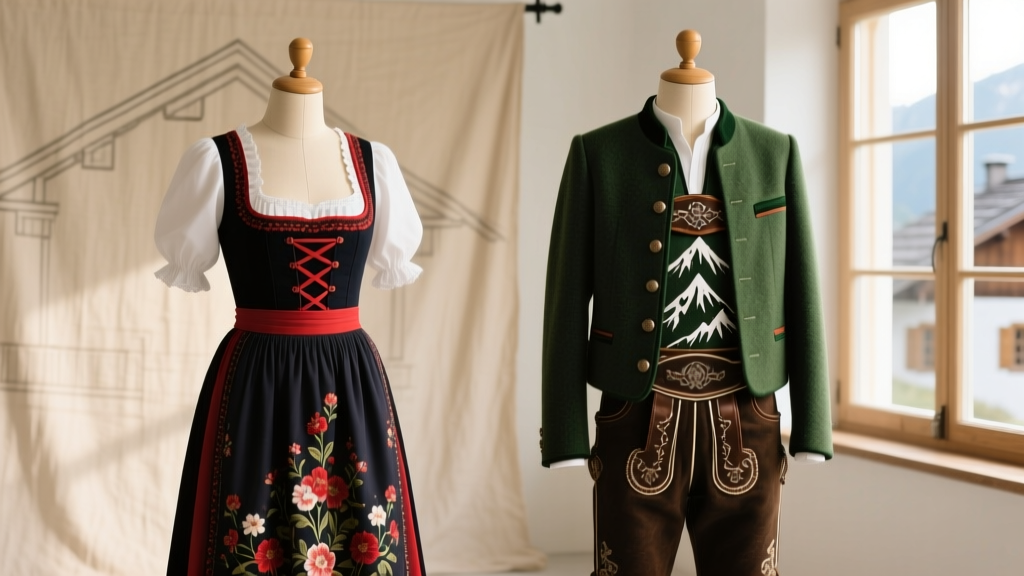
European folk dress, however, evolved around three-dimensional tailoring and structural shaping. The Bavarian dirndl features a tightly fitted mieder (bodice) often reinforced with boning or heavy linen interlining, designed to support and shape the torso before flaring out into a gathered skirt. Similarly, the Norwegian bunad utilizes intricate wool tailoring, heavily embroidered with regional motifs, and fastened with elaborate silver sølje brooches. Where Chinese dress flows over the body, European folk dress actively sculpts it.
The Qipao: A Meeting Point of East and West
The Qipao (or Cheongsam) represents a unique bridge between these two worlds. Originating from the loose, boxy robes of the Manchu people during the Qing Dynasty (1636–1912), the modern Qipao was revolutionized in 1920s Shanghai. Tailors began incorporating Western darting, set-in sleeves, and structured collars, resulting in a garment that retained Chinese motifs and panyu (frog closures) but hugged the body in a manner previously unseen in Chinese sartorial history. This hybridization makes the Qipao a vital piece when comparing Eastern and Western tailoring techniques.
Regional Variants: A Comparative Matrix
To understand the practical and economic realities of these garments today, we must look at specific regional variants. The table below contrasts four iconic garments across their origins, materials, and modern market values.
| Garment | Cultural Origin | Primary Fabric | Closure System | Approx. Price Range (USD) |
|---|---|---|---|---|
| Hanfu (Ming-style Aoqun) | China (Han ethnic majority) | Mulberry Silk, Brocade | Hidden ties, sashes | $250 - $800 (Artisan) |
| Qipao | China (Shanghai/Manchu roots) | Silk, Jacquard, Velvet | Panyu (frog knots), zippers | $150 - $1,200 (Bespoke) |
| Bunad | Norway (Regional specific) | Wool Vadmel, Linen | Silver Sølje brooches, hooks | $3,500 - $6,000+ |
| Dirndl | Alpine (Bavaria/Austria) | Cotton, Linen, Wool blends | Horn buttons, lacing, hooks | $200 - $600 (Authentic) |
Note: Prices reflect authentic, high-quality garments sourced from specialized artisans or heritage brands, excluding mass-produced festival wear or fast-fashion approximations.
Symbolism and Motifs: Imperial Codes vs. Alpine Flora
The decorative elements of these garments serve as visual languages, communicating social status, regional identity, and spiritual beliefs. In the national clothing of China, motifs are deeply symbolic and often rely on homophones. For instance, the bat (fu) is frequently embroidered onto silk robes because it shares a phonetic sound with the word for 'fortune' or 'blessing.' Peonies represent wealth and honor, while the dragon and phoenix denote imperial power and marital harmony. The V&A Museum highlights how the color palette was also strictly codified in imperial China, with bright yellow reserved exclusively for the Emperor, and specific shades of blue and red denoting various court ranks.
European folk dress utilizes motifs that are largely botanical, geometric, or tied to clan identity. The Scottish tartan, as preserved and studied by National Museums Scotland, uses specific thread-count patterns (setts) and natural dyes (like woad for blue or madder for red) to denote clan affiliations and regional origins. In Alpine dress, embroidery often features the Edelweiss flower, alpine roses, and oak leaves, symbolizing resilience, purity, and a deep connection to the mountainous landscape. While Chinese motifs often reach toward the celestial and imperial, European folk motifs remain firmly grounded in the local earth and community lineage.
Sourcing, Pricing, and Wearing Etiquette Today
For collectors, cultural enthusiasts, and diaspora communities in Europe, sourcing authentic garments requires navigating a complex market. The contemporary Hanfu movement has sparked a massive revival in China, leading to a proliferation of online retailers. However, buyers in Europe must distinguish between historically informed artisan pieces (which utilize traditional weaving techniques like kesi tapestry and natural dyes) and cheap, synthetic costumes. When purchasing a Hanfu or Qipao, look for sellers who specify the exact silk weight (measured in momme) and provide historical references for their patterns.
Similarly, acquiring a genuine Norwegian bunad is a significant investment. These are not off-the-rack items; they are typically custom-tailored by certified bunad makers in Norway, requiring months of lead time and precise measurements. Wearing a bunad also carries strict etiquette: one should ideally wear the bunad corresponding to their own ancestral region or current place of residence, and it must be worn with appropriate traditional silver jewelry and footwear.
Whether you are draping a Ming-dynasty inspired silk robe or lacing into a hand-embroidered Alpine bodice, understanding the profound history, material science, and cultural weight of these garments elevates the experience from mere costuming to a genuine appreciation of human heritage. Both the national clothing of China and the folk dress of Europe stand as testaments to the ingenuity of their respective ancestors, weaving identity into every thread.