Bavarian Outfits: Guide to Tracht and Dirndl

Beyond the Beer Tent: Understanding Authentic Bavarian Outfits
When the world thinks of Bavarian outfits, the mind often jumps to the chaotic imagery of Oktoberfest: mass-produced polyester costumes, oversized beer steins, and caricatured alpine stereotypes. However, to view these garments merely as party costumes is to ignore centuries of rich cultural heritage, meticulous artisan craftsmanship, and strict regional codes. In Bavaria, traditional dress is not a costume (Kostüm); it is Tracht.
The term Tracht translates roughly to "traditional dress" or "folk costume," but it carries a much heavier cultural weight. It represents a living tradition, preserved and regulated by local Trachtenvereine (traditional costume preservation societies). For beginners looking to purchase, wear, or simply understand Bavarian outfits, it is crucial to distinguish between Echte Tracht (authentic, regionally specific traditional dress) and Trachtenmode (modern fashion inspired by traditional elements). This guide will decode the anatomy, history, and etiquette of authentic Bavarian garments, ensuring you approach this cultural wardrobe with the respect and knowledge it deserves.
The Dirndl Decoded: Anatomy and the Apron Code
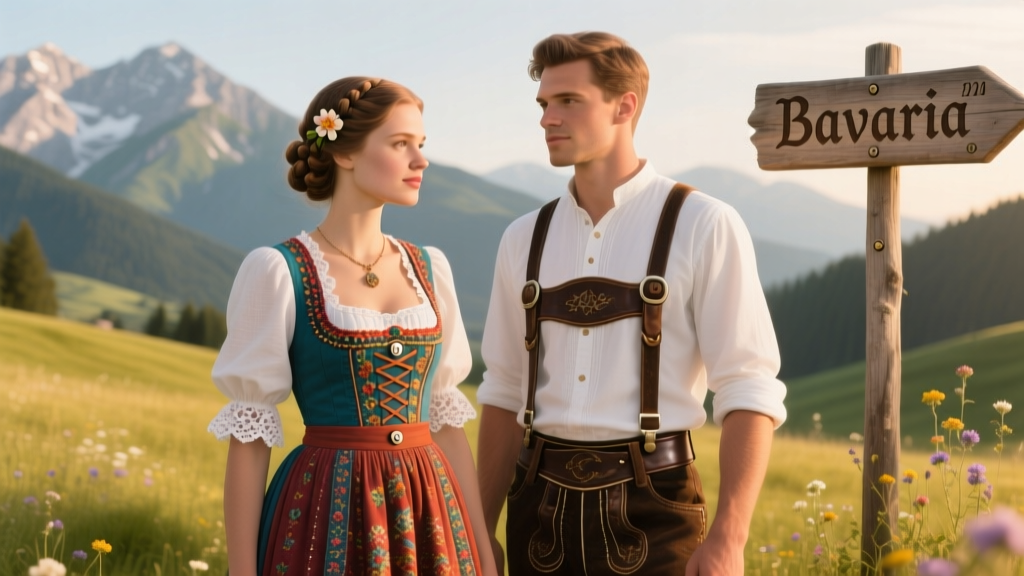
The Dirndl is arguably the most recognizable element of Bavarian womenswear, yet its construction is deeply rooted in historical alpine practicality. Originating as the utilitarian workwear of rural servants and farmwomen in the 18th and 19th centuries, the Dirndl was later romanticized and adopted by the urban elite and royalty—most notably championed by King Maximilian II of Bavaria in the mid-19th century as a way to foster a unified Bavarian national identity.
The Four Essential Components
A true Dirndl is not a single dress, but a meticulously coordinated ensemble of four distinct pieces:
- Die Bluse (The Blouse): Traditionally white and made of lightweight cotton or linen. The neckline can vary from modest and high-collared to wide and square, depending on the specific regional Tracht and the formality of the event. Sleeves can be short, three-quarter, or long.
- Das Mieder (The Bodice): The structural core of the outfit. In authentic Tracht, the Mieder is heavily structured, often featuring a front-lacing design with silver hooks and silk cords, or a concealed front closure. Mass-market versions often use back zippers, which are frowned upon in traditional circles.
- Der Rock (The Skirt): Attached to the bodice, the skirt is heavily gathered or pleated at the waist. The length is strictly dictated by tradition and occasion: knee-length for dancing and folk festivals, and ankle-length for formal events, church attendance, or mourning.
- Die Schürze (The Apron): Once a protective garment for labor, the apron is now the most vital communicative element of the Dirndl. It is made of silk, linen, or fine cotton, and must be slightly shorter than the skirt.
The Apron Knot (Schleife) Etiquette
The way a woman ties her apron bow is a silent but universally understood code in Bavaria, communicating her relationship status to onlookers. Getting this wrong is one of the most common beginner mistakes.
| Knot Position | Cultural Meaning |
|---|---|
| Left Side (Wearer's Left) | Single, unmarried, and potentially available. |
| Right Side (Wearer's Right) | Married, engaged, or in a committed relationship. |
| Center Front | Traditionally signifies a virgin or a young maiden; sometimes worn by brides. |
| Center Back | Widowed, or traditionally worn by women working as servers in beer tents. |
Lederhosen and Menswear: Craftsmanship in Leather
While the Dirndl dominates international perception, the menswear of Bavaria is equally complex and historically significant. The cornerstone of the male ensemble is the Lederhose (plural: Lederhosen), which translates literally to "leather breeches." Originally worn by hunters, foresters, and peasants due to the material's durability and resistance to alpine weather, leather breeches became a symbol of rugged Bavarian masculinity.
Key Elements of the Bavarian Menswear Ensemble
- Die Lederhose: Authentic pairs are crafted from Hirschleder (deerskin) or Ziegenleder (goatskin), tanned using traditional methods like Sämischgerbung (brain-tanning or oil-tanning) which makes the leather incredibly soft, washable, and breathable. The iconic embroidery (Stickerei) often features regional motifs like oak leaves (Eichenlaub), gentian flowers (Enzian), or edelweiss. Styles include the Kurze (short, above the knee) and the Bundhose or Kniebundhose (knee-length, tied with leather laces).
- Das Trachtenhemd: A rustic shirt, typically made of linen or heavy cotton. The most traditional is the Pfoad, a collarless, embroidered linen shirt, though checkered flannel shirts (blue/white or red/white) are widely accepted for casual alpine wear.
- Haferlschuhe: The traditional Bavarian shoe. These robust leather shoes feature a distinctive side-lacing system and a heavily nailed, profiled sole designed for gripping steep alpine terrain. They are worn with thick, calf-high wool socks (Loferl or Trachtenstutzen).
- Der Gamsbart: A "chamois beard" is a tuft of hair from the chamois antelope (or deer), bound in silver or horn and worn as a brush on the side of the traditional alpine hat (Trachtenhut). The size of the Gamsbart historically indicated the hunter's skill and social standing.
- Das Charivari: A silver chain worn across the front of the Lederhosen, originally used by hunters to display small animal teeth, claws, and silver talismans as hunting trophies and good luck charms.
Regional Variations: Not All Bavarian Outfits Are the Same
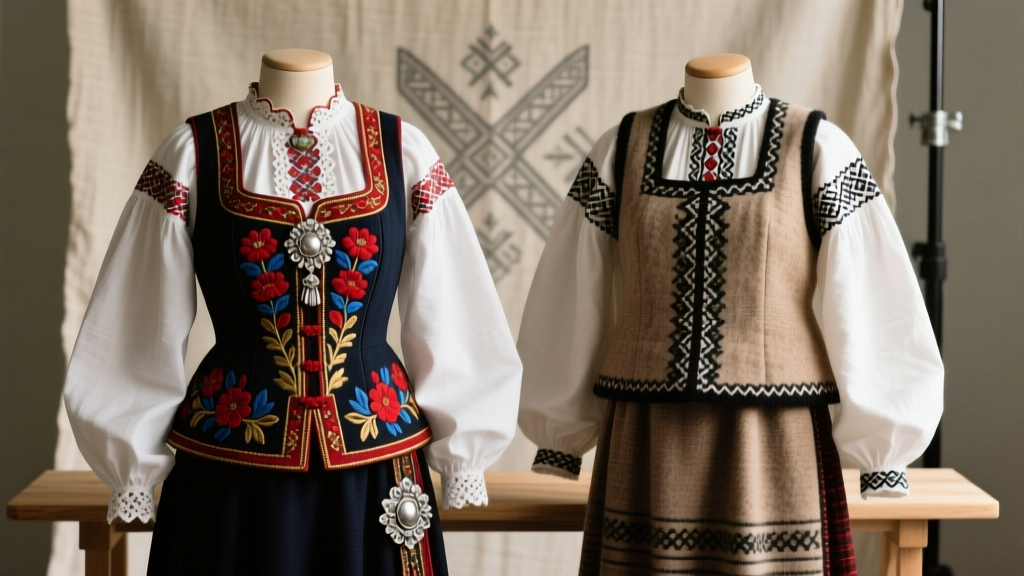
A critical aspect of E-E-A-T (Experience, Expertise, Authoritativeness, and Trustworthiness) in understanding European folk dress is recognizing that "Bavarian" is not a monolith. The Bayerischer Trachtenverband (Bavarian Tracht Association) recognizes over 50 distinct regional variations. Wearing a specific regional Tracht outside of its geographic origin can be seen as a cultural faux pas in conservative rural areas.
- Miesbacher Tracht: Originating from the Miesbach region south of Munich, this is perhaps the most widely recognized and formalized Tracht. For women, it features a dark, heavily embroidered bodice with a silk apron. For men, it is characterized by short Lederhosen with intricate, colorful floral embroidery and a specific grey alpine hat.
- Werdenfelser Tracht: Hailing from the Garmisch-Partenkirchen area, this style is heavily influenced by the rugged mountain environment. The colors are often more muted, utilizing deep forest greens and earthy browns, and the menswear frequently incorporates heavy, weather-resistant loden wool jackets (Lodenjacke).
- Berchtesgadener Tracht: From the far southeast near the Austrian border, this Tracht is famous for its unique accessories, particularly the Berchtesgadener War (intricate wooden items and jewelry) and specific, heavily pleated skirts for women that differ significantly from the standard Dirndl silhouette.
The Buyer’s Framework: Mass Market vs. Artisan Tracht
If you are looking to invest in Bavarian outfits, understanding the market tiers is essential. The price disparity reflects not just brand names, but fundamental differences in material sourcing, labor, and cultural authenticity.
| Quality Tier | Materials & Construction | Price Range (EUR) | Best Use Case |
|---|---|---|---|
| Mass Market (Trachtenmode) | Polyester blends, machine-made lace, zipped backs, synthetic leather. | €50 - €150 | One-off tourist events, casual Oktoberfest attendance. |
| Mid-Tier (Gehobene Tracht) | 100% Cotton/Linen, genuine horn buttons, tailored Mieder, real suede or goatskin. | €250 - €700 | Weddings, Volksfeste, serious cultural enthusiasts. |
| Artisan (Echte Tracht) | Silk, hand-embroidered Hirschleder, bespoke tailoring, antique silver hooks, hand-woven aprons. | €900 - €3,500+ | Lifetime wear, Trachtenvereine members, family heirlooms. |
For beginners, the mid-tier offers the best balance of cultural respect, durability, and cost. Brands like Angermaier or Trachten Angermaier offer accessible entry points, while artisan pieces require visiting specialized Trachtengeschäfte (Tracht shops) in Munich, Garmisch, or Salzburg for bespoke fittings.
Cultural Etiquette: How to Wear Tracht with Respect
Wearing Bavarian outfits is a privilege that comes with cultural responsibilities. The Bayerisches Nationalmuseum in Munich houses extensive collections that document the evolution of these garments, reminding us that they are historical artifacts as much as they are clothing.
1. Never Mix and Match Regions: If you are wearing a specific regional hat or jacket, ensure the rest of your outfit aligns with that region's code. Mixing a Miesbach hat with a Berchtesgaden bodice is immediately noticeable to locals.
2. Respect the Length: For women, a Dirndl skirt should never be shorter than the knee in traditional settings. "Mini-Dirndls" are strictly Trachtenmode and are considered inappropriate for church, weddings, or formal folk festivals.
3. Footwear Matters: Avoid wearing sneakers or modern stiletto heels with traditional Tracht. Invest in proper Haferlschuhe for men and traditional Trachtenschuhe (which feature a specific, sturdy block heel and silver buckles) for women.
4. Acknowledge the Living Tradition: Remember that for millions of Bavarians and Austrians, Tracht is not a historical reenactment. It is contemporary formal wear. Treat the garments, and the people wearing them, with the same respect you would afford someone in a modern tuxedo or evening gown.
Authoritative Resources for Further Study
To deepen your understanding of Bavarian folk dress, consult the archives and guidelines provided by leading cultural institutions:
- Bayerisches Nationalmuseum (Munich): Offers unparalleled physical and digital archives on the evolution of alpine textiles and rural dress from the 17th century onward.
- Bayerischer Trachtenverband: The governing body for traditional costume preservation in Bavaria. Their publications provide the definitive rules on regional variations and proper wearing etiquette.
- Germanisches Nationalmuseum (Nuremberg): Features extensive research on the historical tanning techniques and leatherworking trades that gave birth to the authentic Lederhose.